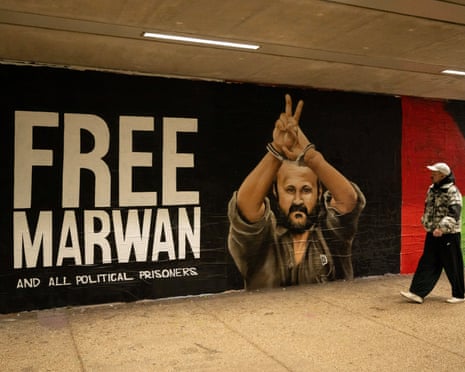
More than 200 prominent cultural figures have issued an open letter calling for the release of Marwan Barghouti, the Palestinian leader currently imprisoned in Israel. This diverse coalition includes well-known names such as authors Margaret Atwood, Philip Pullman, and Zadie Smith, as well as actors Sir Ian McKellen, Benedict Cumberbatch, and Tilda Swinton. The letter emphasizes Barghouti’s potential to unite Palestinian factions and revitalise efforts towards establishing a Palestinian state.
Barghouti, aged 66, has spent over two decades in prison following a trial that many legal experts have described as flawed. Once an elected parliamentarian, he remains a highly popular figure among Palestinians, consistently polling as their preferred leader. Despite this, the Israeli government has repeatedly refused to release him, even during recent prisoner exchanges following a ceasefire in the ongoing conflict in Gaza. The refusal appears to stem not from concerns about Barghouti posing a security threat, but rather from the influence he might exert in fostering unity and momentum towards a two-state solution.
Concerns are growing regarding potential new legislation in Israel that could impose the death penalty on Palestinian prisoners, a measure that could directly impact Barghouti. The recent passage of a United Nations resolution supporting the establishment of an international stabilisation force in Gaza has not led to an overwhelming response from countries willing to contribute troops. Many nations fear that such a force could become embroiled in conflict with Hamas, particularly over the decommissioning of its weapons—an Israeli precondition for any withdrawal from the region.
The movement advocating for Barghouti’s release draws parallels to the cultural campaigns that were instrumental in securing the freedom of Nelson Mandela and ending apartheid in South Africa. In 2002, Mandela himself noted the similarities between his own plight and that of Barghouti, stating, “What is happening to Barghouti is the same as what happened to me.” British musician Brian Eno echoed this sentiment, highlighting the historical impact of cultural voices on political landscapes. He remarked, “History shows us that cultural voices can shift the course of politics. Just as global solidarity helped free Nelson Mandela, we all have the power to accelerate the day that Marwan Barghouti walks free.”
The statement from the cultural figures expresses deep concern regarding Barghouti’s imprisonment, citing reports of violent mistreatment and the denial of legal rights. Selma Dabbagh, a British-Palestinian novelist and lawyer, emphasized that Barghouti’s trial was widely recognized as a sham, with the Inter-Parliamentary Union affirming its flaws. The letter concludes with a call to the United Nations and world governments to actively pursue Barghouti’s release, framing it as a critical step towards allowing Palestinians to determine their own leadership.
Israeli Prime Minister Benjamin Netanyahu is expected to resist calls for Barghouti’s release unless significant pressure is applied, particularly from the United States. This week, former President Donald Trump invited Netanyahu to the White House, which, if it occurs, would be the Israeli leader’s fifth visit since Trump resumed office in January 2023.
The cultural campaign for Marwan Barghouti’s release continues to gather momentum, with advocates hoping to leverage global support to influence political change in the ongoing Israeli-Palestinian conflict.