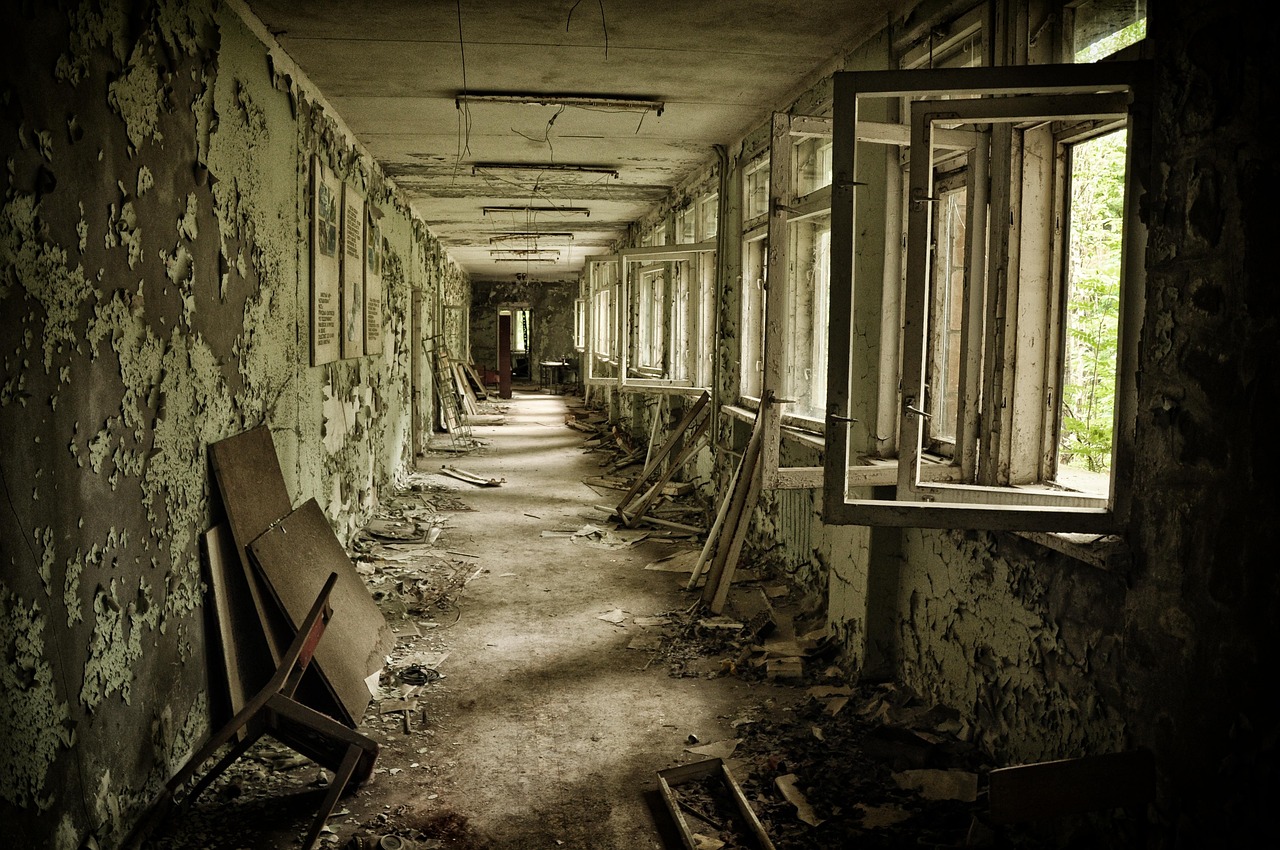
A remarkable species of fungus discovered in the irradiated Chernobyl Exclusion Zone is garnering attention from space scientists for its potential to protect astronauts from cosmic radiation. The fungus, known as Cladosporium sphaerospermum, has shown an unusual ability to thrive in high-radiation environments, leading researchers to explore its application in developing biological radiation shields for future space missions.
Since its identification in the aftermath of the 1986 reactor explosion, this melanised fungus has intrigued scientists due to its unique growth patterns in response to radiation. Rather than merely surviving in hazardous conditions, these fungi exhibit radiotropism; they grow towards sources of gamma radiation. This behavior suggests they may not just endure radiation but could potentially utilize it for energy.
Researchers are particularly interested in the role of melanin, a pigment present in the cell walls of C. sphaerospermum. Laboratory studies indicate that melanin can absorb and dissipate ionising radiation, offering a form of protection by neutralising free radicals generated during radiation exposure. Initial experiments, including a recent study aboard the International Space Station (ISS), have confirmed that this fungus can withstand elevated radiation levels. Over a 30-day period, the fungal layer reduced detected radiation by approximately 2% compared to control samples.
Potential Applications for Space Missions
Despite these promising results, scientists caution that using C. sphaerospermum as a practical radiation shield is still largely conceptual. Transforming this biological innovation into a viable defense mechanism for spacecraft or planetary habitats will require significant further research.
The idea of integrating fungal shielding into space missions presents a challenge. While projections suggest that a layer of melanin-rich fungi around 21 centimetres thick could substantially reduce radiation exposure on the Martian surface, logistical hurdles persist. Maintaining fungal growth in microgravity and developing effective containment systems involve intricate engineering solutions.
Moreover, researchers note that while melanin provides some shielding, it is not a complete substitute for traditional materials like metals. Instead, advocates of bio-hybrid systems propose that combining fungal shielding with conventional materials or Martian regolith could create a more efficient approach. This integration could potentially reduce the payload mass, offer self-repair capabilities, and support sustainable habitat construction.
Towards a New Era of Space Exploration
The Chernobyl fungus represents a broader trend in space science, where biological processes are increasingly considered to address engineering challenges. As investigations continue into the phenomenon of ‘radiosynthesis’—the hypothesis that fungi might convert radiation energy into usable chemical energy—scientists remain hopeful about the implications for future space exploration.
While C. sphaerospermum is far from an operational solution, its unique abilities to thrive in high-radiation environments could pave the way for innovative protective measures for astronauts venturing into deep space. As humanity seeks to explore beyond our planet, understanding how life can adapt to extreme conditions may unlock new possibilities for safe and sustainable exploration.