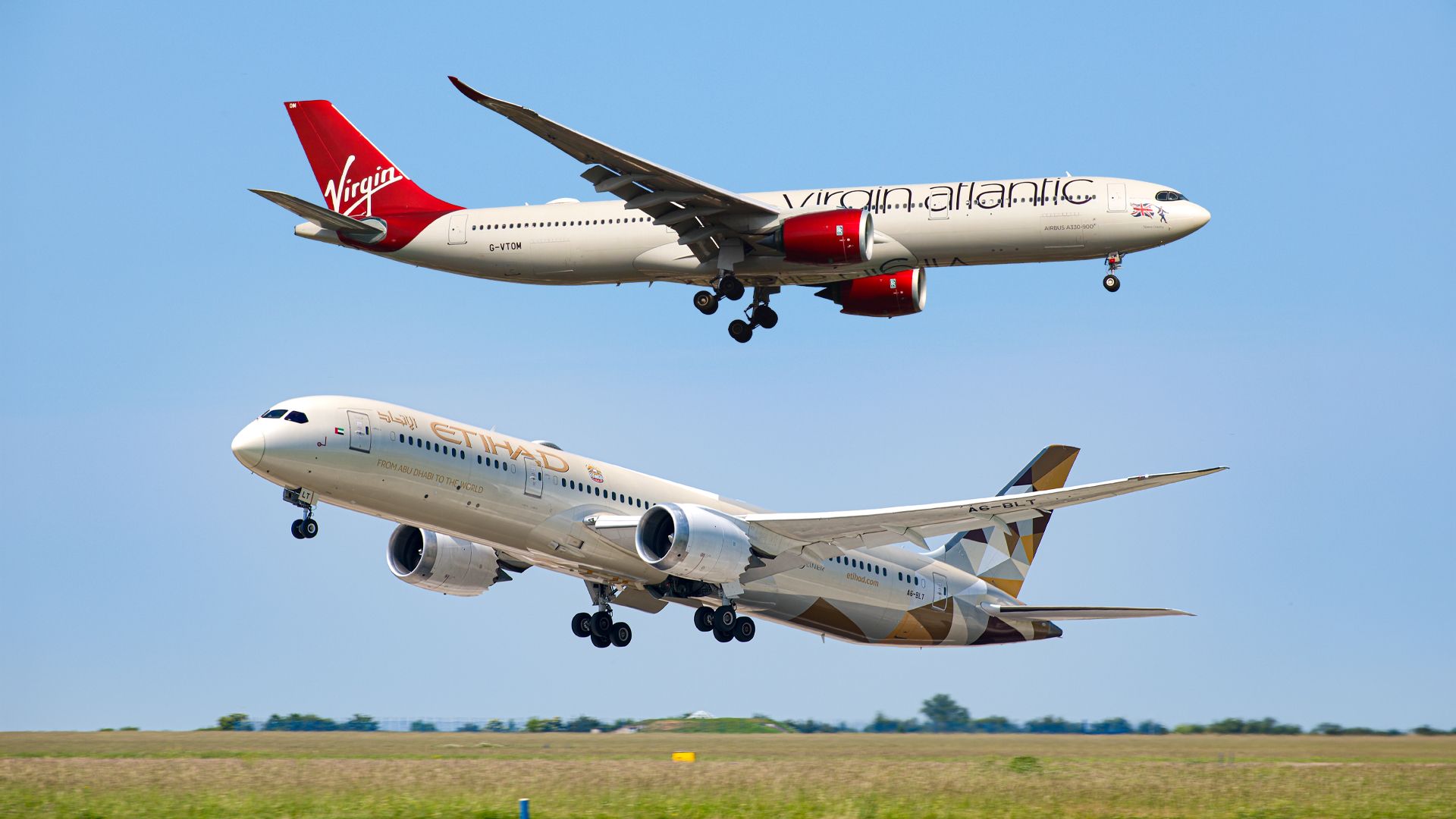
The aviation industry often buzzes with comparisons between leading aircraft models, especially when it comes to size and capability. In this context, the Airbus A330-900neo and the Boeing 787-9 Dreamliner stand out as two of the most popular widebody jetliners currently in operation. Each aircraft embodies different design philosophies, with the A330-900neo being a modernized version of a classic airframe, while the 787-9 represents Boeing’s latest advancements in twin-aisle technology.
When evaluating which aircraft is larger, the dimensions and passenger capacities become central to the discussion. The A330-900neo boasts a longer fuselage and typically accommodates more passengers than the 787-9. However, the Dreamliner features a wider cabin and offers a significantly longer range.
Airbus A330-900neo: A Modernized Classic
The Airbus A330-900neo was developed to provide airlines with lower upfront costs and seamless fleet integration. With a sticker price that is generally lower than that of more advanced composite aircraft, the A330-900 can seat between 260 and 300 passengers in a three-class configuration, with a maximum range of approximately 7,200 nautical miles. This positions it directly against the 787-9, which is one of the best-selling variants of Boeing’s Dreamliner family.
The A330-800, the smaller version of the A330neo family, typically seats 257 passengers and boasts a range of around 8,100 nautical miles. Even in this smaller configuration, it surpasses the 787-8, demonstrating that the A330 series consistently offers a higher seat capacity.
Airbus’s designation of “New Engine Option” (NEO) applies to all successor airframes built on legacy designs. The A330neo features the Rolls-Royce Trent 7000 engine, which significantly reduces fuel consumption and noise emissions. The A330neo benefits from a redesigned wing, utilizing advanced 3D Computational Fluid Dynamics (CFD) modeling. This wing has the highest aspect ratio of any commercial aircraft currently in production, which optimizes aerodynamic performance and reduces drag.
Boeing 787-9: The Dreamliner’s Versatility
The Boeing 787-9 is celebrated for its impressive range and operational efficiency. It is a strengthened variant of the 787-8, allowing for a higher maximum takeoff weight (MTOW) and increased fuel capacity. This enables airlines to operate longer flights while accommodating more passengers. The 787-9’s design has made it an ideal choice for long-haul routes, and its configurations allow airlines to cater to various market demands.
While the 787-10 variant offers even greater capacity, the 787-9 remains the most popular due to its balance of range and passenger load. All three variants of the Dreamliner share a common cockpit, simplifying pilot training and operational flexibility across airline fleets.
The 787 Dreamliner has set industry standards for fuel efficiency and passenger comfort since its launch. With nearly double the sales of Airbus twin-aisles, the 787 has solidified Boeing’s position in the market, particularly as airlines continue to phase out older quadjets like the 747.
The A330neo and 787-9 represent two distinct approaches to modern aviation, with the A330neo focusing on capacity and cost-effectiveness, while the Dreamliner emphasizes range and efficiency.
Shifts in Aviation Philosophy and Future Outlook
Both the A330neo and the 787 embody a shift in commercial aviation toward more efficient twin-engine aircraft. The operational costs associated with these jets have made them increasingly popular, even with partially filled cabins. Significant advancements in materials and engine technology, including lightweight composites and high-bypass turbofans, have contributed to a reduction in fuel consumption by up to 40% compared to traditional aircraft.
This transformation has allowed airlines to adopt a point-to-point routing strategy, moving away from the traditional hub-and-spoke model. Regulatory advances in Extended-range Twin-engine Operational Performance Standards (ETOPS) have enabled twinjets to safely operate over long transoceanic distances, further enhancing their appeal.
The A330neo and 787 Dreamliner have both proven their mettle in the current market landscape. While the 787 may be smaller in physical dimensions, its remarkable range and operational flexibility allow it to serve ultra-long-haul routes that were previously considered unfeasible. An example is the route operated by Qantas from Perth to London Heathrow, which spans over 9,000 miles and takes around 18 hours to complete.
As the aviation industry evolves, both the Airbus A330-900neo and Boeing 787-9 will continue to play pivotal roles in shaping the future of air travel, catering to airlines’ diverse needs and enhancing the passenger experience.