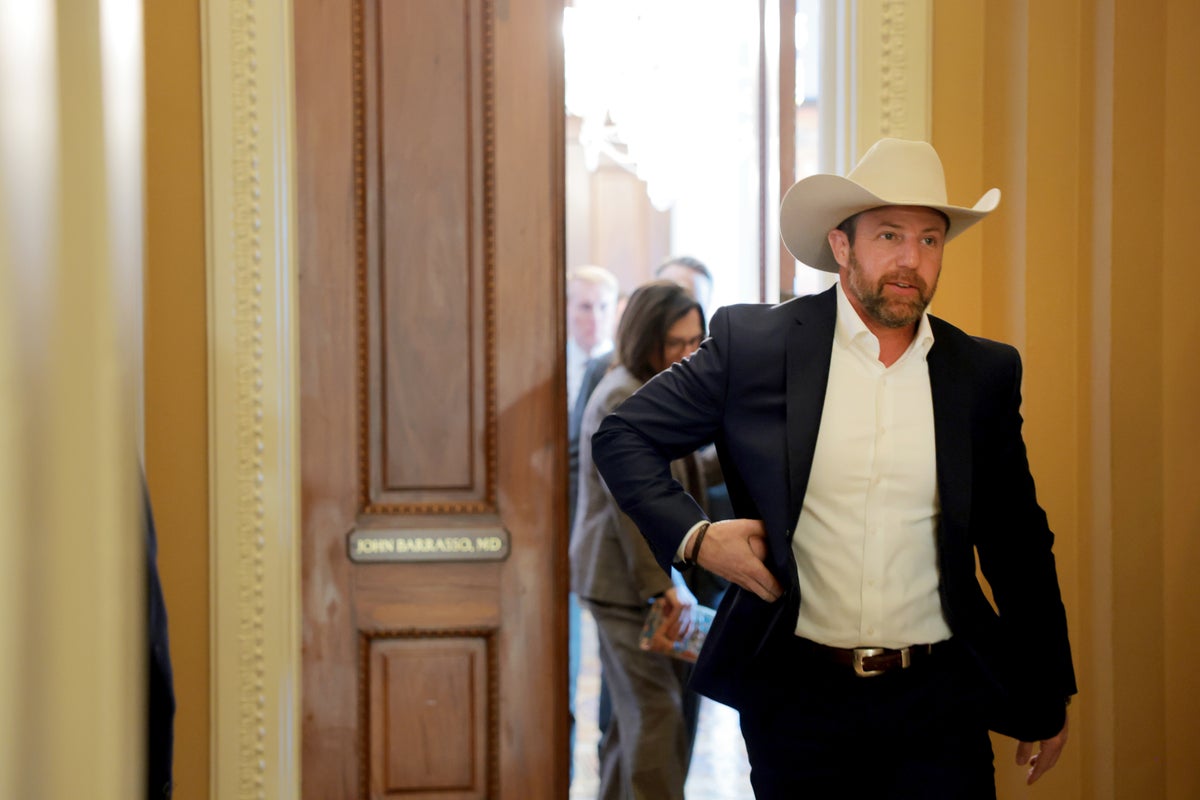
Senator Markwayne Mullin, nominated by President Donald Trump to succeed Kristi Noem as Secretary of the Department of Homeland Security, purchased shares in Chevron just five days prior to the U.S. military action against Venezuela. This move has raised eyebrows as the stock price of Chevron subsequently increased following the operation, which resulted in the capture of Venezuelan President Nicolás Maduro.
On December 29, 2025, Mullin acquired Chevron stock valued between $15,001 and $50,000, as reported by investment research platform Quiver Quantitative. Following the military action on January 3, 2026, Chevron’s stock surged from $150.99 to $196.82, reflecting a gain of 30.4 percent by March 13, 2026.
The timing of Mullin’s investment raises questions about potential insider knowledge regarding the U.S. government’s intentions. Despite this, there is currently no evidence to suggest that he had advance knowledge of the planned military action when he purchased the stock. The situation has drawn attention as Mullin prepares for his confirmation hearing before the Senate Committee on Homeland Security and Governmental Affairs, scheduled for Wednesday.
The New York Times recently described Mullin as “one of the most prolific stock buyers in Congress.” He has been involved in buying and selling shares of companies that hold contracts with the department he aims to oversee, including Microsoft and defense contractor RTX. A spokesperson for Mullin stated that he utilizes an independent third-party firm to manage his investments, ensuring compliance with federal law regarding financial disclosures.
Since assuming office in the Senate, Mullin’s personal wealth has seen substantial growth. His assets, valued between $29 million and $97 million in 2024, reflect a significant increase from $2.8 million to $9 million in 2012, according to financial disclosure forms.
Concerns surrounding stock trading by members of Congress have intensified, especially regarding the use of privileged information that may influence investment decisions. Although there are currently no legal prohibitions against such trading, public sentiment strongly favors a ban on congressional stock trading. President Trump emphasized this issue during his State of the Union address last month, urging Congress to pass the Stop Insider Trading Act to prevent members from profiting from insider information.
Noem’s departure as Secretary of Homeland Security, effective March 31, 2026, follows scrutiny regarding conflicts of interest during her tenure. Ethical watchdogs argue that the current lax regulations surrounding stock trading by members of Congress hinder transparency and public trust. Delaney Marsco, director of ethics at the Campaign Legal Center, remarked on the accessibility of information to lawmakers, stating, “These people have whole staffs dedicated to collecting information and putting it in a neat pile on their desk.”
As Mullin moves forward with his nomination, the implications of his stock transactions continue to be a focal point in discussions about ethics and accountability in government.