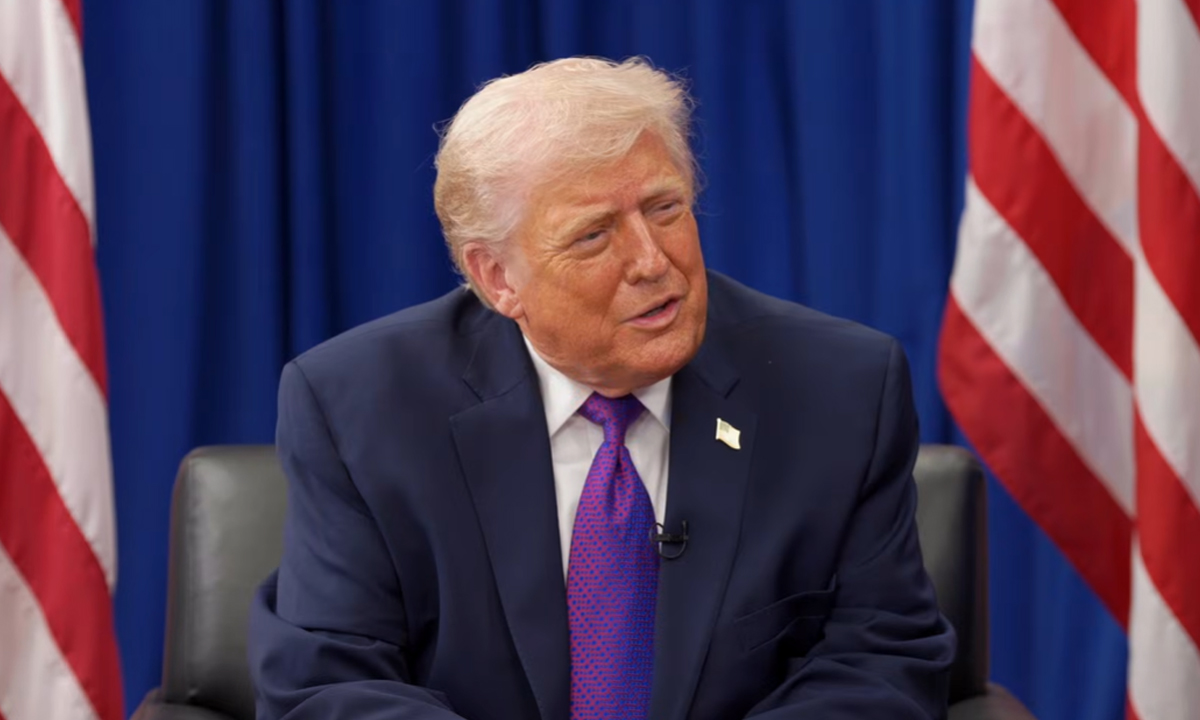
Donald Trump is under scrutiny following a recent public appearance where he appeared to confuse former adviser Kellyanne Conway with current press secretary Karoline Leavitt. This incident occurred during a Women’s History Month event in Washington, D.C., where Trump spoke alongside First Lady Melania Trump. The moment quickly ignited discussions on social media concerning Trump’s memory and mental fitness, despite the absence of any formal health updates from the White House.
During the event, Trump praised Conway, stating she was “out there fighting” and admired for her media engagements. Observers noted that his comments seemed to merge references to Conway, who served in his previous administration, with Leavitt, who currently holds the same role. The apparent mix-up led to a rapid spread of video clips online, prompting a renewed examination of Trump’s cognitive abilities, especially in a setting intended to convey authority and clarity.
Public Reaction and Media Scrutiny
The response to Trump’s verbal misstep was immediate and intense. Social media users characterized him as “not well,” questioning why his cognitive state was not scrutinized with the same fervor that Democratic President Joe Biden has faced in similar contexts. Critics pointed to this incident as indicative of what they perceive as a broader decline in Trump’s mental acuity.
One user noted, “It looks like Donald Trump was mixing Karoline Leavitt up with Kellyanne Conway… and everyone’s cheering, as if he’s not talking about someone who last worked for him six years ago.” The reaction illustrates how political optics can shift quickly, especially for a figure like Trump, who has often taken advantage of ridicule directed at his opponents.
Despite the wave of commentary, it is essential to approach the situation with caution. No medical assessments or official statements from the White House have accompanied this incident, which suggests that drawing definitive conclusions about Trump’s mental health may be premature. A single public gaffe does not constitute a diagnosis, regardless of the eagerness of some observers to interpret it as such.
Political Implications and the Nature of Public Discourse
In a broader context, Trump’s verbal slip highlights the harsh realities of political discourse in the digital age. The former president has long used ridicule as a weapon against his rivals, emphasizing aspects such as age and cognitive coherence to question their legitimacy. As a result, his own misstatements are frequently amplified and dissected by critics, creating a cycle where even minor errors are treated as significant failures.
The incident also underscores the nature of online commentary, where the term “mental health fears” has been prominently featured in headlines discussing the clip. Trump’s remarks during the event, while confusing, reflect the complexities of public speaking under scrutiny.
As political narratives continue to evolve, it remains to be seen how this moment will impact perceptions of Trump, particularly as he prepares for future engagements. Without further clarification from the White House or Trump himself, the safest interpretation remains that a president made a confusing statement during a public event, which was then rapidly capitalized upon in the current media landscape.