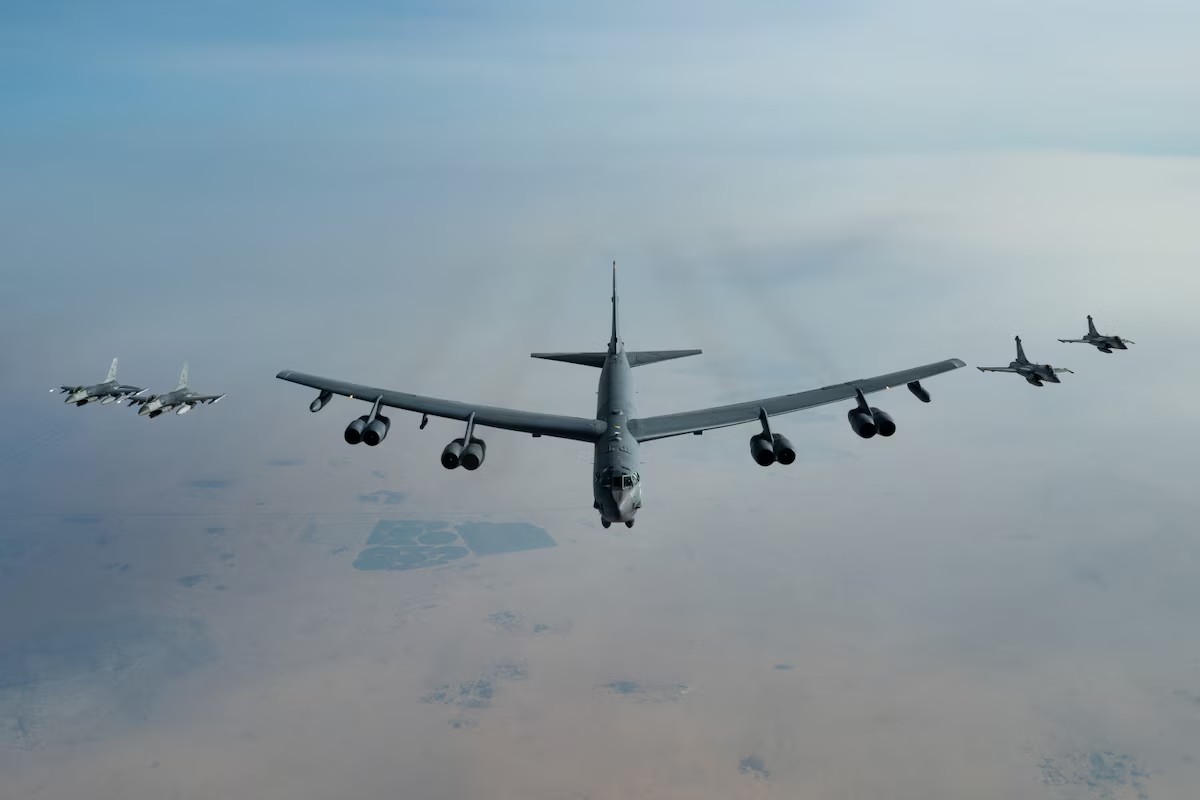
Rolls-Royce has successfully completed altitude and operability testing of its F130 engine, a significant step in the re-engineering program for the U.S. Air Force’s B-52J Stratofortress bomber fleet. This announcement was made by the company following tests conducted at the U.S. Air Force’s Arnold Engineering Development Complex in Tennessee, where engineers collaborated closely with Air Force personnel to assess engine performance under challenging mission conditions.
The comprehensive testing campaign involved altitude trials designed to validate the engine’s capabilities during sustained high-altitude operations. Additionally, the operability testing utilized distortion screens to simulate turbulent airflow, while Integrated Drive Generator testing with Boeing ensured stable electrical power generation during operational missions.
Jennifer Schwerin, Director of Early Life Cycle and Naval Programs at Rolls-Royce Defence, expressed pride in reaching this critical milestone. “We are proud to deliver another milestone for our F130 engine testing program, on-time and on-budget, for the Air Force,” she stated. She highlighted the collaborative efforts with Boeing and the Air Force, emphasizing the F130’s ability to meet mission requirements and bolstering confidence in its suitability for the B-52J.
In a statement, Lt. Col. Timothy Cleaver, U.S. Air Force programme manager for the B-52 Commercial Engine Replacement Program, noted the value of the data gathered during the tests. “Throughout this F130 engine test campaign, we gathered essential data about how this engine operates across the full spectrum of flight conditions,” he said. Cleaver also indicated that the tests at the Arnold facility provided assurance in the engine and its associated systems as the program advances to aircraft modification and flight testing.
This milestone follows the completion of the program’s Critical Design Review in late 2024, which paved the way for the construction of the first flight-test engines. Previous testing phases included sea-level trials in Indianapolis and “rapid twin-pod” tests at NASA’s Stennis Space Center, aimed at confirming the engine’s configuration for the B-52’s twin-engine pod arrangement.
The program is now set to progress into further system integration and additional dual-pod testing prior to the commencement of flight trials. The F130 engine, which is derived from the BR725 commercial engine family, aims to enhance reliability, streamline logistics, and reduce maintenance needs for the enduring B-52 fleet. Rolls-Royce plans to manufacture, assemble, and test these engines at its facility in Indianapolis once production officially begins.
This advancement represents not only a technical achievement but also a commitment to modernizing the U.S. Air Force’s legacy aircraft, ensuring they remain capable and effective in future operations.