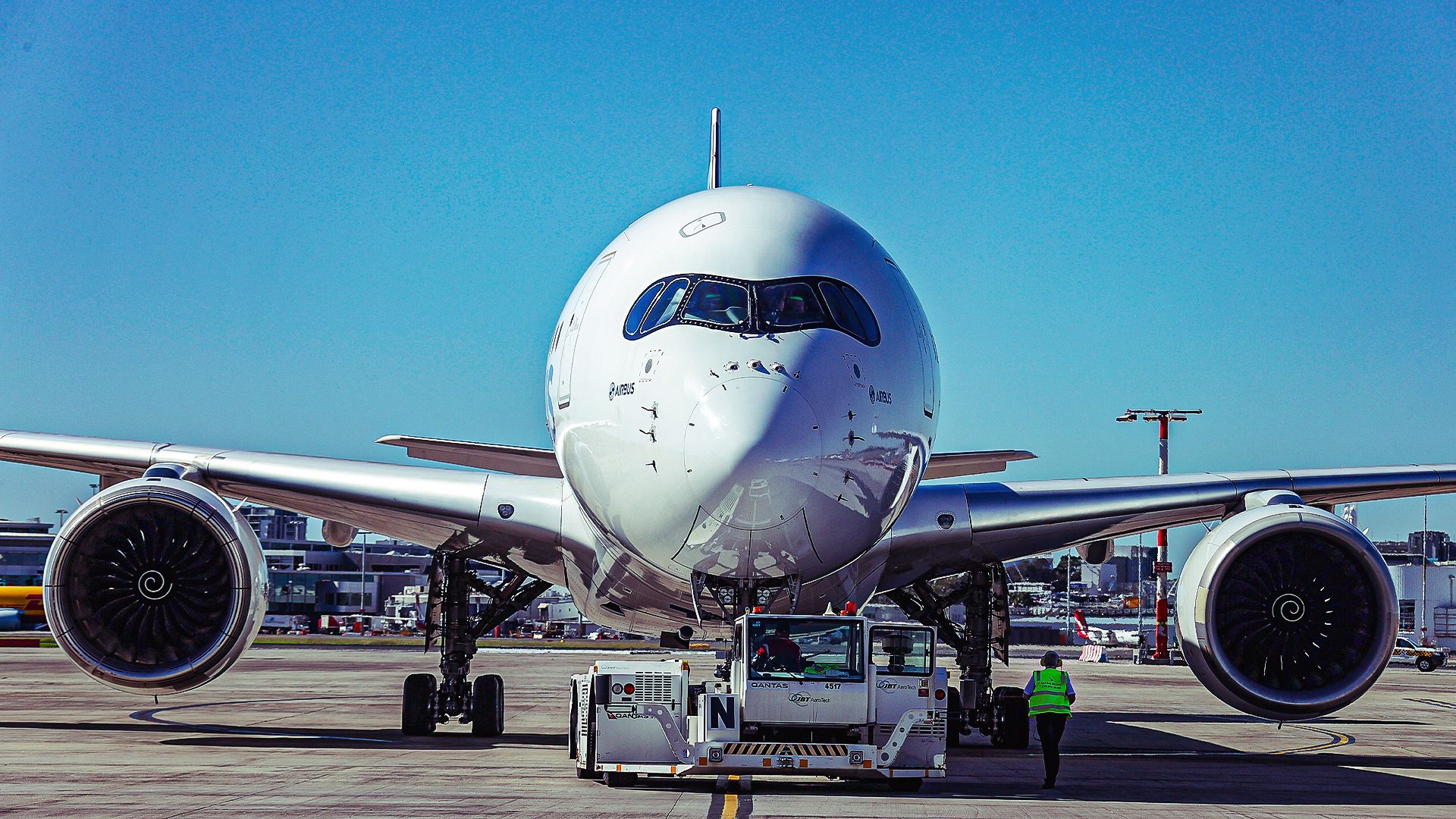
UPDATE: The Airbus A350-1000 is officially redefining long-haul aviation with its capacity and performance advantages over the A350-900. Just announced, this aircraft is set to elevate airline operations, allowing carriers to maximize both passenger comfort and cargo efficiency.
Modern aviation is witnessing a drastic shift towards **highly efficient twin-engine aircraft**, and at the forefront is the Airbus A350 program. With innovations in composite materials and cutting-edge engines, the A350 series has become a flagship for airlines globally, operating some of the longest nonstop routes available. The latest data reveals that while the A350-900 and A350-1000 share similar designs, the A350-1000 offers substantial benefits in size and passenger capacity.
The **A350-1000** stretches to roughly **242 feet (73.78 meters)**, a notable increase from the **A350-900**, which measures **219 feet, 2 inches (66.8 meters)**. This additional **23 feet** translates to enhanced cabin space, enabling airlines to increase passenger capacity significantly. According to Airbus, the A350-1000 can accommodate **up to 480 passengers**, compared to **440 seats** in the A350-900—an increase of **40 seats** that could mean more travelers on busy routes.
Airbus has confirmed that the maximum takeoff weight (MTOW) of the A350-1000 is approximately **679,000 lbs (308,000 kg)**, compared to the A350-900’s **617,000 lbs (280,000 kg)**. This increase in size necessitates different engines; the A350-1000 uses the more powerful **Rolls-Royce Trent XWB-97**, generating **97,000 pounds of thrust**, compared to the **87,000 pounds** from the A350-900’s engines.
Both models share an impressive **wingspan** of **212 feet, 5 inches (64.75 m)** and a **height** of **56 feet (17.08 m)**, allowing for operational flexibility at major airports. Airlines that operate both variants can utilize the same gate infrastructure, making fleet management easier and more cost-effective.
Passenger experience aboard both aircraft remains largely similar, featuring high cabin ceilings, advanced LED lighting, and the innovative **Airbus Airspace cabin concept** designed for comfort. However, airlines are now poised to leverage the A350-1000’s larger capacity, enhancing profitability on lucrative long-haul routes.
In terms of range, the A350-1000 claims a maximum reach of **9,000 nautical miles (16,670 km)**, making it a leader in long-haul capabilities. This far surpasses the A350-900’s **8,500 nautical miles (15,740 km)**, allowing airlines to connect major cities like New York to Auckland or Dubai to Buenos Aires seamlessly.
IMPORTANT UPDATE: Despite the A350-1000’s advantages, the A350-900 continues to dominate orders and deliveries, with over **1,081 units ordered** compared to the A350-1000’s **367**. As of late 2023, **591 A350-900s** have been delivered, while the A350-1000 surpassed **100 deliveries** this year, marking a significant recovery post-pandemic with **15 deliveries** in 2023 alone.
Looking ahead, the A350-1000 is expected to play a pivotal role in airlines’ future operations, particularly as carriers like **Qatar Airways**, which operates both variants, aim to maximize efficiencies on long-haul flights. Discussions are already underway regarding a potential **A350-2000** variant, which could further enhance capacity and compete with Boeing’s upcoming **777X**.
Airbus’s commitment to innovation and efficiency is evident in the A350 family, and the A350-1000’s entry into service marks a transformative moment for global aviation, promising improved travel experiences for millions of passengers worldwide.
As the aviation landscape evolves, the A350-1000 stands ready to meet the demands of tomorrow’s travelers—making it a key player in the ongoing revolution of long-haul air travel.