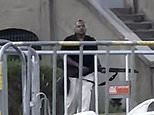
URGENT UPDATE: An ex-ASIO agent has made shocking allegations that **Sajid Akram**, the Bondi Beach terrorist who killed **15 people** in December 2022, openly supported the **Islamic State (IS)** as far back as **2019**. This revelation raises critical questions about the effectiveness of Australia’s counter-terrorism measures.
The former undercover agent, known by the codename **Marcus**, claims he shared intelligence with ASIO regarding the Akrams’ radicalization years before the devastating attack. Despite ASIO’s assurances that the duo was not a known threat, Marcus insists he provided evidence of their ties to IS sympathizers, highlighting a severe oversight by authorities.
In a stunning interview aired on **Four Corners**, Marcus revealed that he had infiltrated a radical cleric group where he witnessed **Naveed Akram**, Sajid’s son, being targeted by IS propaganda. He described how the group discussed plans for potential terrorist attacks in Sydney, including smuggling firearms from **Lebanon**.
BREAKING: The details of the Akrams’ radicalization are alarming. Marcus reported that Sajid justified his support for IS, stating, “it’s required from us as Muslims — to support the Islamic State.” He claimed that Sajid’s extremism surpassed that of his son, indicating a troubling family dynamic that went unnoticed by authorities.
Authorities confirmed that Sajid Akram was shot dead during the attack, while Naveed awaits trial on **59 charges** related to the incident. The shocking claims have prompted ASIO to face intense scrutiny, especially after they previously stated that they had no intelligence indicating the Akrams posed a threat.
Just hours before the Four Corners episode aired, ASIO issued a rare statement, referring to Marcus as a “single, unreliable and disgruntled source.” They asserted that the information provided was “significantly erroneous” and that they had no prior knowledge of the impending attack. ASIO’s Director-General, **Mike Burgess**, expressed regret over the incident but emphasized that additional resources might not have changed the outcome.
Marcus, now in hiding overseas due to death threats, firmly denies ASIO’s claims. “The allegation I am unreliable does not withstand scrutiny,” he stated, defending the integrity of his intelligence-gathering efforts.
This developing story underscores a critical gap in Australia’s counter-terrorism strategy, raising fears about the effectiveness of monitoring radicalization within communities.
As investigations continue, the public awaits further clarification on what measures will be implemented to prevent future tragedies. This incident serves as a grim reminder of the complexities surrounding domestic terrorism and the urgent need for comprehensive intelligence operations.
Stay tuned for more updates as this story unfolds.