
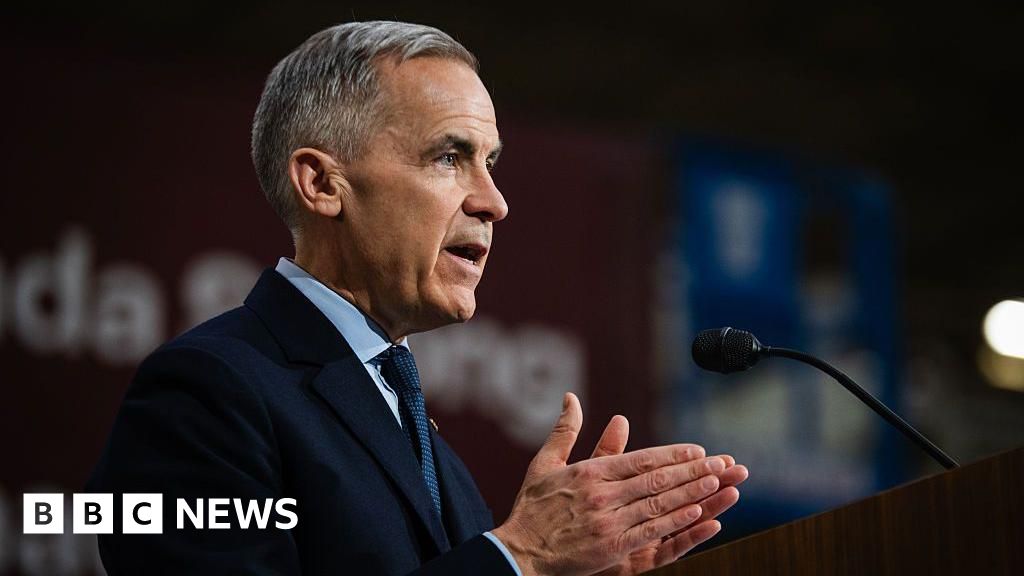
Prime Minister Mark Carney has introduced a comprehensive plan to strengthen Canada’s automotive industry and accelerate its transition to electric vehicles (EVs) as the sector grapples with the impact of tariffs imposed by the United States. The announcement, made on March 14, 2024, marks a pivotal moment as Canada seeks to reduce its dependence on U.S. markets, particularly following President Donald Trump‘s recent push for increased domestic car production.
The new strategy includes financial incentives for automotive manufacturers to invest in Canada and the reinstatement of rebates for EV purchases. Last year, the U.S. government imposed a 25% tariff on Canadian cars and auto parts, causing significant disruption to the industry, which exports approximately 90% of its vehicles to the U.S. Many American carmakers operate in Canada, benefiting from longstanding free trade agreements, but the current political climate has shifted the dynamics of these arrangements.
New Initiatives and Trade Agreements
During his visit to a car manufacturing plant in Toronto, Carney highlighted the need for Canada to adapt to changing circumstances in the U.S. trade landscape. “Their approach has changed,” he remarked, emphasizing the necessity of preparing for various scenarios. Canadian auto workers have felt the repercussions of U.S. policies, with thousands losing jobs as companies like General Motors and Stellantis have reduced their production in Canada.
Among the initiatives unveiled, Carney introduced a new tariff credit system aimed at supporting companies that produce vehicles in Canada. This move is designed to mitigate the financial burden of U.S. tariffs. As Canadian officials navigate the upheaval in their trading relationship with the U.S., they have also looked to strengthen ties with other nations. Recently, Canada entered into an agreement with China to ease tariffs on Chinese electric vehicles, as well as a partnership with South Korea to promote Korean automotive manufacturing in Canada.
These agreements have the potential to create competitive pressure on U.S. firms, particularly as they coincide with a broader strategy to enhance Canada’s position in the global auto market.
Changing Emissions Standards and EV Incentives
In a significant shift, Carney announced the reintroduction of EV buyer incentives, contrasting sharply with U.S. policy, where Trump eliminated a similar government subsidy last year. Canadian officials aim for EVs to account for 90% of all car sales by 2040. This ambitious goal will be supported by stronger emissions standards for new vehicles. However, Carney also decided to scrap an electric vehicle sales mandate that was previously instituted by former Prime Minister Justin Trudeau in 2023. This mandate faced criticism from automakers who argued it placed undue financial burdens on the industry.
Carney stated that focusing on emissions standards would prioritize the results that are most beneficial to Canadians while avoiding excessive constraints on the automotive sector. Some environmental advocates have expressed concern over this decision, viewing the abandonment of the sales mandate as a step back in Canada’s climate ambitions.
As the Canadian government implements these new strategies, the future of the automotive industry remains uncertain amid a rapidly changing economic landscape. The success of these initiatives will depend on the ability to balance domestic priorities with the realities of international trade dynamics.


