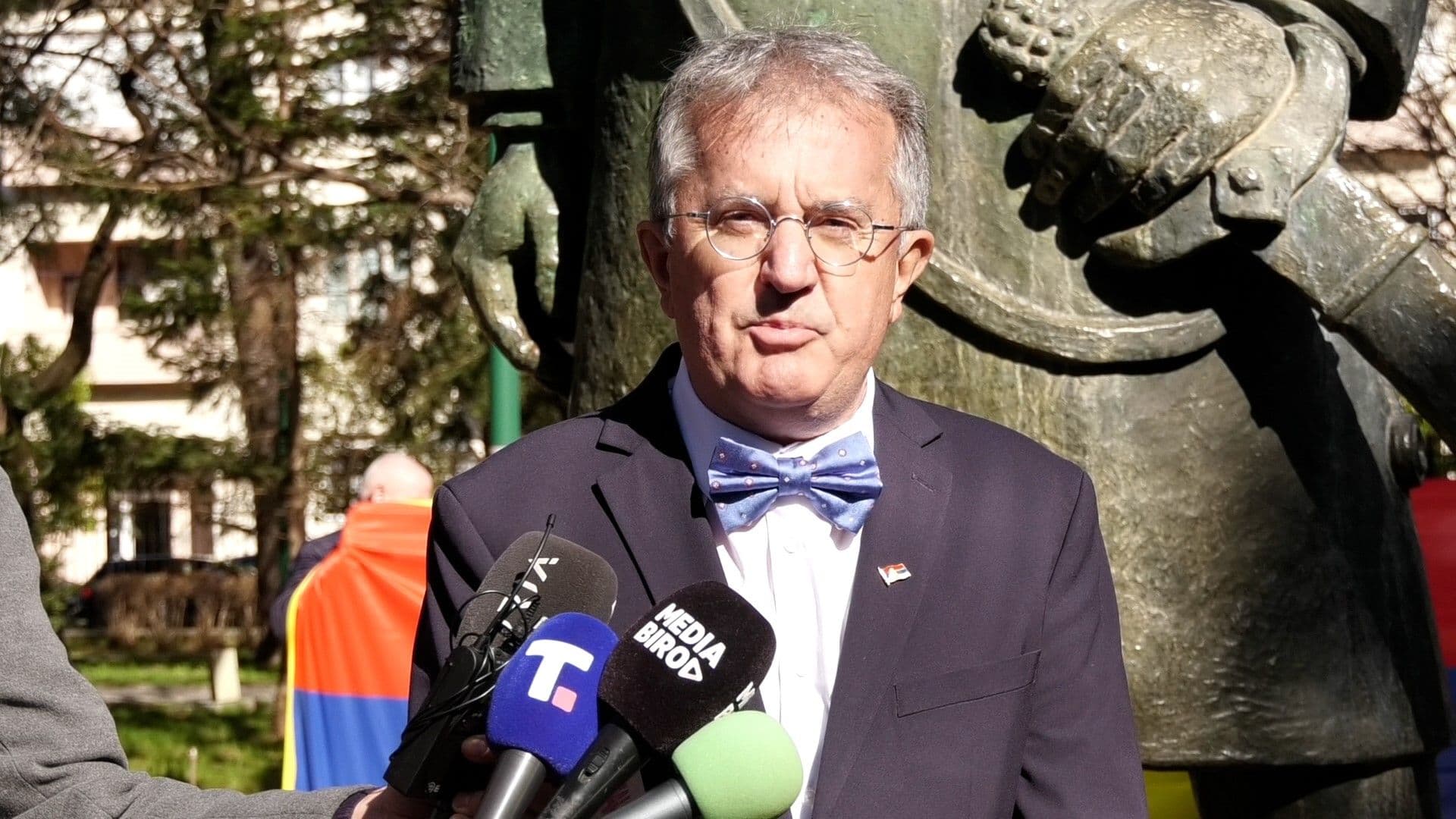
The Serbian Ambassador to Montenegro, Nebojsa Rodić, has been summoned for discussions at the Ministry of Foreign Affairs of Montenegro due to a statement made on the official social media account “Serbia in English.” This account, managed by the Office for Public and Cultural Diplomacy of the Government of Serbia, posted comments regarding Montenegro’s language policy, which have sparked diplomatic tensions.
The controversy arose from a post shared on January 28, 2026, which included a video featuring a meme with Homer Simpson. The post stated that Montenegro does not recognize the Serbian language, which is spoken by 43% of its citizens, asserting that it is “the majority language according to the latest census.” It further questioned, “Respecting the majority language rights is also an EU value. Isn’t it?”
Montenegro’s reaction to this post has been one of disapproval, interpreting it as an inappropriate interference in its internal affairs. This sentiment is magnified by the fact that the statement originated from an official communication channel of the Serbian government. The Ministry of Foreign Affairs of Montenegro has expressed concern that such remarks could undermine diplomatic relations between the two countries.
Ambassador Rodić has previously refrained from publicly commenting on Montenegro’s internal political and institutional matters. As such, during his upcoming meeting with Montenegrin officials, it is anticipated that he will be asked to clarify the position conveyed through the Serbian government’s social media.
At this point, neither the Ministry of Foreign Affairs of Montenegro nor the Serbian Embassy in Podgorica has issued any official statements regarding the situation. The diplomatic exchange highlights the sensitivity surrounding language and identity issues in the region, particularly given the historical context between Serbia and Montenegro.
This incident follows Montenegro’s recent developments in its European Union accession process, with the closure of 13 chapters in negotiations, a move that may be influencing the current diplomatic tensions. As the situation evolves, both governments will likely continue to navigate the complexities of their relationship, particularly in light of public sentiments regarding language rights and national identity.