A recent ranking of long-duration energy storage (LDES) suppliers has positioned Tesla as the leading company in the lithium-ion sector, while Energy Dome has claimed the top spot among non-lithium firms. The LDES Leaderboard, compiled by research and consultancy firm Sightline Climate, assesses suppliers based on technology, financial health, deployment capabilities, and economic viability.
According to research associate Lukas Karapin-Springorum, the leaderboard serves as an important tool for identifying which companies are succeeding in securing LDES contracts. He noted that it provides insights into the competitive landscape without being a direct assessment of bankability. LDES is defined as storage solutions with a duration of eight hours or more, allowing lithium-ion companies to qualify if they have deployed projects meeting that threshold.
Top Rankings and Notable Non-Lithium Firms
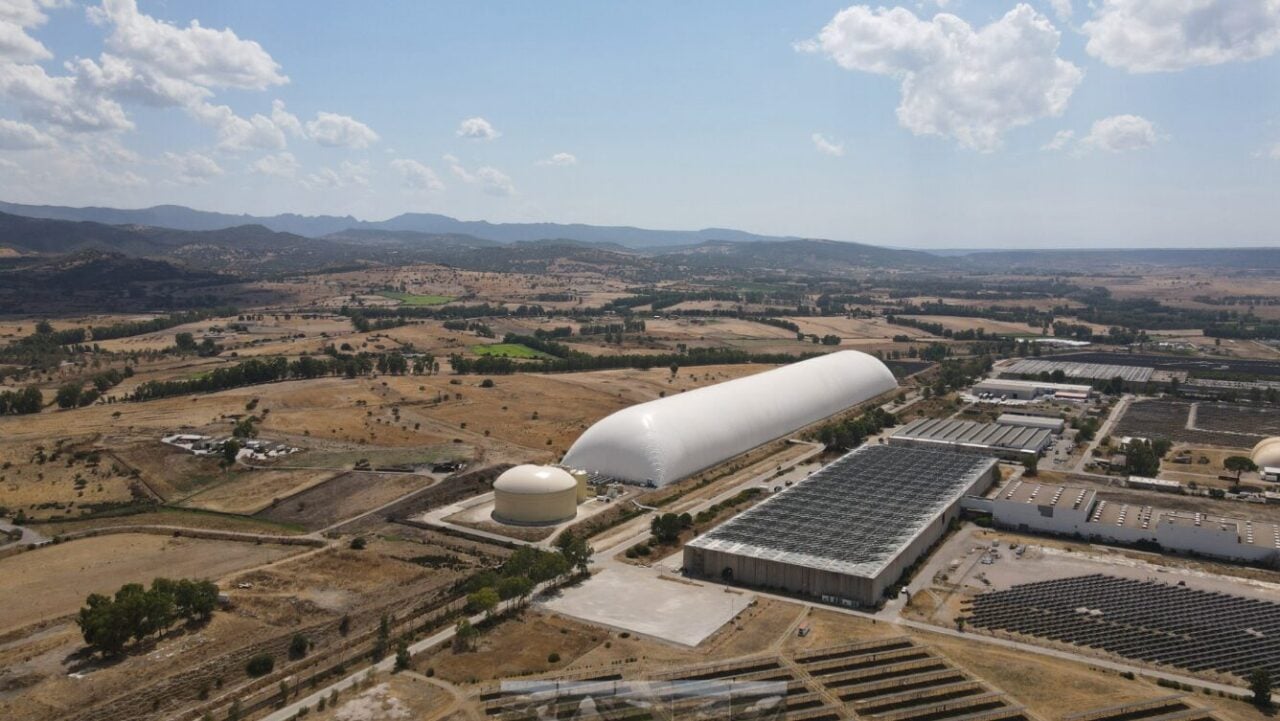
In Sightline’s latest assessment, Tesla and Chint Power occupy the first and second positions, respectively. Among non-lithium competitors, the top five include Energy Dome, liquid air storage firm Highview Power, advanced compressed air energy storage (A-CAES) company Hydrostor, iron hybrid flow battery firm ESS Tech Inc, and geothermal energy company Sage Geosystems. These firms rank third to seventh overall, showcasing a solid performance against lithium-ion competitors.
Karapin-Springorum highlighted Energy Dome’s achievements, particularly its two commercial projects that have reached final investment decision (FID) stages. He pointed out that Energy Dome’s technology boasts a higher round-trip efficiency compared to other mechanical storage options, aided by competitive capital expenditure (capex) due to lower regional costs associated with its pioneering project in India.
Highview Power has also made significant strides, advancing to large-scale, post-FID projects bolstered by strong financing from project finance initiatives. Karapin-Springorum noted that mechanical storage technologies benefit from the ability to utilize off-the-shelf components, allowing them to achieve capex levels comparable to lithium-ion solutions. This advantage is particularly notable for first-of-a-kind projects that have yet to realize the economies of scale or learning benefits from deployment.
Market Dynamics and Future Prospects
Despite lower fundraising and fewer pipeline projects, mechanical storage companies have performed well in the rankings. Conversely, firms like Enervenue, Form Energy, and Invinity Energy Systems have found themselves outside the top seven due to limited deployments and relatively high capex. The inclusion of ESS Tech Inc among the top non-lithium firms may come as a surprise, but Karapin-Springorum attributed its success to historical financing and a moderate deployment score from utility pilot projects in the United States.
Looking ahead, up to 9.3 GW of LDES tender awards could be announced in the first half of 2026, spanning regions such as the UK, New South Wales in Australia, and Ontario, Canada. Karapin-Springorum emphasized that vendors with successful projects will have a clear path towards FID by late 2026 or early 2027. This could enable them to gain a competitive advantage in the leaderboard as construction progresses.
The outcomes of these tenders will reveal whether any non-lithium technologies can effectively compete with the established dominance of eight-hour duration lithium-ion batteries. Currently, the majority of projects benefiting from pre-2026 LDES policies in New South Wales and California are based on long-duration lithium-ion batteries, which represent 77% of the global capacity projected for operational status by 2030.
In the event that non-lithium technologies do not secure significant contracts in 2026, their best strategy may involve focusing on programs in California and Ontario that specifically exclude long-duration lithium-ion solutions. With various gigawatt-scale projects currently undergoing assessments, the next few years will be pivotal for the evolution of the energy storage market.