New research from Curtin University provides compelling evidence that humans, rather than glaciers, transported the iconic bluestones to Stonehenge. This study addresses a long-standing debate regarding the origins of the Altar Stone and other rocks at the prehistoric site located on Salisbury Plain in southern England.
Using advanced mineral “fingerprinting” techniques, researchers examined microscopic grains found in rivers near Stonehenge. These grains serve as geological time capsules, offering insights into how sediments have moved across Britain over millions of years. The team, equipped with state-of-the-art technology at Curtin’s John de Laeter Centre, analyzed over 500 zircon crystals, one of the most resilient minerals on Earth.
The findings align with previous research conducted in 2024, which established that the six-tonne Altar Stone originated from Scotland. This supports the theory that Neolithic builders deliberately sourced and transported the stones across significant distances.
Challenging Long-Standing Theories
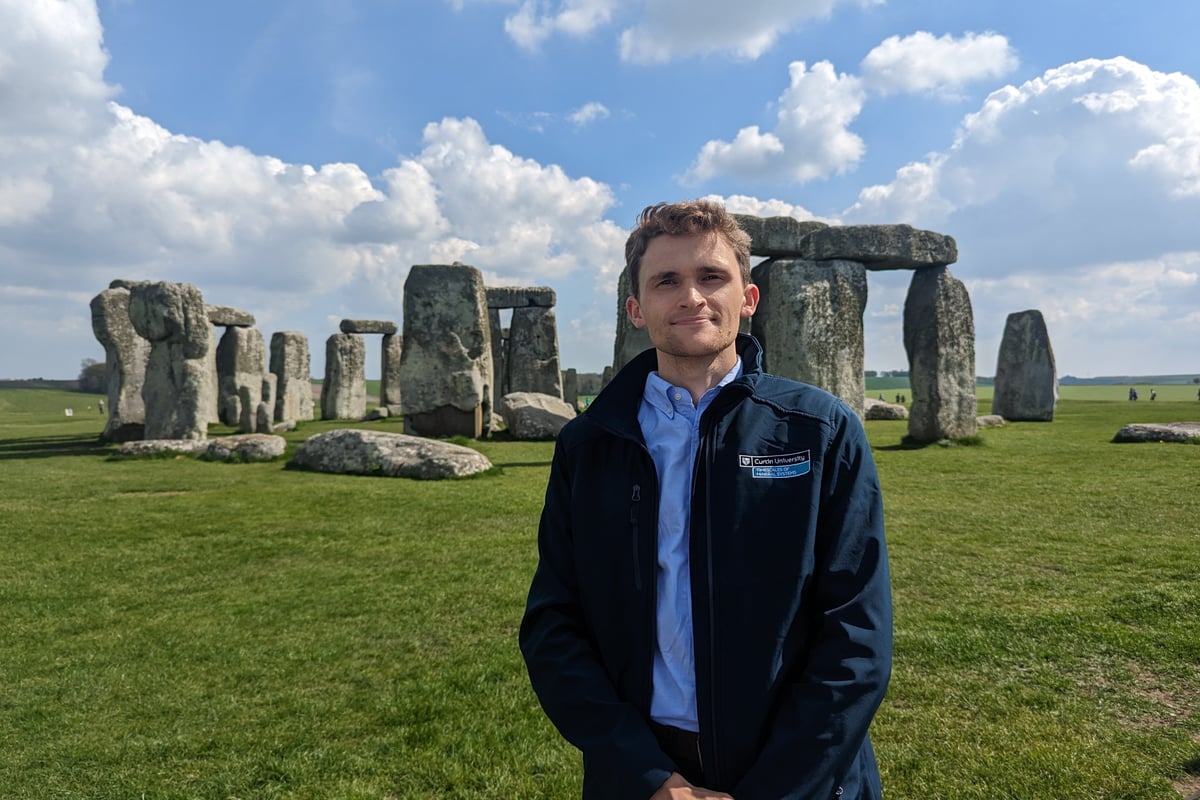
Lead author Dr. Anthony Clarke, from the Timescales of Mineral Systems Group at Curtin University, pointed out that the research revealed no evidence of glacial transport to the Stonehenge site. “If glaciers had carried rocks from Scotland or Wales to Stonehenge, they would have left a distinct mineral signature on Salisbury Plain,” Dr. Clarke explained. “We searched river sands for traces of those grains but found none. This strongly suggests that humans moved the stones.”
The question of how these ancient peoples might have transported the stones remains unanswered. Dr. Clarke speculated, “Some suggest the stones could have been sailed down from Scotland or Wales, while others propose they were moved over land using rolling logs. Ultimately, we may never know.”
Study co-author Professor Chris Kirkland echoed Dr. Clarke’s sentiments, emphasizing the significance of modern geochemical tools in resolving historical inquiries. “Stonehenge continues to surprise us,” Professor Kirkland remarked. “By analyzing minerals smaller than a grain of sand, we have tested theories that have persisted for over a century.”
A Broader Perspective on Stonehenge
The research adds an important dimension to understanding the purpose of Stonehenge. “It likely served multiple functions, such as a calendar, an ancient temple, or a feasting site,” Professor Kirkland noted. He stressed that answering these questions requires a diverse array of data, and this study contributes significantly to the overarching narrative.
The paper titled “Detrital zircon–apatite fingerprinting challenges glacial transport of Stonehenge’s megaliths” was published in the journal Communications Earth and Environment. The findings not only challenge existing theories but also pave the way for future research into the mysteries surrounding this monumental site.