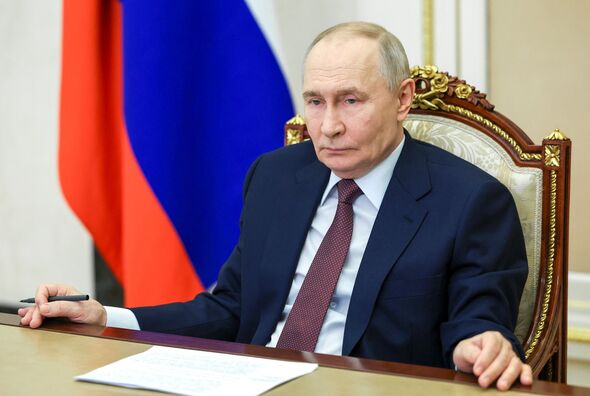
As Russia grapples with significant economic challenges, President Vladimir Putin has mandated a substantial increase in tax collection as part of efforts to bolster the country’s wartime economy. This announcement came during a meeting of the Council for Strategic Development and National Projects in early December, highlighting the Kremlin’s response to a stagnating economy that has seen growth slow to a near halt.
Starting January 1, the Value Added Tax (VAT) has risen from 20% to 22%. This adjustment is anticipated to generate approximately 1 trillion rubles (around £9.1 billion) in additional tax revenues. The increased revenue is expected to support heightened military expenditure and address ongoing budget shortfalls. Notably, the government will maintain a reduced VAT rate of 10% on essential goods such as food and medicine to alleviate the burden on consumers.
This tax increase is part of a broader tax overhaul aimed at revising revenue thresholds for simplified tax regimes. Such changes are designed to shift more of the tax burden onto businesses and consumers, thereby covering additional war-related costs. Furthermore, the Russian government plans to introduce a new tax on electronics in September, targeting imported finished goods like smartphones and laptops. The revenue generated from this tax is expected to enhance domestic electronics manufacturing and promote technological independence.
Russia’s economic growth has significantly decelerated, which has prompted these tax reforms. The country initially appeared to withstand Western sanctions through robust state spending, but that momentum has since dwindled. In the third quarter of 2025, Russia’s GDP growth slowed to only 0.6%, a substantial decline from 1.4% at the beginning of the year. By November 2025, the year-over-year expansion had dropped to just 0.1%. Additionally, industrial output decreased by 0.7%, suggesting that military manufacturing is no longer sufficient to offset broader economic pressures.
Energy exports remain crucial for Russia’s financial stability, yet this vital revenue source is facing mounting challenges. Oil prices experienced a significant drop of roughly 20% in 2025, driven by high global supply coupled with declining demand. The government is also contending with persistent inflation, which reached 9.5% in 2024. Officials are working to reduce this rate to a target range of 4–5% by the end of 2026.
Public sentiment reflects growing concern over the country’s economic prospects. According to Business Insider, many Russians anticipate that the ongoing conflict will conclude in 2026, largely due to the evident economic slowdown and the increasing strain on household finances. In addition, the United States’ initiatives to revitalize oil production in Venezuela pose a potential threat to Russian oil exports, which could further depress global prices and diminish Russia’s economic leverage.
As Russia navigates these turbulent times, the government’s tax strategies will play a critical role in shaping the nation’s financial landscape moving forward.