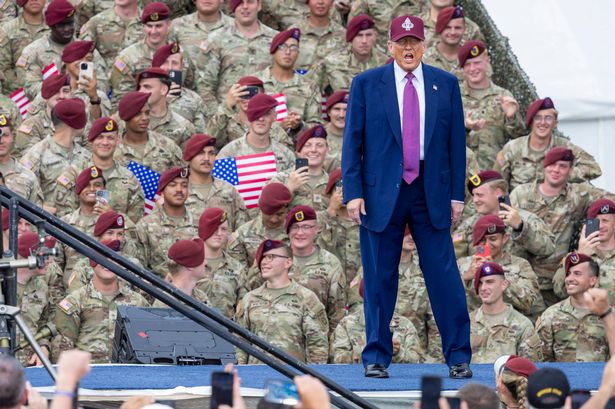
Donald Trump’s ambitions regarding Greenland have sparked significant backlash, with the island’s political leaders firmly stating their desire to remain a part of Denmark and not the United States. This comes as a potential challenge looms for Trump, as a 75-year-old law may allow military leaders to disobey unlawful orders regarding the territory.
Following Trump’s recent actions against Venezuelan President Nicolas Maduro, tensions have escalated concerning Greenland, which is a sovereign territory of NATO ally Denmark. According to the 1951 Uniform Code of Military Justice, U.S. military personnel are permitted to reject orders deemed illegal. This legal provision introduces a complex dynamic should Trump attempt to annex Greenland, suggesting that his generals could choose to resign rather than comply with such directives.
Potential Consequences of Military Disobedience
The revelation of this law arrives just ahead of Trump’s anticipated appearance at the World Economic Forum in Davos, Switzerland, where he is expected to address global leaders as U.S. aircraft head toward Greenland. Speculation regarding Trump’s intentions has intensified, leading to questions about whether he may resort to military action or continue his strategy of imposing sanctions on nations resistant to his plans.
So far, nations affected by Trump’s sanctions include the United Kingdom, Denmark, Norway, Sweden, France, Germany, the Netherlands, and Finland. The newly announced tariffs will commence at 10 percent on all U.S. imports and may escalate to 25 percent in June if the United States does not secure control over Greenland.
When questioned by reporters about his threats regarding Greenland, Trump assured that he would follow through, suggesting that Europe should redirect its focus towards the ongoing conflict with Russia and Ukraine. He stated: “I will, 100 percent… Europe ought to focus on the war with Russia and Ukraine because, frankly, you see what that’s gotten them.”
Greenland’s Response
In response to Trump’s remarks, Greenland’s political leaders are expressing mounting concern over their future amid these developments. Last week, representatives from five political parties in Greenland issued a joint statement, emphasizing that residents do not wish to become Americans. They proclaimed, “We don’t want to be Americans, we don’t want to be Danish, we want to be Greenlanders. The future of Greenland must be decided by Greenlanders. No other country can meddle in this.”
This strong assertion reflects a clear desire for self-determination, underscoring that the future of the island should be shaped without external pressures. Despite this, Trump seemed unfazed when asked about his intentions for Greenland just before departing for Davos, cryptically responding, “You’ll find out.”
As discussions continue and tensions rise, the implications of Trump’s ambitions for Greenland remain uncertain, raising critical questions about legality, sovereignty, and international relations. The next few months could prove pivotal in determining the fate of the Arctic territory and its relationship with the United States.