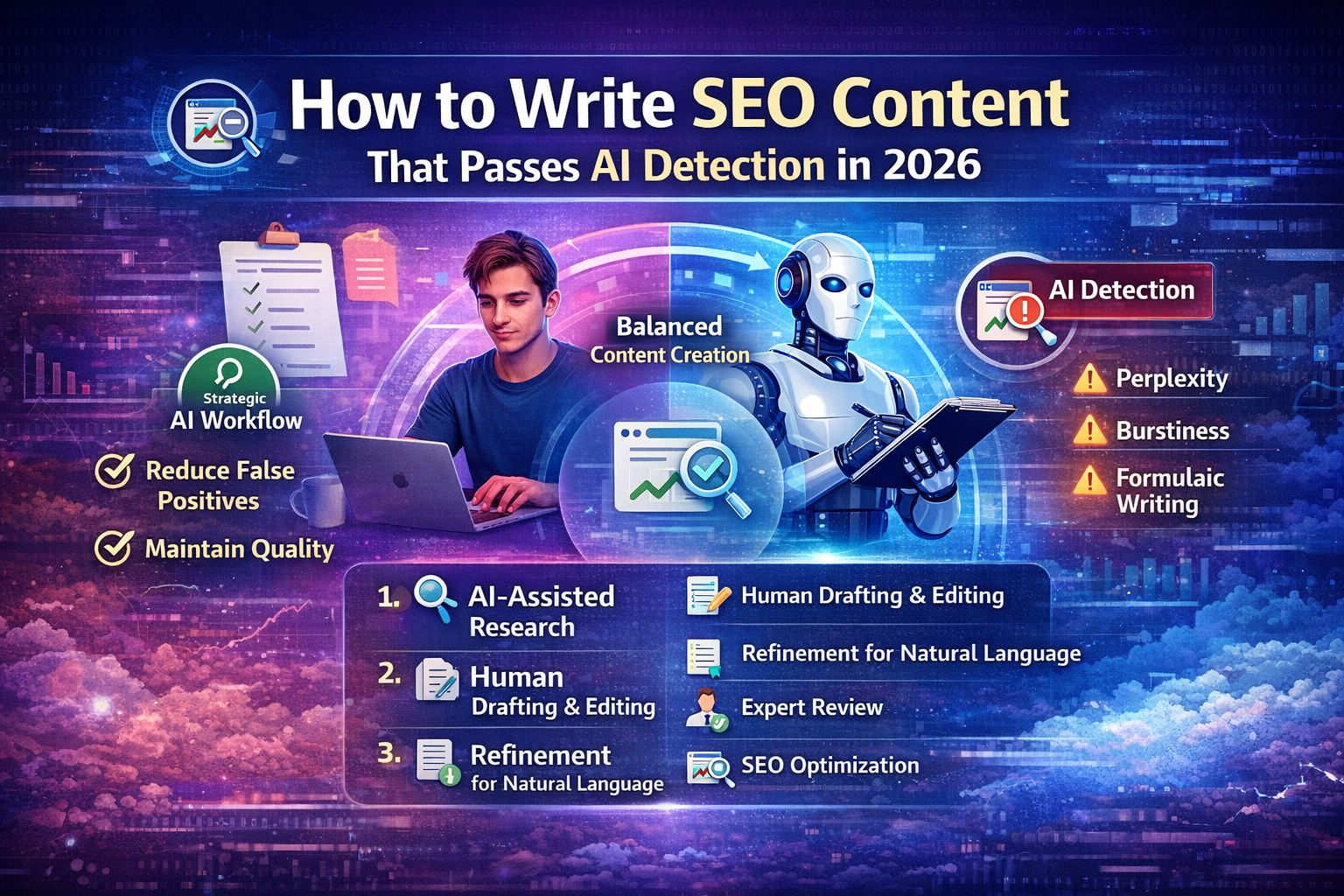
The landscape of content marketing has undergone significant changes as businesses navigate the complexities introduced by AI detection systems. In 2025, search engines and content publishers began implementing these systems, creating challenges for organizations that rely on AI-generated blog posts and marketing copy. As a result, many businesses now face the risk of their content being flagged or outright rejected. In 2026, successful marketers are harnessing AI tools strategically to enhance their content while ensuring it meets quality standards and minimizes false positives.
Understanding the importance of AI detection for businesses is crucial. Google’s approach has evolved, particularly following its March 2024 helpful content update, which emphasizes evaluating content quality based on Experience, Expertise, Authoritativeness, and Trustworthiness (E-E-A-T). This shift indicates that Google is not outright penalizing AI-generated content but is instead focusing on the overall quality of submissions. Despite this, many publishers are increasingly adopting AI detection tools, leading to a notable percentage of submissions being rejected when flagged for high AI probability.
There are several implications when content is flagged by AI detection systems. First, search performance can suffer, as content deemed low-quality may rank poorly. Additionally, guest posts and contributed articles risk rejection if editors identify AI authorship, which can damage relationships with publishers. Clients may also question the authenticity of content generated through AI detection tools, further impacting brand perception. Finally, businesses that fail to adapt risk falling behind competitors who utilize more effective workflows.
Understanding AI Detection Systems
To create content that minimizes false positives, it is essential to understand how AI detection systems operate. Tools such as GPTZero, Originality.ai, and Copyleaks analyze various linguistic patterns to identify AI-generated text. Key factors include:
– **Perplexity**: This measures the predictability of the text. AI content often follows predictable patterns as language models select statistically likely sequences.
– **Burstiness**: Human writers typically vary sentence length, creating a mix of short and long sentences, whereas AI tends to produce more uniform sentence structures.
– **N-gram Analysis**: Detection systems examine word sequences, with AI models favoring specific combinations that frequently appear in training data.
– **Structural Patterns**: AI-generated content often adheres to formulaic organization, which can signal automation to detection systems.
It is important to note that AI detectors are not infallible. A study from Stanford University highlighted that these tools disproportionately flag the writing of non-native English speakers, resulting in significant false positive rates. This issue particularly affects non-native writers whose formal writing may inadvertently mimic AI patterns, those using grammar tools extensively, and technical content that requires specific terminology.
Implementing a Strategic AI Content Workflow
Creating effective content necessitates a balance between efficiency and authenticity. Leading businesses have established workflows to optimize their content creation process. AI tools can be invaluable for research and brainstorming. They can assist with:
– Keyword research and analysis of search intent.
– Identifying content gaps by analyzing competitor articles.
– Topic clustering and planning.
– Generating outlines and compiling initial research.
For instance, a marketer might instruct an AI tool to “analyze top-ranking articles for [keyword] and identify themes, angles, and gaps that our article should address.” However, it is critical to use AI as an assistant rather than as the primary author. Effective utilization includes generating introduction options, expanding bullet points into detailed paragraphs for heavy editing, suggesting transitions, and providing alternative phrasings when writers feel stuck.
Avoiding complete AI-written sections without revision is essential. Accepting first drafts as final products or using AI-generated paragraphs unchanged can lead to predictable patterns that detection systems easily identify. The ultimate aim is to enhance human writing with AI assistance, ensuring that the content retains its authenticity and quality.
To further refine AI-generated content, businesses can implement humanization technology. Such tools analyze drafts for typical AI markers and modify them to align with authentic writing characteristics. This process becomes especially valuable when significant AI assistance is used during research or when content must pass publisher screenings.
Adding a human touch through original data, industry-specific examples, and personal insights enhances the content’s value and aligns with E-E-A-T guidelines, which emphasize the importance of expertise that AI cannot replicate.
Final refinements before publishing should include an SEO checklist that ensures the target keyword appears in the title, H1, opening, and conclusion, along with naturally distributed LSI keywords, descriptive subheadings, internal links, external links, and optimized meta descriptions. Care must be taken to avoid over-optimization, as forced keyword usage can negatively impact readability.
In addition to these foundational strategies, businesses can adopt advanced techniques to enhance their content’s performance while maintaining efficiency. Alternate approaches might include writing the introduction and conclusion personally while relying on AI for the middle sections, ensuring that substantial editing occurs for AI-generated parts, and integrating personal examples throughout the text.
Monitoring success goes beyond merely reducing detection scores. Businesses should measure search rankings, analyze engagement metrics, assess conversion performance, and track backlink acquisition to ensure that content not only passes detection but also achieves meaningful results.
Establishing monthly content audits that utilize detection tools can help organizations compare scores with actual performance, identify trends, and refine workflows accordingly. This ongoing process of evaluation and adaptation is crucial for maintaining a competitive edge in the evolving landscape of digital content.
Building team capabilities is essential for the successful implementation of an AI-assisted content workflow. Teams should be trained in understanding detection mechanics, effective prompt engineering, critical editing skills, and SEO fundamentals. Documenting standard operating procedures (SOPs) that outline the content workflow and quality checklists for each stage can significantly enhance overall efficiency.
As technology continues to advance, understanding emerging trends will enable businesses to future-proof their content strategies. Notable developments in detection technology include watermarking, behavioral analysis, and semantic fingerprinting. These advancements will reinforce the necessity for genuine human involvement in the content creation process.
In conclusion, the path to successful content strategies in 2026 lies in recognizing AI tools as powerful assistants that amplify human creativity and expertise. The focus should remain on delivering authentic, valuable content that meets reader needs. By implementing the outlined workflow systematically, businesses can achieve lower detection scores while enhancing rankings, engagement, and overall performance. The ultimate goal is to create content that resonates with audiences and drives meaningful business outcomes.