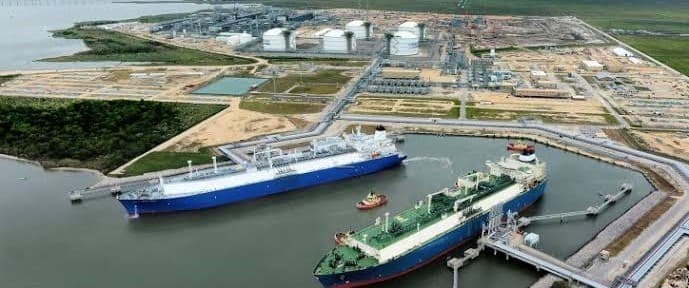
The liquefied natural gas (LNG) market is facing significant challenges in 2026, following a record year in 2025. After experiencing a surge in trade, concerns are rising over geopolitical tensions that threaten to disrupt energy supply chains. A major dispute has emerged between the European Union and the United States, jeopardizing a substantial energy trade agreement and raising questions about future LNG demand.
The European Union recently suspended a significant trade deal with the Trump administration, which had aimed to facilitate the purchase of $750 billion worth of U.S. energy commodities over three years. This decision comes in the wake of President Trump’s announcement of a 10% tariff on eight countries, including Denmark, Norway, and the United Kingdom, as part of a contentious claim over Greenland. In response, these countries sent military personnel to the island, reinforcing their commitment to its security.
While the EU’s trade deal with the U.S. was never fully realistic, especially given the EU’s inability to absorb the vast quantities of LNG involved, it did reflect an increased demand for U.S. LNG. In 2025, European nations heightened their imports by an impressive 60%, contributing to a remarkable 25% increase in global LNG sales. Despite this growth, analysts express caution, noting that weak industrial activity and slow economic growth in Europe could dampen future LNG demand.
Asia Maintains Robust LNG Market
In contrast, Asia continues to dominate the global LNG market, accounting for 64% of all exported LNG last year. However, a 5% decline in LNG exports to Asia in 2025, particularly a 15% drop in China, has raised concerns. This decline can be attributed to increased domestic natural gas production and rising pipeline imports from Russia.
Looking ahead, Kpler forecasts that global LNG capacity could expand by 37 million tons annually in 2026, following an addition of 51 million tons the previous year. Such expansions could exert downward pressure on prices, which may stimulate demand from Asian buyers, particularly in China. Kpler estimates that Chinese LNG import demand could rise to 73 million tons in 2026, up from 68.43 million tons in 2025.
Europe, on the other hand, imported over 100 million tons of LNG in 2025. Kpler predicts that this figure could increase to approximately 145 million tons in 2026, although geopolitical uncertainties may complicate this outlook. A deterioration in U.S.-EU relations could lead to lower LNG prices, adversely affecting producers while potentially accelerating demand recovery in Asia.
Challenges in the Global LNG Landscape
In addition to geopolitical challenges, the global LNG market faces other obstacles. Japan’s renewed commitment to nuclear energy is expected to influence its LNG import patterns, while China’s push to enhance domestic natural gas production is set to reshape its energy landscape. Kpler projects that China’s total gas production could reach 278.5 billion cubic meters in 2026, up from 263 billion cubic meters in 2025, primarily driven by increased shale gas production.
India, another significant player in the LNG market, saw a decline in imports last year, underscoring the price sensitivity of many large buyers. As the geopolitical landscape evolves and energy security remains a priority, the LNG market is likely to experience ongoing fluctuations.
The coming months will be crucial in determining whether 2026 will stabilize the LNG market or lead to further disruptions. The interplay of demand, geopolitical relations, and domestic production strategies will shape the future of this vital energy sector.