World leaders have adopted increasingly theatrical methods to engage former President Donald Trump during diplomatic meetings in 2025. From affectionate nicknames to symbolic gifts, these encounters reveal a unique blend of diplomacy and personal flattery aimed at winning Trump’s favor.
During a NATO pre-summit press briefing in The Hague, Trump likened the ongoing tensions between Iran and Israel to “like children in a schoolyard.” Following this analogy, NATO Secretary-General Mark Rutte referred to Trump as “Daddy,” asserting, “Daddy has to sometimes use strong language.” Trump appeared to take the comment in stride, responding, “I think he likes me… If he doesn’t I’ll let you know. I’ll come back and hit him hard, OK?” The White House’s social media team capitalized on the moment, sharing a clip of the exchange set to Usher’s song “Hey Daddy,” which quickly went viral.
Rutte’s praise extended beyond playful nicknames. Discussing the Russia-Ukraine conflict, he emphasized Trump’s pivotal role in initiating dialogue with President Putin, describing him as “the most powerful leader in the world.” This sentiment reflects a broader trend among world leaders who have sought to flatter Trump to maintain good relations.
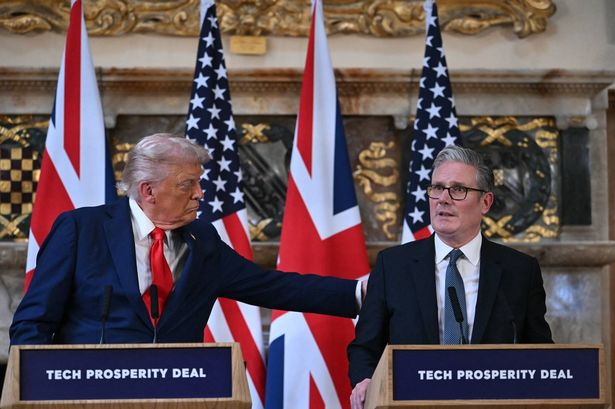
In February 2025, UK Prime Minister Sir Keir Starmer made headlines by personally delivering a rare second state visit invitation from King Charles III to Trump. Starmer characterized the invitation as “really special” and “unprecedented,” signifying the strength of the UK-US relationship. Trump, initially taken aback, responded, “Your country is a fantastic country, and it will be our honour to be there, thank you.”
Italy’s Prime Minister Giorgia Meloni echoed similar sentiments during her visit to the United States. She proclaimed, “Together we have been defending the freedom of Ukraine. Together we can build a just and lasting peace. We support your efforts, Donald.” Meloni even adapted Trump’s campaign slogan for her own agenda, stating, “The goal for me is to Make the West Great Again. I think we can do it together.”
In a surprising gesture, Venezuelan opposition leader and Nobel Peace Prize laureate María Corina Machado presented Trump with her Nobel medal during a White House meeting. Trump shared his appreciation on social media, calling it a “wonderful gesture of mutual respect.”
While many interactions have been characterized by flattery, not all have been devoid of critique. In May 2025, Canadian Prime Minister Mark Carney labeled Trump a “transformational president” who supports American workers. Yet, he was also firm in declaring that Canada is “not for sale, won’t be for sale ever,” highlighting the complexities of international diplomacy.
Trump’s remarks about global leaders frequently touch on their appearances. Ukrainian President Volodymyr Zelenskyy, who faced scrutiny for his military attire at previous meetings, received Trump’s praise last August for his formal black suit. Trump remarked, “I love it,” to which Zelenskyy replied, “It’s the best I have.” Similarly, he complimented Finnish President Alexander Stubb on his appearance, saying, “You look better than I have ever seen you look.”
Commenting on these diplomatic exchanges, Ivo Daalder, a senior fellow at Harvard’s Belfer Center and former US ambassador to NATO, suggested that flattery is a strategy to secure Trump’s approval. He noted, “Flattery and saying he is the best… is meant to first and foremost keep him on side,” indicating that leaders may believe such personal appeals are essential for effective diplomacy.
As 2025 progresses, the theatrical nature of international diplomacy surrounding Trump continues to evolve, showcasing a blend of respect, admiration, and strategic engagement that is both unique and revealing of contemporary political dynamics.