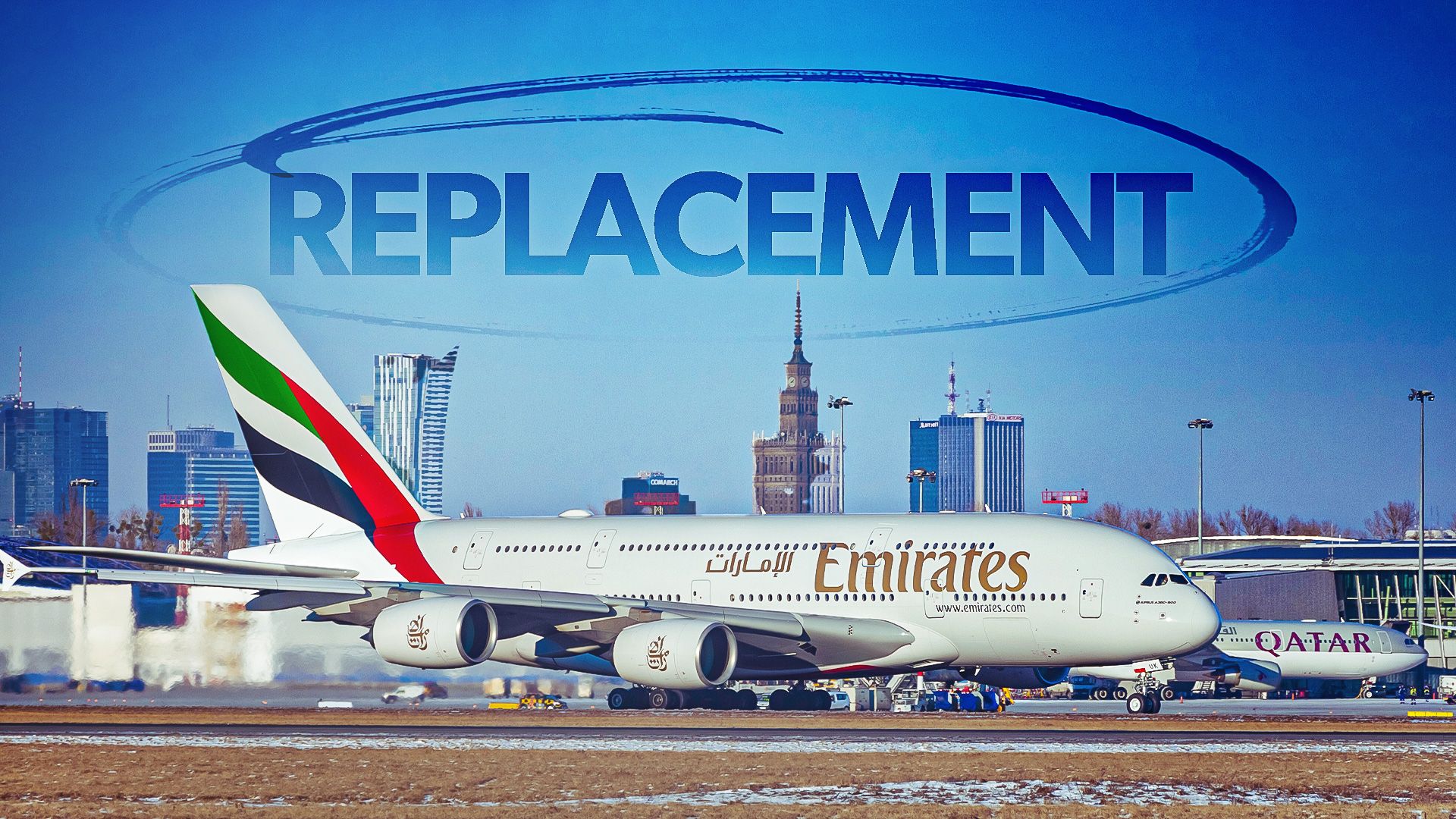
URGENT UPDATE: The future of long-haul air travel is being redefined as the Airbus A380, once the world’s largest quadjet, gradually exits service. As airlines seek alternatives, a combination of newer, more efficient aircraft is set to fill the void left by the iconic superjumbo.
The Airbus A380 redefined air travel when it launched in 2000, becoming a revolutionary double-decker aircraft capable of carrying over 800 passengers in an all-economy layout. However, with production ending in 2021, the question arises: what will take its place? The answer lies in a strategic shift towards efficiency and versatility, primarily represented by the Airbus A350 and the Boeing 777X.
The A350, while smaller, is Airbus’s closest alternative to the A380. The A350-900 typically accommodates 300 to 350 passengers, and the A350-1000 can seat 350 to 410. This shift aims to provide airlines with greater operational flexibility, allowing them to maximize profit margins without relying on a few high-capacity flights. Notably, Qantas has announced plans to phase out its A380s in favor of the A350-1000 by early 2030, emphasizing the need for more frequent, smaller flights on long-haul routes.
Meanwhile, the Boeing 777X emerges as a formidable contender, particularly the 777-9 variant, which offers a capacity of 400 to 425 passengers in a typical configuration. With its advanced GE9X engines and composite construction, the 777X promises lower fuel consumption and greater efficiency, making it an attractive option for airlines. Emirates, the world’s largest operator of both the A380 and the new 777X, has placed orders for over 205 units, indicating strong confidence in the aircraft’s ability to meet high-capacity demands.
Despite the A380’s unmatched scale, its operational limitations have led to a decline in demand. The aircraft’s large wingspan necessitates specialized airport infrastructure, restricting its service to a limited number of locations. As airlines pivot towards more fuel-efficient models, the A380’s era is swiftly coming to a close.
However, the A380 is not disappearing completely. Emirates plans to operate its fleet into the 2040s, with reports indicating that several airlines have recently reintroduced A380s to accommodate a post-pandemic travel surge. Qatar Airways, for example, has brought back its A380s to service high-density routes as they await new aircraft deliveries.
While the A380’s remarkable legacy as a symbol of size and luxury in aviation will be hard to replicate, the industry is shifting towards a new norm focused on efficiency and sustainability. The A350 and 777X are poised to lead this transition, reshaping airline networks and the future of long-haul travel.
As the aviation world adapts to these changes, passengers can expect to see a gradual phase-out of the A380, alongside the emergence of newer, more efficient aircraft that promise to enhance the flying experience in a more sustainable manner. Stay tuned for further updates as the aviation landscape continues to evolve.