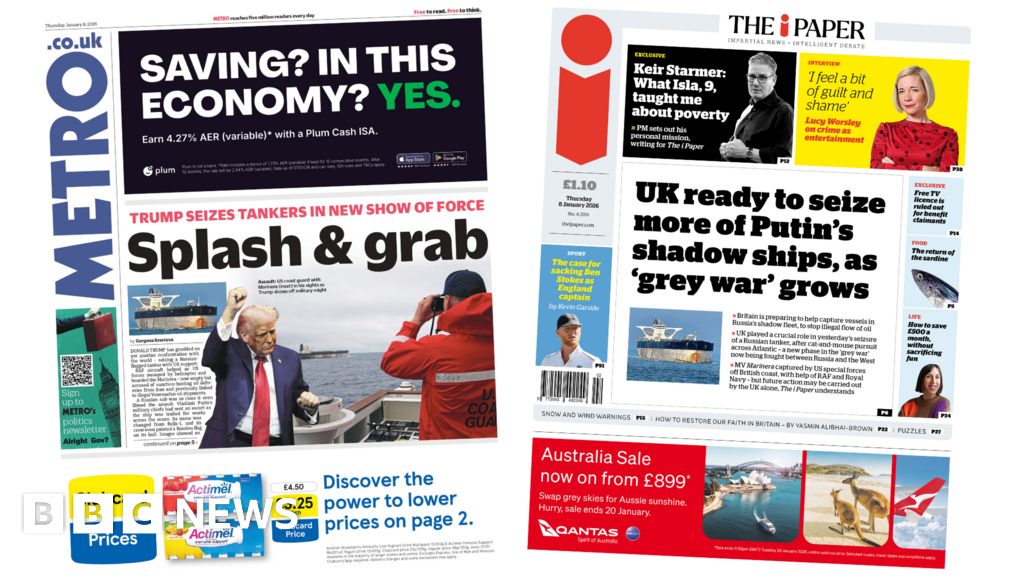
The United Kingdom has announced plans to seize additional Russian vessels as part of ongoing efforts to counteract the influence of President Vladimir Putin and uphold international maritime law. This decision, revealed on March 15, 2024, signals a significant escalation in the UK’s response to Russia’s actions in the Black Sea and beyond.
The UK Government stated that it is prepared to implement further measures against vessels linked to the Russian Federation. This is in line with a broader commitment from Western nations to deter Russian aggression following the invasion of Ukraine in February 2022. The move underscores the UK’s resolve to uphold the principles of international law and protect its maritime interests.
Details of the Operation
The strategy involves the UK working closely with the International Maritime Organization and allied nations to target Russian ships suspected of violating sanctions. These ships may be linked to the transportation of goods that contribute to Russia’s military efforts or are otherwise in breach of international agreements.
According to a spokesperson for the UK Government, the operations are expected to intensify, with additional resources allocated to monitor and intercept Russian vessels. The spokesperson emphasized that the UK remains committed to ensuring that the waters remain free and secure for all lawful navigation.
The UK has already taken significant steps in this direction, with reports indicating that several Russian vessels have been detained in recent months. The government aims to expand these operations to include not only military assets but also commercial shipping that may be aiding Russia’s military objectives.
International Response and Implications
The announcement has drawn mixed reactions from the international community. Some nations have expressed support for the UK’s stance, viewing it as a necessary measure to uphold international law. Others, however, caution against escalating tensions further. The European Union has indicated that it is closely monitoring the situation and may consider additional sanctions if necessary.
The implications of these actions could be far-reaching. As the UK increases its maritime operations, the potential for confrontations in the Black Sea region rises. Analysts warn that miscalculations could lead to significant diplomatic fallout, further complicating an already tense geopolitical landscape.
Moreover, the UK’s actions may also prompt a reevaluation of shipping routes and security measures among countries that rely on these waterways for trade. The potential disruptions could have economic repercussions, impacting global supply chains.
In conclusion, the UK’s intent to seize more Russian ships reflects a deepening commitment to counteracting Russian aggression and upholding international maritime norms. As the situation evolves, the international community will be watching closely to assess the impact of these actions on regional stability and global trade.