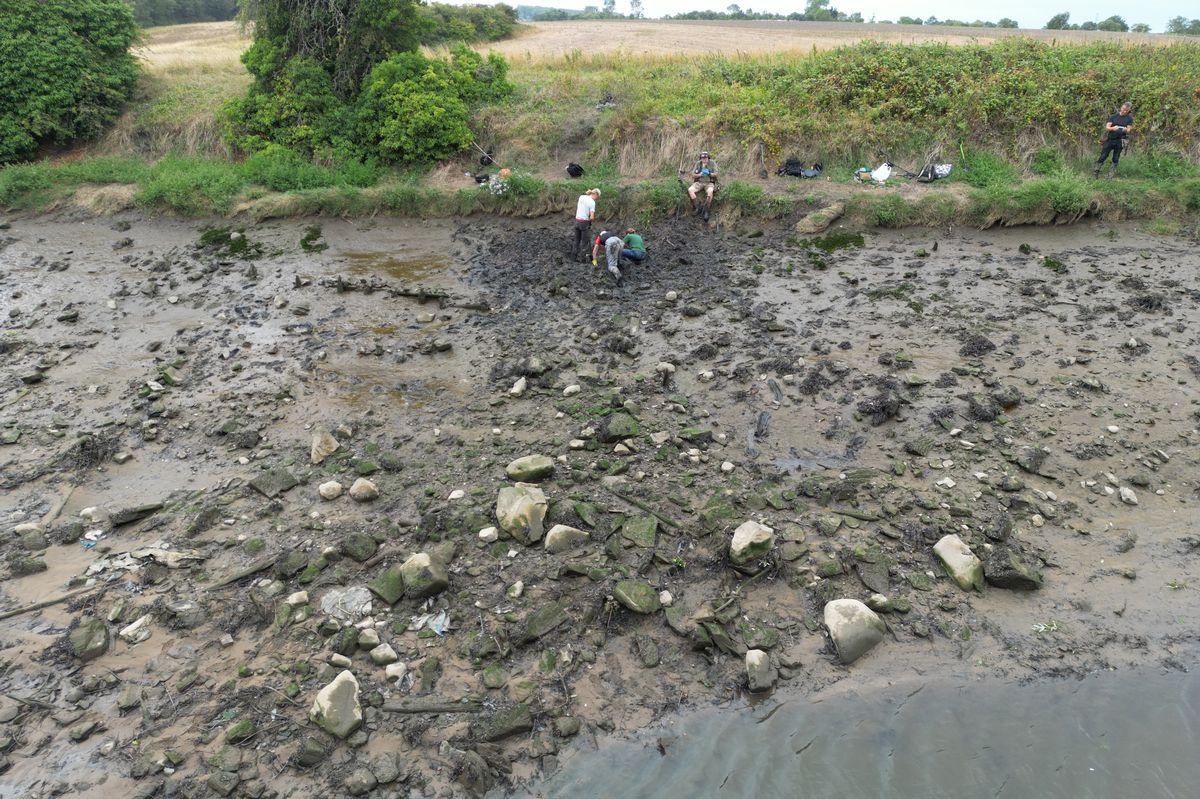
A significant archaeological discovery has emerged from the banks of the River Wear, near Sunderland, where experts have identified a Roman industrial hub. This site, located in the hamlet of Offerton, has yielded over 800 whetstones and eleven stone anchors, shedding light on the area’s historical significance.
The findings were made by volunteer members of the Vedra Hylton Community Association, with support from Durham University’s Department of Archaeology. The sediment analysis confirms that this location dates back to the Roman period, marking a vital addition to our understanding of Roman Britain.
Unprecedented Discoveries and Historical Context
The discovery of whetstones is particularly noteworthy, as it represents the largest collection found from this era in North West Europe. This suggests that Offerton may be the first Roman site in Britain where stone was intentionally quarried for whetstone production. Experts believe that additional artifacts may still lie buried along the riverbank, potentially numbering in the thousands.
Gary Bankhead, President of the Vedra Hylton Community Association and Honorary Fellow at Durham University, spearheaded the project. He emphasized the collaborative nature of this effort, stating, “This isn’t just a Roman site—it’s Sunderland’s story, revealed through the dedication of local volunteers and researchers working side by side.”
The excavations will be highlighted in the upcoming series of Digging for Britain on BBC Two, with episodes available on iPlayer from January 7, 2025.
Alongside the whetstones, the team unearthed various other artifacts, including a post-medieval wooden jetty, tools such as chisels and stone splitters, and a leather shoe from the Tudor period. Iron and stone cannonballs, as well as lead shot from the English Civil Wars, were also found. Collectively, these artifacts could extend the timeline of human activity along the River Wear by over 1,800 years.
Implications for Local History and Future Research
The project highlights Sunderland’s potential role in the manufacturing and trade networks of Roman Britain. “The manufacture of whetstones at this location closely matches examples from securely dated Roman contexts,” Bankhead noted, indicating that these items were likely produced and distributed from this riverside workshop.
Dr. Eleri Cousins, Assistant Professor in Roman Archaeology, remarked on the importance of the findings, stating, “With the confirmation that these whetstones are Roman, this site has the potential to make a significant addition to our understanding of manufacturing and industry in Roman Britain, particularly in the militarised north of the province.”
Cllr Michael Mordey, leader of Sunderland City Council, expressed excitement over the discovery, saying, “This shines a whole new light on the role Sunderland may have played in the Roman Empire.” He acknowledged the collaborative research and analysis that revealed this pivotal history, emphasizing its contribution to the city’s industrious legacy.
Emily Swift, Senior Asset Manager for Coastal at The Crown Estate, shared her enthusiasm for the find, highlighting the cooperative efforts that have brought this historical narrative to light. She stated, “Mapping out the historical significance of the River Wear also helps our team to work closely with Sunderland City Council to sensitively maintain and preserve the river and riverbanks for future generations to enjoy.”
This remarkable discovery opens new avenues for research and understanding of the rich historical tapestry of the region, making it an exciting time for both historians and local communities. Further survey work will be essential to uncover the full extent and significance of this Roman industrial site.