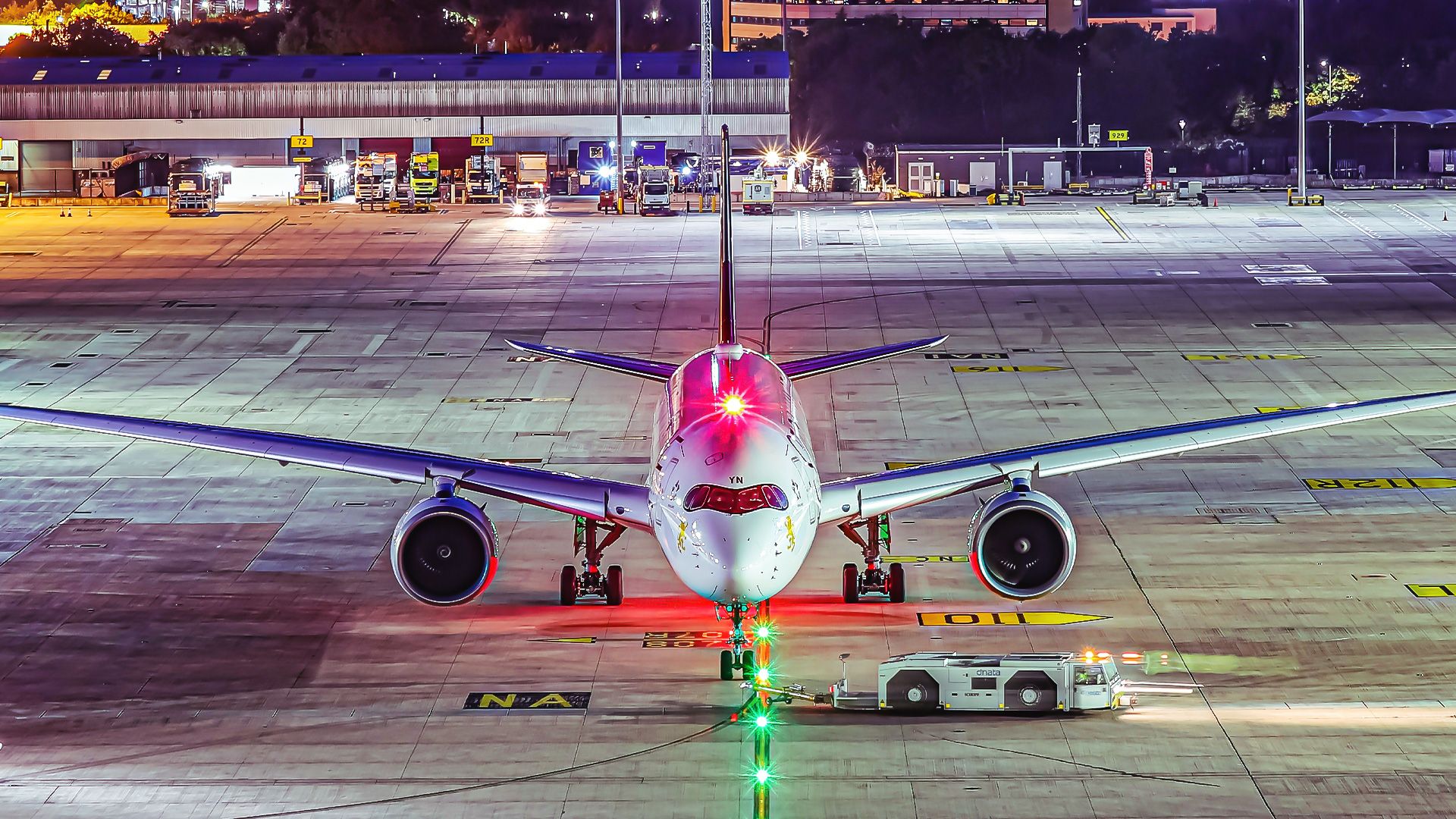
European aircraft manufacturer Airbus has successfully surpassed its annual delivery target for 2025, achieving a total of 793 aircraft delivered during the calendar year. This accomplishment comes after a concerted effort by the company to meet its goal, particularly in the final weeks of December.
Despite initial projections estimating deliveries of 820 aircraft, Airbus had to revise its guidance due to several challenges, including issues related to the A320 model. A critical software upgrade had temporarily grounded the A320 fleet, while quality control findings regarding fuselage panels caused further delays. These setbacks prompted Airbus to adjust its delivery estimates to just above 790 aircraft.
While Airbus has not yet confirmed the exact number of deliveries, various media reports have provided estimates. Reuters suggested that the total exceeded 790 aircraft, while Cirium and other aviation analytics firms projected deliveries at approximately 782 aircraft for the year. Airbus remains the world’s largest aircraft manufacturer in terms of production and delivery rates, though it trails behind the U.S. competitor Boeing in total new orders.
As of now, Airbus has opted not to comment on its final annual delivery figures. The audited order and delivery numbers are scheduled to be published after markets close on January 12, 2026. The performance of both Airbus and Boeing is closely monitored, as it serves as a barometer for the overall stability of the airline industry.
Comparing Airbus and Boeing Deliveries
In the competitive landscape between Airbus and Boeing, over 1,400 aircraft are projected to have been delivered by the end of 2025. This marks a notable return to pre-pandemic delivery levels. In 2024, Airbus successfully delivered 7 commercial aircraft to 86 international customers. Once confirmed, it is expected that the delivery gap between Airbus and Boeing will be around 150 aircraft.
Airbus demonstrated its commitment to meeting its delivery targets when it delivered ten A321neo aircraft in a single day on December 19, 2025. The recipients included major airlines such as Air China and Wizz Air, showcasing the high demand for this model.
On the other side, Boeing has been focusing on recovery after facing significant challenges, including quality control issues and additional certification delays. The company is aiming to reach around 650 aircraft deliveries by the end of the year, with 537 aircraft delivered through November 2025, predominantly comprising the Boeing 737 MAX. The 777X project has also encountered delays, with no aircraft delivered yet.
Looking Ahead to 2026
As Airbus looks to 2026, several key developments are on the horizon. Among the most anticipated is the delivery of the A350-1000ULR to Qantas, which is central to the airline’s Project Sunrise, aimed at launching non-stop flights from Sydney to New York and London. The first of these aircraft is expected to be delivered in late 2026, with the capability to operate non-stop flights of up to 22 hours.
In response to growing demand, Airbus plans to increase production of the A320 and A321 models. The establishment of a second assembly line in Tianjin, China, along with an additional A321 line in Toulouse—repurposed from the now-retired A380—will be operational in the coming year.
Aerospace Global News indicates that Airbus will maintain ambitious delivery targets as it pushes into 2026, focusing on the growth of the A320neo and A321XLR models while also preparing for the inaugural flight of the first A350F. CEO Guillaume Faury emphasized that 2026 will represent “another year of progressive ramp up” for the company, reflecting their resilience and adaptability in a competitive market.