The year 2025 has been marked by the significant return of Donald Trump to the presidency of the United States, which has reshaped international relations and intensified political crises within the European Union. The ongoing wars in Ukraine and the Middle East, alongside a fragile ceasefire in Gaza, highlight a period of instability across Europe. The resurgence of right-wing populism in Germany, political paralysis in France, and the return of Andrej Babiš to power in the Czech Republic reveal the complex dynamics at play.
As Trump re-establishes his dominance on the world stage, the implications for global security and diplomatic relations are profound. His administration has been characterized by a sharp increase in tariffs on imports from nearly all countries, significantly impacting the global economy. According to reports, Brussels’ Politico named Trump the most influential figure in Europe, despite the ranking typically being reserved for Europeans. His assertive stance has led to contentious relations with EU nations, forcing them into unfavorable trade agreements and compelling NATO members to increase defense spending to five percent of GDP.
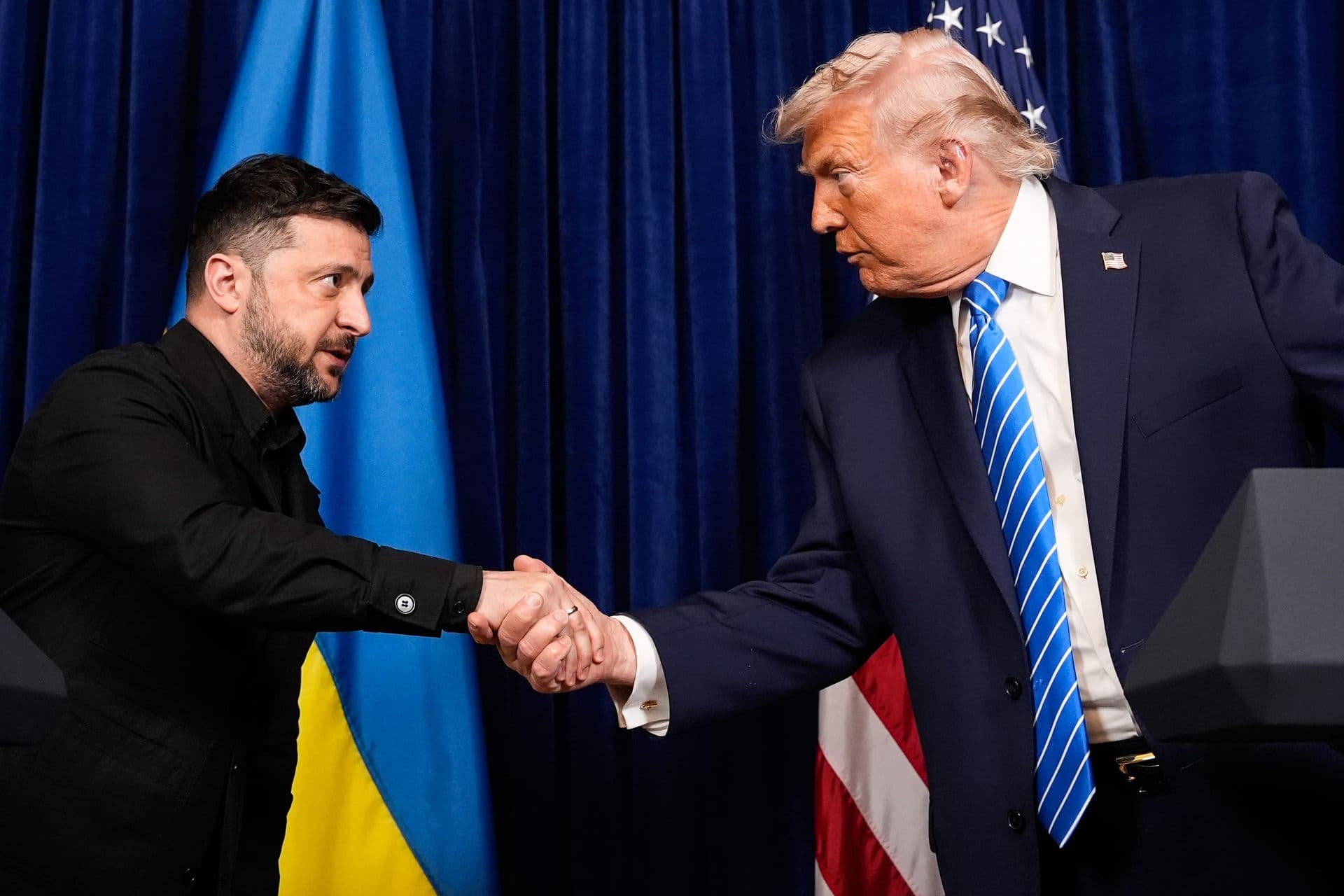
Trump’s foreign policy has seen a renewed focus on Russia, as he has reestablished diplomatic ties while simultaneously challenging Ukrainian President Volodymyr Zelensky. He secured access to Ukraine’s strategic minerals in exchange for continued support, although efforts to end the Russian invasion have yet to yield results. In the Middle East, Trump’s pressure has facilitated a ceasefire in Gaza, but the humanitarian situation remains dire.
Ceasefire and Continued Violence in Gaza
On October 10, 2025, a fragile ceasefire came into effect between Hamas and Israel after more than two years of brutal conflict. This agreement, brokered under U.S. pressure, included a cessation of hostilities and the withdrawal of Israeli forces, alongside the release of hostages held by Hamas in exchange for Palestinian prisoners in Israel. Despite the truce, violence continues, with thousands of Palestinians reportedly killed in Israeli strikes since the conflict began in October 2023.
The humanitarian crisis in Gaza is severe, with hundreds of thousands of Palestinians facing dire conditions. Although the ceasefire has allowed for a modest increase in humanitarian aid, the region remains on edge. The situation escalated following an Israeli attack on Iran in June 2025, leading to a brief but intense conflict that ended with U.S. strikes on Iranian nuclear facilities.
The ongoing Israeli military campaign in Gaza has drawn international condemnation, with the United Nations describing the actions as genocidal. This has led to a growing number of nations recognizing Palestine, including major Western countries like the United Kingdom, France, Canada, and Australia.
Political Turmoil in Europe
As Trump solidifies his influence, Europe grapples with internal challenges. The conflict in Ukraine, now nearing its fifth year, has prompted continued diplomatic efforts from the U.S. to broker peace. In late 2025, Ukraine and the U.S. revised a peace proposal that had previously aligned too closely with Russian interests. Kyiv’s decision to abandon its NATO aspirations in exchange for security guarantees highlights the ongoing struggle for territorial control in Eastern Ukraine.
In Germany, the Christian Democratic Union (CDU) has regained prominence after parliamentary elections held on February 23, 2025, amid a surge in support for the far-right Alternative for Germany (AfD). The CDU secured 28.4 percent of the votes, leading to the formation of a coalition government. The AfD, which garnered 20.7 percent, has capitalized on widespread discontent and is now represented by a record 152 seats in the Bundestag.
Meanwhile, France is experiencing unprecedented political instability, with President Emmanuel Macron struggling to maintain a functioning government. Following a divided parliamentary election, Macron has appointed four minority governments since September 2024, with the most recent, led by Sébastien Lecornu, collapsing within 27 days. The political deadlock has sparked protests and strikes across major cities in response to austerity measures.
In the Czech Republic, Babiš returned to power after a decisive victory in the October elections, leading a coalition government with radical nationalists. His initial actions have raised concerns about his commitment to EU solidarity, particularly regarding support for Ukraine. Despite past promises, Babiš’s government appears to be leaning towards a more pragmatic approach in foreign policy.
Scandals and Violence in the U.S.
The United States also faced its own crises, including the controversial murder of Charlie Kirk, a prominent right-wing activist and ally of Trump. Kirk was shot on September 10, 2025, during an event at a university in Utah, exacerbating the polarized political climate in the country. His death sparked a national conversation about political violence, with reactions ranging from condemnation to celebration among various factions.
In addition, a corruption scandal involving former EU foreign affairs chief Federica Mogherini has emerged, raising serious questions about the integrity of EU institutions. Mogherini was arrested after a police raid linked to an alleged corruption scheme involving the College of Europe. This scandal, coupled with ongoing investigations into lobbying activities involving Chinese telecom giant Huawei, threatens to undermine public trust in the EU.
2025 has proven to be a pivotal year for global politics, with significant shifts in leadership and ongoing conflicts testing the resilience of international institutions. As the world grapples with these challenges, the future of democracy and security remains uncertain.