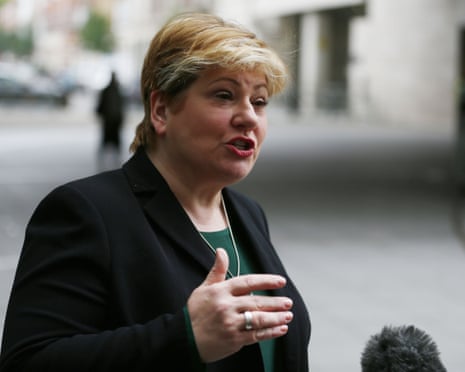
The UK government has been accused of “embarrassing failures” in the case of activist Alaa Abd el-Fattah, who recently returned to the UK after being pardoned and released from prison in Egypt. The criticism comes from Emily Thornberry, chair of the Commons foreign affairs committee, who stated that the government could have taken steps to prevent the issues surrounding Abd el-Fattah’s case.
Thornberry highlighted “serious shortcomings” in the government’s handling of information sharing. She argued that designating a special envoy to manage complex cases involving Britons detained abroad could have made a significant difference. Former foreign secretary David Lammy had announced in 2024 that the government would appoint such an envoy, but no individual has been named to date.
In a letter to Foreign Secretary Yvette Cooper, Thornberry commented, “Had an envoy been established [in 2024]… it is clear to me that such embarrassing failures of due diligence and information sharing would have been avoided.” She emphasized that it would have been within the envoy’s purview to conduct necessary background and social media checks.
Alaa Abd el-Fattah, who received British citizenship in 2021, has been at the center of controversy following the resurfacing of social media comments he made over a decade ago. Since his return to the UK on December 26, 2023, his past statements, including calls for violence against Zionists and derogatory remarks about British people, have drawn public scrutiny.
Initially, Prime Minister Keir Starmer expressed his delight at Abd el-Fattah’s return. However, he later condemned the resurfaced tweets, claiming he was unaware of their existence. This reversal has led to calls from political opponents, including the Conservative Party and Reform UK, for Abd el-Fattah to be deported and have his citizenship revoked.
On January 10, Robert Jenrick, the shadow home secretary, underscored the need for Abd el-Fattah’s citizenship to be reconsidered. He referenced social media posts linked to Abd el-Fattah’s sister, Mona Seif, which praised the “imagination” of Hamas during its attacks in October 2023. Seif’s comments, made shortly after a Hamas assault on Israel, included a critique of perceived hypocrisy regarding the support for Ukrainian resistance versus Palestinian resistance.
The situation surrounding Abd el-Fattah deepened with the discovery of additional comments from him. In a 2011 post, he questioned, “who would weep if we killed Osama Saraya?”, the editor of a pro-Mubarak newspaper. A 2010 tweet appeared to joke about a “suicide bombing taking a few Zionists’ lives.”
In response to the mounting controversy, Yvette Cooper has initiated a review to address “serious information failures” in the handling of Abd el-Fattah’s case. While government sources indicate that the Home Office is unlikely to revoke his citizenship due to the legal thresholds not being met, human rights advocates have warned that such a measure would represent an “extremely authoritarian step.”
As this complex situation unfolds, the UK government faces increasing pressure to clarify its approach to cases involving detained Britons and the implications of past actions on present citizenship rights.