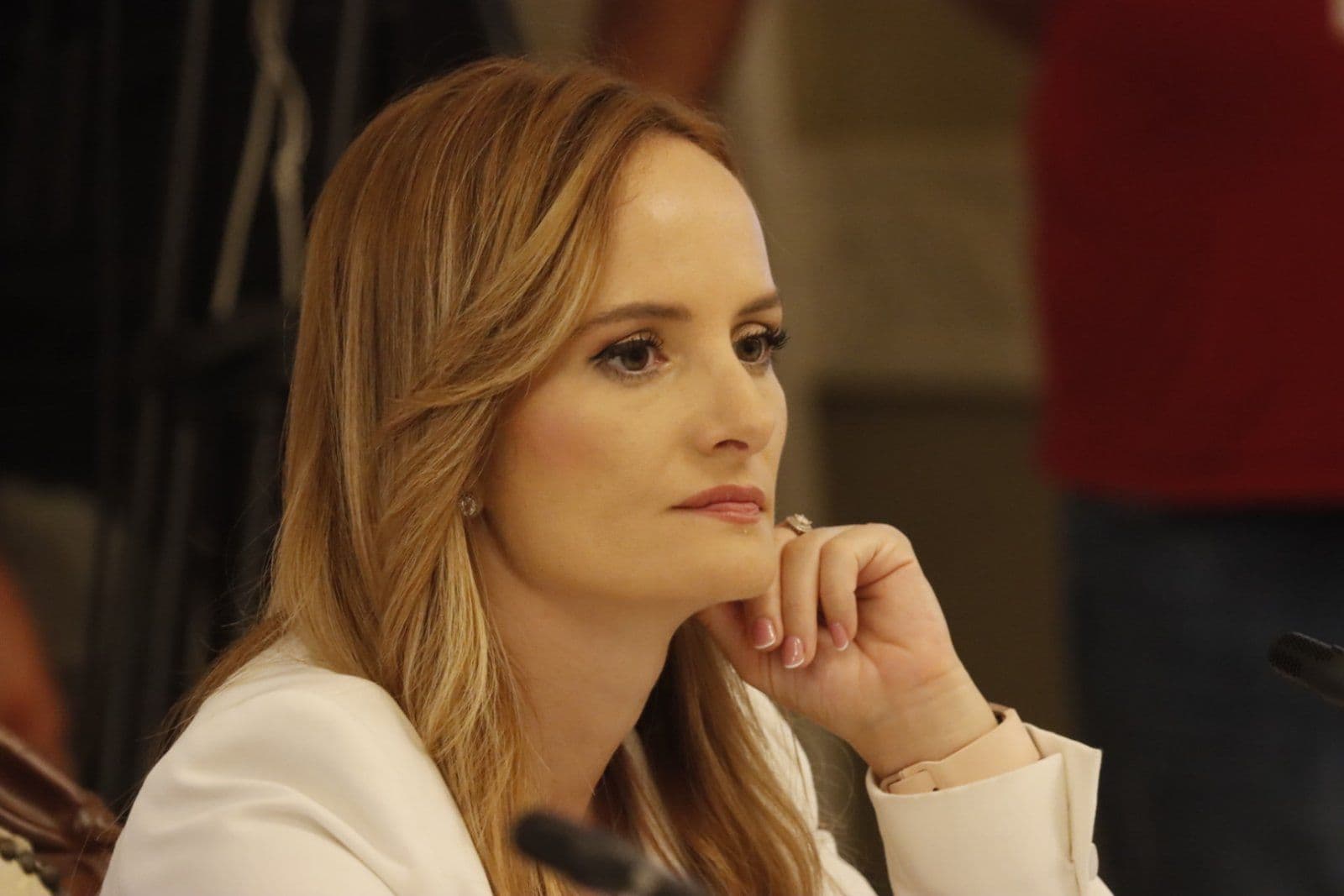
Nikoleta Đukanović, a political scientist, has sharply criticized recent police actions in Botun, Montenegro, describing them as a form of sabotage against the country’s European integration efforts. Her comments came during an appearance on the central news program “24 Hours” on Television E, where she asserted that the actions of Milan Knežević, a prominent political figure, are driven more by political gamesmanship than genuine concern for the citizens of Botun.
According to Đukanović, the situation in Botun reflects a broader trend of politicization and instrumentalization of law enforcement, particularly by pro-Serbian political parties. She stated, “Mr. Knežević and Mr. Mandić view this as a kind of task rather than something they genuinely advocate for.” Đukanović highlighted how the police’s reactions differ significantly based on the political context, referencing various past events where citizens faced police force without similar official commendations.
The political scientist emphasized the urgent need for a wastewater treatment project, not only for environmental protection but also for the health of the local population and the advancement of Montenegro’s European integration. She argued, “If our politicians and political parties are genuine Europeans as they claim, they should support this project rather than sabotage it.” Her remarks underscore a belief that political pressures are overriding the needs of the residents of Botun and Zeta.
Commenting on Knežević’s recent announcement to leave the government due to police actions, Đukanović expressed skepticism. She noted that his conflicting statements—one indicating a withdrawal and another suggesting a discussion within his party—cast doubt on his intentions. “I honestly doubt that this is in his best interest,” she concluded, suggesting that such moves are largely tactical rather than principled.
Đukanović also reflected on the reaction of Zeta’s municipality president, Mihailo Asanović, interpreting it as a personal stance rather than a party position. She pointed out the historical inconsistency in political alliances, referencing past elections where leaders shifted coalitions after promising change.
In response to President Jakov Milatović’s recent stance, Đukanović characterized his statements as politically motivated. She noted that the upcoming 2027 elections are likely influencing the behavior of politicians across the board. “It is evident that all political actors have begun preparations for those elections,” she remarked, indicating a loss of credibility in leadership.
The political landscape is further complicated by Andrija Mandić’s declaration that Botun represents a “red line,” which may reflect internal party dynamics rather than a unified front. She observed that Mandić’s recent praise for collaboration with Prime Minister Spajić stands in stark contrast to his current rhetoric, suggesting an attempt to appease voters who oppose the project.
Additionally, Đukanović criticized Serbian President Aleksandar Vučić’s support for Knežević, stating that this represents an interference in Montenegro’s internal affairs. She highlighted the concerning reactions from government officials, including Deputy Prime Minister Filip Ivanović, who justified police conduct in a way that aligns with Vučić’s interests rather than those of Montenegrin citizens.
In conclusion, Đukanović’s analysis reveals a complex interplay of political motivations and public policy challenges in Montenegro. The situation in Botun raises critical questions about the authenticity of political leadership and the prioritization of citizen welfare over partisan interests.