Plans for a multibillion-dollar “smart city” in the Philippines have ignited tensions between development and Indigenous rights. The Philippine government aims to transform the former Clark Air Base into New Clark City, a project that President Ferdinand Marcos Jr. envisions as a future hub for tourism and investment. This ambitious endeavor is central to alleviating congestion in Metro Manila, which is home to nearly 15 million people.
The New Clark City project includes infrastructure enhancements such as new train lines, expanded airport runways, and a $515 million stadium aimed at attracting global artists like pop star Taylor Swift. However, the construction site encroaches upon the land of the Indigenous Aeta village of Sapang Kawayan, where approximately 500 families face potential displacement due to ongoing development.
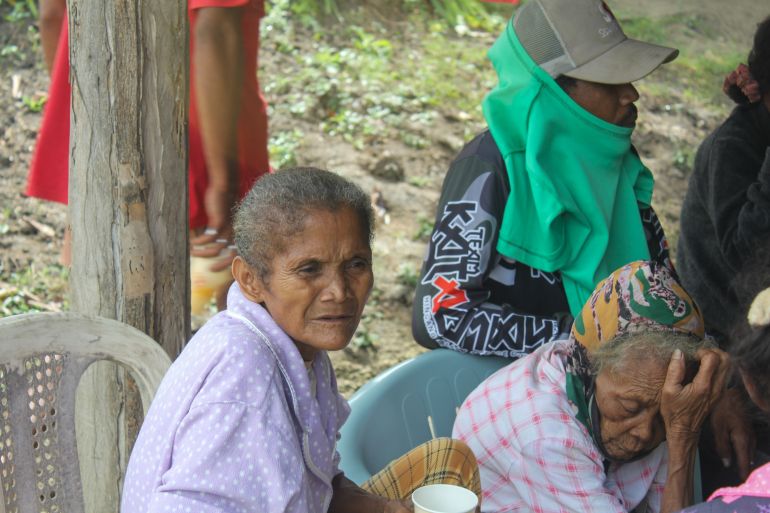
Petronila Capiz, 60, chieftain of the Aeta Hungey tribe, expressed deep concern, stating, “We were here before the Americans, even before the Spanish. And the land continues to be taken from us.” The Aetas, known for their rich history and cultural heritage, have endured significant displacement since American colonizers took control of the area in the early 20th century.
Historically, the Aetas were dispossessed of their land when the United States established the Clark Air Base in the 1920s. Following the base’s return to the Philippine government in 1991, the Bases Conversion and Development Authority (BCDA) took charge of the land. Estimates suggest that around 20,000 Aetas remain in the vicinity, but many of their land claims lack official recognition.
As development progresses, residents of Sapang Kawayan are concerned they will be forced out before they can secure legal rights to their ancestral land. The community, in collaboration with researchers from the University of the Philippines, is working to expedite a long-standing application for a Certificate of Ancestral Domain Title (CADT). This title is essential for asserting their rights to the territory and its resources.
Gatherings in January, July, and September saw Aeta families come together to compile genealogies, share stories, and document their history. Their claim for 17,000 hectares overlaps significantly with the 9,450 hectares allocated for New Clark City, raising fears about the loss of agricultural fields, fishing areas, and natural resources.
The Philippine government initially announced plans for New Clark City under former President Rodrigo Duterte, promoting it as a solution to Manila’s congestion. The BCDA has touted the project as a “green, smart, and disaster-resilient metropolis.” Construction began in 2018, with the city designed to accommodate 1.2 million residents and expected to take at least 30 years to complete.
As part of the infrastructure expansion, the BCDA is currently building three highways to enhance connectivity between New Clark City and the airport complex, which includes the planned stadium. BCDA President Joshua Bingcang emphasized the importance of connectivity for attracting investment, noting the proximity to major transport links.
Despite this progress, the Aeta communities have faced increasing challenges. According to research from Counter-Mapping PH, hundreds of Aeta families have already been displaced since the project’s inception. The BCDA has offered limited compensation of $0.51 per square meter and has begun constructing 840 housing units, though it remains unclear if these are for displaced Aeta families.
In response to inquiries regarding displacement, the BCDA stated that it respects the rights of Indigenous peoples and recognizes their historical presence in the region. However, they also noted that the land’s ownership predates the current development, maintaining that the New Clark City project does not encroach on any recognized ancestral domains.
The National Commission on Indigenous Peoples (NCIP) has set strict requirements for granting CADTs, including proof of continuous presence since before Spanish colonial rule. Marcial Lengao, head of the NCIP’s Tarlac office, highlighted the challenges Aeta communities face in meeting these criteria, which include extensive genealogical documentation and elder testimonies.
Activists have criticized these requirements as excessively burdensome, warning that without formal recognition, the Aetas remain vulnerable to displacement. “Without a CADT and without genuine recognition from the government, the Aetas will continue to be treated like squatters on their own land,” cautioned Pia Montalban from the rights group Karapatan-Central Luzon.
The Aetas, who primarily engage in small-scale subsistence farming, are among the most historically marginalized Indigenous groups in the Philippines. While official figures on their population are sparse, estimates suggest they number in the tens of thousands nationwide. The Aeta Tribe Foundation notes that they often face poverty and limited access to education.
Jeremiah Silvestre, an Indigenous psychology expert, describes the Aetas as some of the most abused Indigenous Filipinos, stating that their culture is often exploited. He criticized the CADT process as unduly complicated, likening it to “defending your dissertation” before government officials.
A recent World Bank report highlighted the bureaucratic obstacles Indigenous peoples face in securing land rights, emphasizing that recognizing and protecting these rights is crucial for addressing poverty and conflict. For families in Sapang Kawayan, the absence of formal land recognition could lead to increased displacement and homelessness.
Victor Valantin, an Indigenous Peoples Mandatory Representative for Tarlac Province, expressed concern about the diminishing territory available to the Aetas as development accelerates. “We’ll have to move and move,” he remarked, lamenting the imbalance in prioritizing development projects over Indigenous rights.
As New Clark City continues to rise, the future of the Aeta community hangs in the balance, caught between the promise of progress and the threat of erasure.