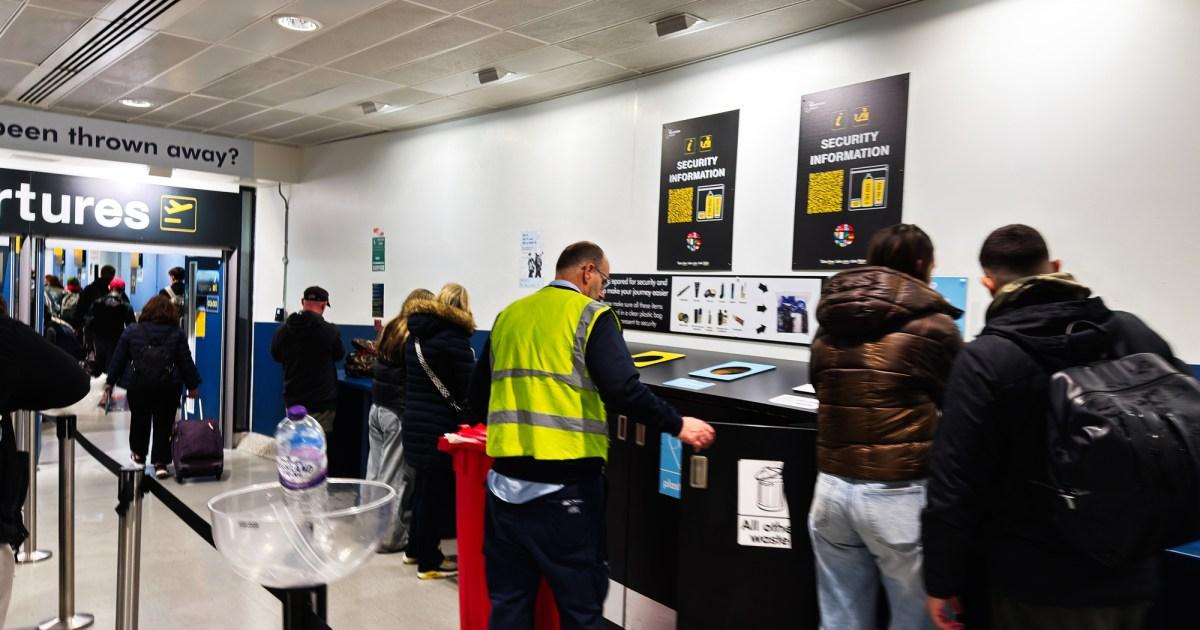
As travel demand surges this January, a frustrating airport trend known as “belt bumping” is drawing ire from passengers. This term, popularized by Metro, describes the habit of travelers neglecting to return their security trays after retrieving their belongings from the conveyor belt. This seemingly minor oversight is leading to significant frustration among fellow passengers and airport staff alike.
Amelia Jackson, 26, encapsulates the sentiment of many travelers when she states, “I always start the holiday being slightly pissed off.” This feeling often arises when dealing with the less considerate behaviors of fellow flyers. The annoyance is compounded as travelers eagerly anticipate sun-soaked getaways, only to encounter the pet peeve of not-so-courteous passengers.
Belt bumping manifests when individuals leave their trays on designated unloading tables or even abandon them on the conveyor belt. Such behavior not only clogs the airport security process but also reflects a broader disregard for shared public spaces. Despite signage indicating the need to return trays, many passengers appear either unaware or indifferent to this aspect of airport etiquette.
Recent studies have heightened awareness regarding the hygiene of airport security trays. Research from the University of Nottingham and the Finnish National Institute for Health and Welfare revealed traces of rhinovirus, the common cold’s cause, on these trays in 2016. This unsettling finding reinforces the importance of proper etiquette, as travelers are encouraged to minimize their contact with potentially germ-laden surfaces.
The issue of belt bumping transcends individual annoyance; it speaks to societal norms and shared responsibilities. Frequent traveler Blaise Kelly, 26, comments, “It’s horrible etiquette and disrespectful to the queue and people working at the airport.” He emphasizes that ignoring staff requests to maintain cleanliness is a conscious choice that reflects poorly on the individual.
In an effort to combat this behavior, some travelers have taken matters into their own hands. Charlotte Howard, also 26, has initiated a passive-aggressive approach by returning trays to their rightful place herself, often while smiling at security personnel. This has resonated on social media platforms, where users like TikTok user @currentdowns have shared their similar experiences, showcasing a collective frustration with the trend.
The phenomenon of belt bumping has sparked lively discussions online, with many expressing disbelief at fellow travelers’ disregard. One user noted, “It’s like it’s everybody’s first day on earth.” Another lamented, “Nothing bothers me more than people leaving the trays to pile up.” Such comments reflect a shared sentiment that proper etiquette enhances the travel experience for everyone.
Opinions on whether belt bumping constitutes bad etiquette vary. Laura Windsor, known as the Queen of Etiquette, suggests that while returning trays is a common courtesy, it should not be viewed as an obligation. She acknowledges that many travelers, particularly those with young children or mobility constraints, may not be able to manage this task. Windsor proposes that if trays begin to pile up, those who are able should lend a hand to ensure a smoother process for all.
In light of the ongoing travel surge, addressing the issue of belt bumping may not only improve the airport experience but also foster a greater sense of community among travelers. As airports continue to serve as gateways to adventure, it becomes increasingly important for passengers to consider the impact of their actions on fellow travelers and airport staff.
Ultimately, while the trend of belt bumping may be rooted in individual behavior, its ripple effects are felt throughout the airport environment. A collective effort to uphold etiquette could transform the travel experience, allowing passengers to focus on the excitement of their journeys rather than the frustrations of their departures.