
The turn of the millennium was once envisioned as a transformative moment in history, marked by both excitement and fear. With the arrival of the year 2000, the world held its breath, caught between apocalyptic predictions and the promise of a new era. Cultural references, from Stanley Kubrick’s iconic film *2001: A Space Odyssey* to the comic *2000 AD*, shaped perceptions of what the future would hold. Yet, as the moment approached, it became clear that the reality would fall short of the grand expectations.
As the 1990s progressed, the sense of impending doom grew, fueled by a rise in doomsday cults. In 1993, the Waco siege in Texas resulted in the tragic deaths of 82 members of the Branch Davidians, alongside four federal agents. Similarly, a series of mass suicides involving the Order of the Solar Temple claimed nearly a hundred lives across Switzerland and Canada between 1994 and 1997. Such events sparked fears of widespread violence, while mainstream religious leaders, like George Carey, the Archbishop of Canterbury, expressed concerns about the future of organized religion, suggesting that the Church was merely “a generation away from extinction.”
Amidst these fears, technology presented what seemed to be a real threat. The discovery of the Y2K bug in 1995 raised alarms that computer systems could malfunction as the year transitioned from 1999 to 2000. Originally, many computer programs represented the year with just two digits, leading to concerns that systems would interpret “00” as 1900, potentially causing chaos in hospitals, banks, and power plants. Predictions ranged from minor glitches to catastrophic failures, including the terrifying notion that nuclear weapons could be launched by malfunctioning computers.
In total, it is estimated that between $300 billion and $500 billion was spent on measures to avert disaster. The transition to the year 2000, however, passed without significant incident. This led to skepticism about whether the extensive preparations had been necessary, a sentiment echoed by Bernard Jenkin, a Conservative MP, who later remarked that Y2K was a “bit like the millennium bug” and suggested that the panic had been overstated.
The dawn of the 21st century came with a growing distrust of experts. While some anticipated cataclysm, many others felt a sense of triviality surrounding the preparations for Y2K. The notion that humanity could be brought to its knees due to a coding oversight felt far-fetched. In contrast to the dramatic narratives found in religious texts, the reality of the millennium bug lacked the gravitas that many had expected.
With the clock striking midnight on January 1, 2000, the celebrations marked the beginning of a new era. Yet, the excitement soon gave way to a sense of disillusionment. The millennium became less about a significant turning point and more about a grand party. A quarter-century later, this disappointment remains evident in contemporary society, where optimism has been replaced by a sense of unease.
Back in the 1990s, optimism had prevailed. The world economy was growing, and there was hope that climate change would be addressed through initiatives like the 1997 Kyoto Protocol. The end of the Cold War led to a sense of triumph in the West, with Francis Fukuyama even declaring “The End of History.” In music, the Britpop movement produced upbeat anthems, reflecting a carefree spirit rather than apocalyptic dread.
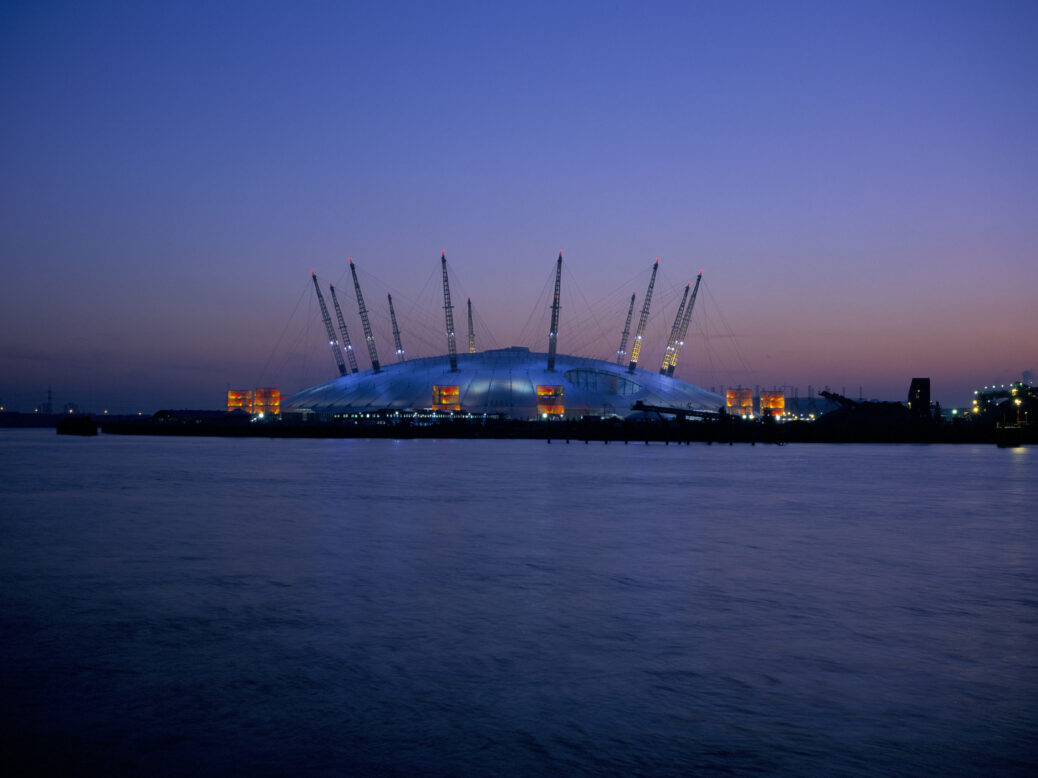
The Millennium Dome, intended as a centerpiece for the celebration, symbolized this paradox. Originally envisioned by Michael Heseltine, then a member of the Conservative government, as a statement of national confidence, the Dome ultimately failed to deliver a coherent theme or purpose. The project was funded by the National Lottery and expected to attract millions of visitors, but only 6.5 million attended, each costing taxpayers approximately £90.
The Dome was not the only notable project of the time. The Millennium Wheel, later known as the London Eye, opened on New Year’s Eve, although it was not operational until months later. Similarly, the Millennium Footbridge faced structural issues shortly after its opening, leading to a prolonged closure.
Once the festivities subsided, the millennium quickly faded into history. Tony Blair, the incoming Prime Minister, acknowledged in 2001 that the millennium had merely marked “a moment in time.” As major projects were rebranded—the Millennium Dome became the O2 Arena, and the Millennium Wheel was renamed the London Eye—there was a collective effort to distance the present from the failed promises of the past.
Reflecting on the events surrounding the millennium, it is evident that the era was marked by a series of unmet expectations. The grand narratives of change and transformation gave way to a reality characterized by confusion and disappointment. The legacy of the millennium may serve as a reminder of the gap between aspiration and reality, capturing a dynamic that continues to resonate in today’s world. As TS Eliot famously wrote, the world may indeed end “not with a bang, but a whimper.”


