UPDATE: The Trump administration is under fire for using official government social media accounts to promote overtly religious Christmas messages, raising significant alarms among First Amendment advocates. In a series of posts during the week of Christmas, top officials declared Jesus as the nation’s savior, prompting concerns over a critical breach of the church-and-state separation.
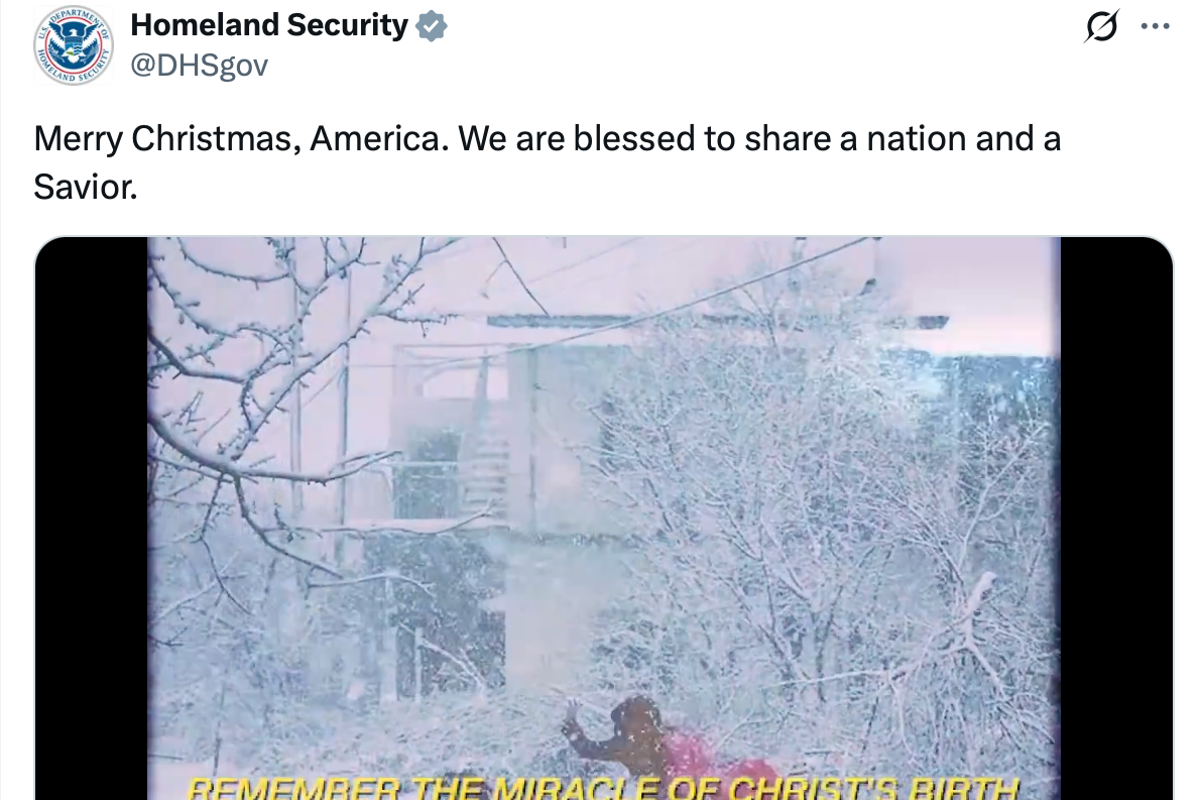
On December 25, 2023, the Department of Homeland Security shared two videos on X (formerly Twitter) with the caption “Christ is Born!” and another post stating, “we are blessed to share a nation and a Savior.” These posts featured a rapid montage of American Christmas imagery. The White House amplified the message, with Defense Secretary Pete Hegseth stating, “Merry Christmas to all. Today we celebrate the birth of our Lord and Savior, Jesus Christ.”
Secretary of State Marco Rubio added that “the joyous message of Christmas is the hope of Eternal Life through Christ.” In a video, Agriculture Secretary Brooke Rollins emphasized that “the very best of the American spirit … flows from the very first Christmas.” Education Secretary Linda McMahon wished families a day filled with “lasting memories as we celebrate the birth of our Savior.” The official account for the Department of Labor even posted, “Let Earth Receive Her King.”
These explicit religious messages sharply diverge from the usual generalized holiday greetings and have drawn swift criticism from advocates for religious freedom. The First Amendment prohibits the government from establishing or favoring a religion, and experts warn that this push from the Trump administration could indicate an attempt to favor a specific religious ideology.
Rachel Laser, president of Americans United for Separation of Church and State, stated, “Our Constitution’s promise of church-state separation has allowed religious diversity to flourish in America.” Former Homeland Security spokesperson Alex Howard called the posts an “inappropriate use of official government channels,” underscoring that “Americans don’t share a religion.”
The urgency of this situation is heightened by the fact that nearly two-thirds of Americans currently identify as Christian, according to the latest data from the Pew Research Center. However, this figure reflects a significant decline from two decades ago, with those identifying with no religion rising to 29 percent this year.
Officials from the Trump administration faced backlash and deflected criticism with a simple “Merry Christmas.” The administration’s messaging aligns with its broader efforts to appeal to the evangelical base, which played a critical role in Trump’s election victories. This includes the establishment of a task force to “fully prosecute anti-Christian violence and vandalism” and the creation of the Religious Liberty Commission in the Department of Justice.
As the Trump administration continues to navigate its relationship with religious groups, the implications of these posts could resonate far beyond the Christmas season. The potential for increased public funding for religious organizations and a shift in political endorsements from religious institutions remains a critical concern.
With the Supreme Court poised to hear several cases involving church-state separation, Justice Sonia Sotomayor has warned that the conservative majority court is dismantling the wall of separation that the Framers intended. This raises urgent questions about the future of religious freedom and the role of government in personal faith.
As these developments unfold, all eyes will be on how the administration responds to the backlash and what further actions it may pursue in this contentious area of church and state.