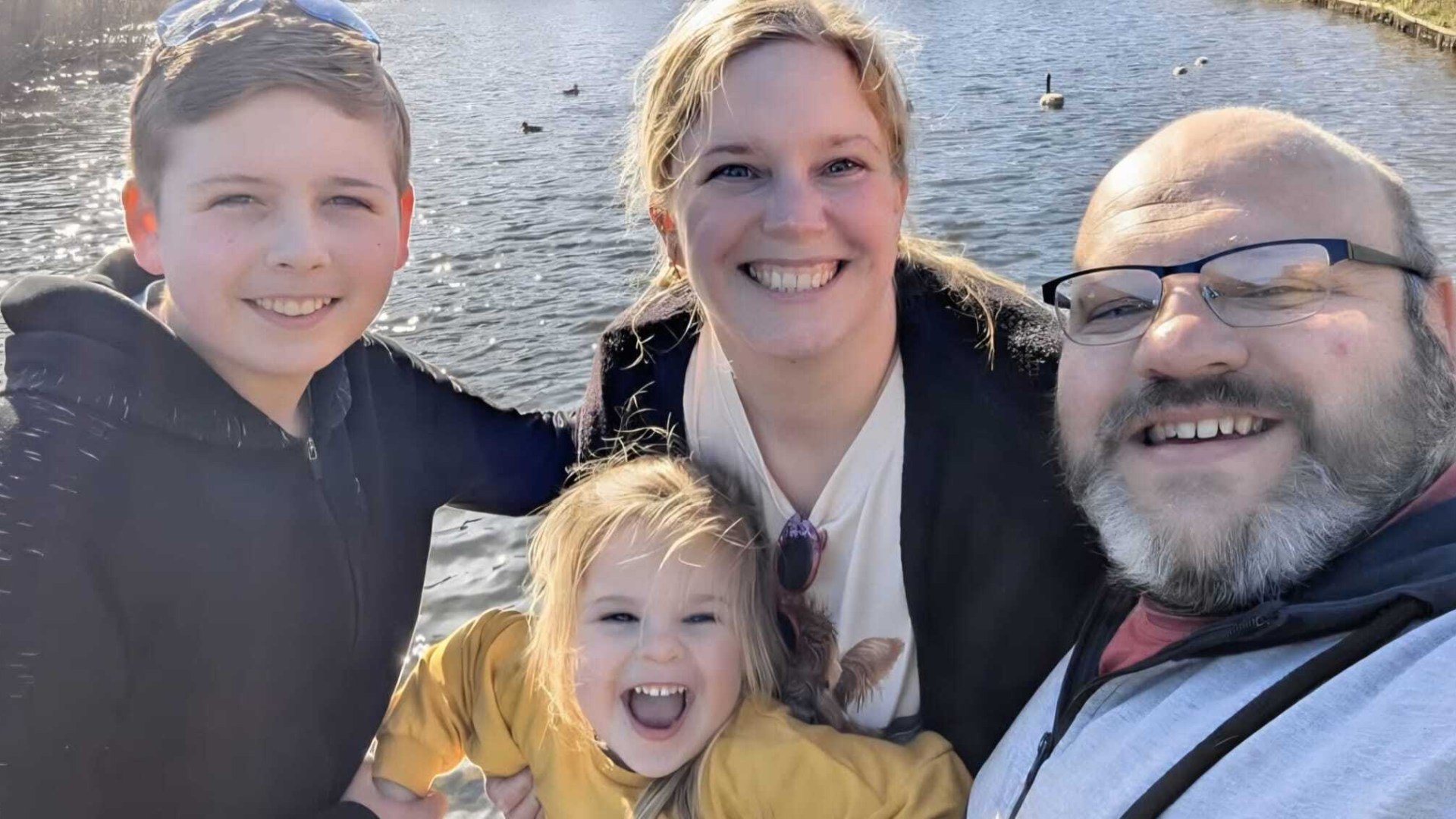
Zoe Plumley, a mother from Bridgend, South Wales, experienced a life-altering health crisis on Christmas Day 2020, which left her unable to walk without assistance. Initially believing she was simply fatigued after the busy holiday season, Zoe’s symptoms escalated rapidly, culminating in a diagnosis of rheumatoid arthritis.
As Christmas Eve unfolded, Zoe, then 32, was out with her family, enjoying the festive atmosphere while her newborn daughter, Larna, was comfortably nestled in her pram. During a stroll to view the Christmas lights, Zoe began feeling unusually sore and cold. “I told my partner, George, that the cold was getting into my bones,” she recalled. The family’s outing was cut short when Zoe found herself unable to push the pram up a curb, prompting their return home.
On Christmas morning, Zoe awoke to debilitating pain. “I couldn’t even pop a paracetamol out of the packet. I couldn’t move,” she said. The situation worsened during a visit to her parents in Somerset, where she struggled to open presents or interact with her children. “My parents watched me literally balloon in front of them,” she added, describing alarming swelling and difficulty breathing.
Back in Bridgend, Zoe’s condition deteriorated, rendering her unable to perform basic tasks. “I couldn’t go to the toilet without help,” she explained. George called for an ambulance, and Zoe was admitted to the Accident and Emergency department, where she was diagnosed with pneumonia. After receiving morphine for pain relief, she was sent home, but her suffering continued.
In the following weeks, Zoe contacted her general practitioner daily. With George often unavailable due to work, her 10-year-old son Logan assisted her. “My GP was amazing; they pushed for an urgent rheumatology referral because my bloods were through the roof,” she stated. In January, a specialist confirmed her fears — she had rheumatoid arthritis.
Rheumatoid arthritis is an autoimmune disease that primarily affects the joints, causing severe pain and discomfort. It can lead to significant disability if not managed properly. Zoe began treatment with methotrexate, a common disease-modifying anti-rheumatic drug (DMARD), in February. Unfortunately, the condition had progressed aggressively, resulting in the loss of the joint in her thumb due to tissue damage.
Zoe’s life has changed dramatically since her diagnosis. She now uses two crutches for mobility and has made various adaptations to her home, including a fall alarm. Although she can still walk, it is a challenge. Morning stiffness is a notable symptom, often lasting for up to an hour after waking. “I thought it was just another diagnosis, but then came the grief — realizing my old self was gone,” she said, reflecting on the emotional toll of her condition.
The impact of rheumatoid arthritis extends beyond physical challenges. Zoe has had to leave her job running a printing business, and George has become her primary caregiver. This transition occurred just months before he developed long COVID, which has further complicated their situation. Their son Logan, now 15, has taken on the role of a young carer, learning to assist his mother in daily tasks.
Zoe has since become a disability consultant, establishing her own company, L&L Specialist Services, which provides support to others facing similar health challenges. She advocates for greater understanding of invisible disabilities, sharing her experiences to help others navigate their conditions. “People still assume disability means a wheelchair. I’ve had strangers try to take my blue badge off me because I look ‘fine’,” she said, emphasizing the misconceptions surrounding disabilities.
Despite the difficulties, Zoe remains resilient. “I take each day as it comes. I make the most of the good ones,” she affirmed. Her journey illustrates the profound and often overlooked challenges faced by those living with chronic conditions like rheumatoid arthritis, highlighting the importance of empathy and understanding in society.