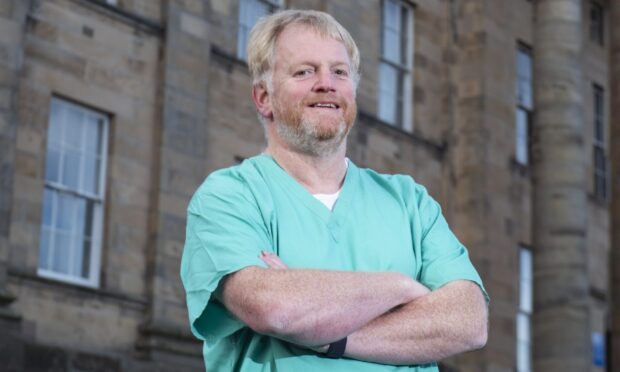
In a significant advancement for lung cancer detection, Dr. Struan Wilkie, a consultant radiologist at Dr. Gray’s Hospital in Elgin, is leveraging artificial intelligence to identify potential cases earlier in the diagnostic process. This initiative, part of a broader effort by NHS Grampian, aims to enhance patient outcomes by prioritizing chest X-rays that indicate concerning signs of cancer.
Dr. Wilkie’s interest in computing began during his formative years in the 1980s, where exposure to the BBC Micro sparked a lifelong passion for merging technology with medicine. “I’ve always had an interest in computing, and that’s probably why I wanted to merge the medical and computing sides together to make people’s lives better,” he explained.
Every year, NHS Grampian reviews approximately 70,000 chest X-rays, equivalent to around 300 per day. The challenge lies in detecting lung cancer, which remains the leading cause of cancer-related deaths in Scotland. Often, the disease is diagnosed late, with symptoms that can easily be mistaken for other conditions. Dr. Wilkie emphasizes the importance of early detection, stating, “The earlier you find it, the more options there are for treatment.”
Transforming Diagnosis with AI
The integration of AI into the diagnostic workflow has already produced measurable improvements. Under Dr. Wilkie’s guidance, chest X-rays flagged as showing urgent suspected cancer can now be reported within 24 hours, significantly reducing delays at the outset of the diagnostic pathway. This proactive approach is crucial, given that many patients undergo chest X-rays for unrelated reasons, and the presence of lung cancer may only be identified during those examinations.
Implementing AI in a real-world clinical setting posed various challenges. Transitioning from research trials to practical application took over a year, requiring coordination among various stakeholders. “There were governance checks, IT systems to align, and organizations that had never worked together before needing to communicate,” Dr. Wilkie remarked.
Addressing concerns about AI’s role in the NHS has also been vital. Initially, many staff feared that AI would replace their jobs. However, Dr. Wilkie reassures his colleagues that AI serves as a prioritization tool rather than a replacement. “At no point is the AI running autonomously,” he clarified. “It’s a way of making sure the patients who need attention most urgently are seen first.”
The Future of Radiology
Dr. Wilkie likens the emergence of AI in healthcare to the transformative shift from X-ray to CT imaging, a change that positioned Aberdeen Royal Infirmary as a leader in advanced imaging techniques. He believes AI represents the next evolution in medical technology, poised to accelerate healthcare delivery and address some of the NHS’s future challenges.
Reflecting on the journey from a childhood fascination with computing to his current role, Dr. Wilkie finds satisfaction in the impact of his work. He acknowledges that his early love for video games has persisted, leading him to explore retro gaming, although it has also sparked light-hearted moments at home when his wife discovered the value of his collection.
By harnessing technology to enhance early lung cancer detection, Dr. Wilkie and his team at NHS Grampian are setting a precedent that could inspire similar initiatives across the healthcare sector. Their work not only aims to save lives but also exemplifies the potential for innovation in addressing critical health challenges.