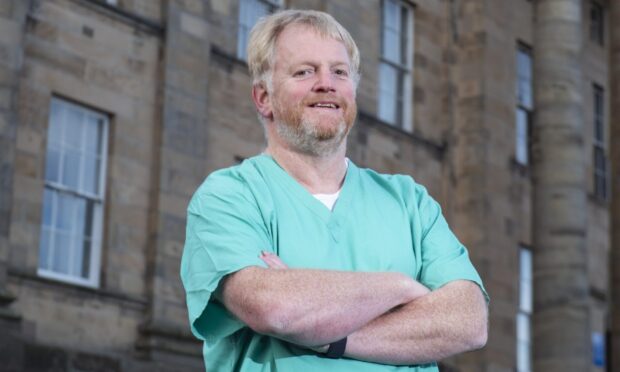
Dr. Struan Wilkie, a consultant radiologist at Dr Gray’s Hospital in Elgin, Scotland, is at the forefront of a significant technological advancement in healthcare, utilizing artificial intelligence (AI) to enhance the early detection of lung cancer. This innovative approach is part of NHS Grampian’s efforts to address one of the most pressing challenges in oncology, as lung cancer continues to be the leading cause of cancer-related deaths in Scotland.
70,000 chest X-rays are reviewed annually by radiology teams in Grampian, approximately 300 each day. The challenge lies in identifying the early signs of lung cancer, which is often diagnosed too late due to non-specific symptoms that can be attributed to other conditions. “It’s often a hidden killer,” Wilkie explains, highlighting the importance of improving detection rates during initial imaging.
The AI system that Wilkie and his team have implemented is designed to prioritize chest X-rays that show concerning indicators of cancer. This technology has already begun to yield positive results, allowing for a more efficient diagnostic process. Chest X-rays flagged for urgent review can now be reported within 24 hours, significantly reducing waiting times and improving the chances of successful treatment.
Integrating AI into Clinical Practice
The transition to integrating AI into everyday clinical practice was not without its challenges. NHS Grampian’s decision to move beyond research trials took over a year, requiring alignment of IT systems, governance checks, and collaboration among various organizations that had not previously worked together. Wilkie acknowledges the initial fears among staff regarding AI’s impact on their roles, but he emphasizes that the technology is not intended to replace healthcare professionals. Instead, it serves as a prioritization tool to ensure that patients in urgent need receive prompt attention.
“As we continue to evolve the conversation around AI, we are moving beyond the notion that it could replace us,” Wilkie states. He envisions AI as a means to ease the workload of healthcare staff, allowing them to focus on what they do best. “At no point is the AI running autonomously,” he clarifies, reiterating its role as a supportive tool in the diagnostic pathway.
The Future of Radiology and Healthcare
Wilkie draws parallels between the introduction of AI and previous technological advancements in radiology, such as the shift from X-ray to computed tomography (CT). He believes AI represents the next significant evolution in healthcare, potentially addressing future challenges within the NHS. “This is a transformative moment for the field,” he asserts, highlighting the potential for AI to speed up healthcare delivery and improve patient outcomes.
Reflecting on his early fascination with computing, sparked by the BBC Micro computer in his school days, Wilkie underscores how that interest has shaped his career and contributed to this groundbreaking work in medicine. His journey from a classroom in the 1980s to a leading role in healthcare exemplifies the profound impact of technology on patient care.
As NHS Grampian continues to refine its approach to lung cancer detection, the integration of AI is expected to set a precedent for other NHS boards, paving the way for broader implementation throughout the healthcare system. With these advancements, the hope is to catch lung cancer earlier, ultimately leading to better outcomes for patients across Scotland.