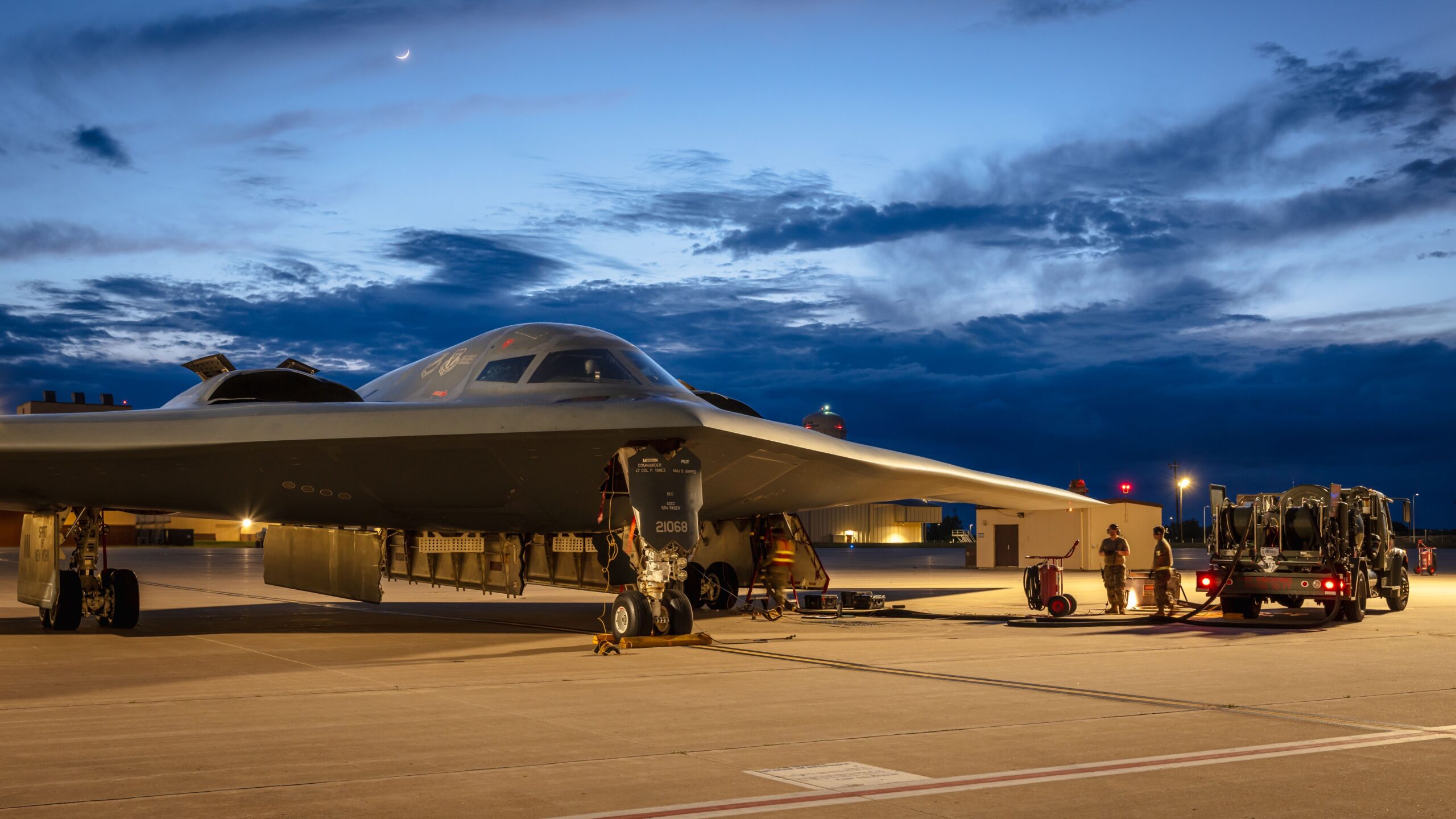
UPDATE: New insights reveal how USAF B-2 Spirit bombers accommodate their aircrews during marathon missions that can exceed 40 hours. Each B-2, valued at around $2 billion, is equipped with a fold-down cot, a microwave, and a chemical toilet, enabling pilots to rest in the cramped confines of the stealth bomber.
In the face of increasing global military demands, these amenities are essential for maintaining pilot alertness on long-duration sorties, such as the recent missions that reach targets across the globe. Captain Chris “Thunder” Beck, a B-2 pilot, explained to Defense News, “After you do a few long-duration flights, anything under twenty hours doesn’t seem like a big deal.”
The B-2 Spirit is unique in the U.S. Air Force fleet, with an unrefueled range of 6,000 NM. This capability requires crews to navigate lengthy missions, often taking them from bases like Whiteman AFB in Missouri to operational theaters like Afghanistan.
The operational history of the B-2 has proven its critical role in U.S. military strategy. For example, former B-2 pilot Mel Deaile recounted a mission following the events of September 11, 2001, where the crew logged over 24 hours in the air, relying heavily on the limited comforts of their in-flight quarters.
The B-2’s design allows for two pilots to take turns resting—a vital feature that enhances mission capability. During one mission, the crew made multiple air refuelings and still managed to execute successful bombing runs, demonstrating the aircraft’s endurance and the rigorous training of its pilots.
As the USAF faces a shortage of qualified pilots, the demand for skilled aviators to fly the B-2 has intensified. The Initial Qualification Training program at Whiteman Air Force Base has seen its 500th graduate, highlighting the ongoing commitment to maintaining a robust pilot cadre. New pilot Brandon Cameron expressed excitement about joining the B-2 program, calling it “one of the best gigs in the Air Force.”
While the B-2 Spirit remains operational, the U.S. military is also looking to the future with the development of the B-21 Raider, which aims to incorporate lessons learned from the B-2’s crew accommodations. The focus on crew comfort is increasingly crucial as missions become longer and more complex.
In a landscape where human endurance is as vital as technological prowess, the B-2 Spirit bomber stands as a testament to innovative design that supports the operational readiness of the U.S. Air Force. As the demand for strategic air power increases, the B-2’s unique accommodations for aircrew may shape the designs of future bombers, ensuring that human performance remains at the forefront of military aviation.
Stay tuned for more updates on military aviation and the evolving capabilities of the U.S. Air Force.