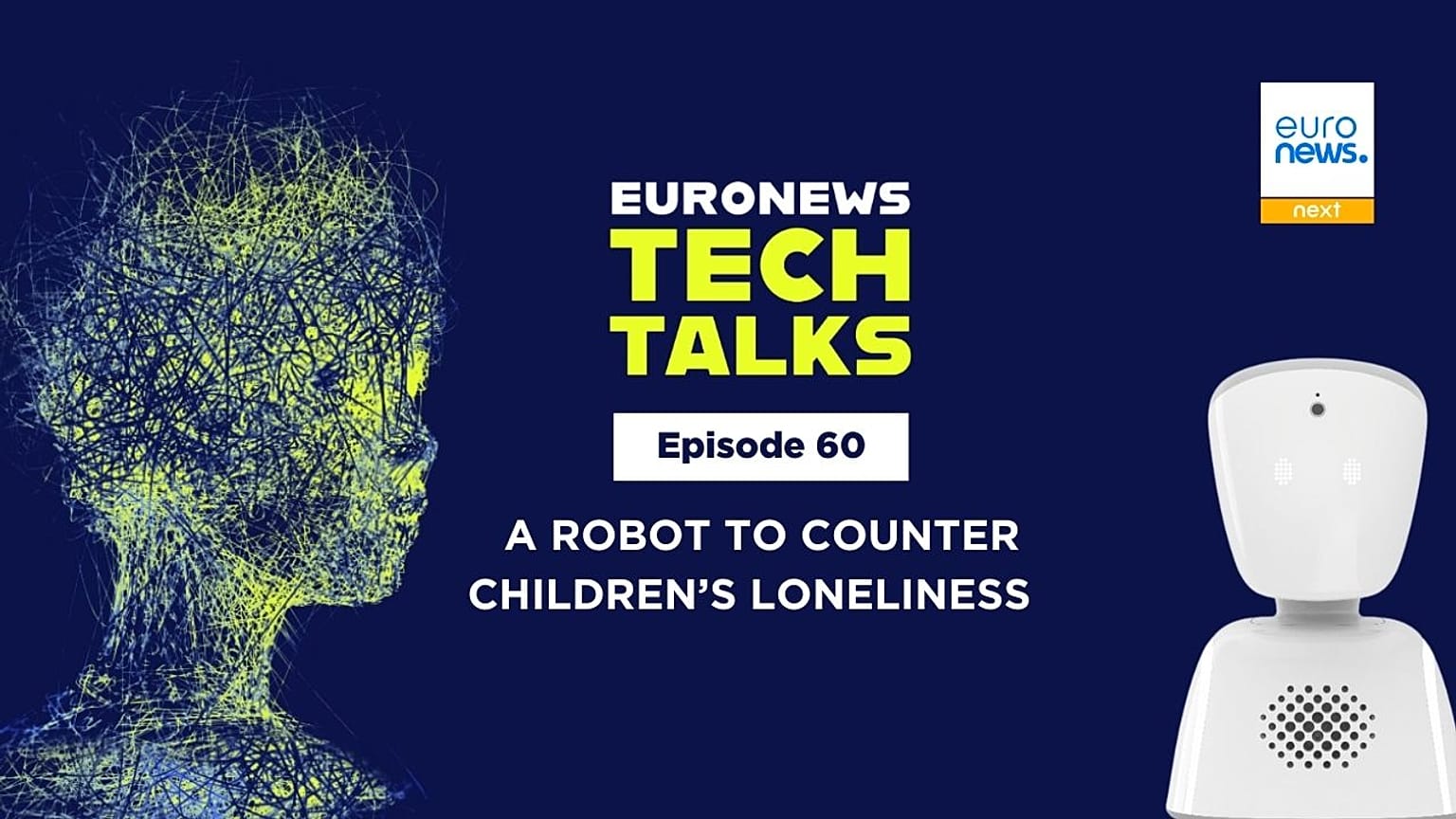
In a groundbreaking effort to combat childhood loneliness, Norwegian tech company No Isolation has developed a robot named AV1. This initiative aims to help children with medical conditions engage with their peers in an educational setting. In 2023, the World Health Organization (WHO) recognized loneliness as a significant global health threat, impacting millions worldwide. The organization’s report indicated that between 2014 and 2023, approximately 16 percent of individuals reported feelings of loneliness, with adolescents experiencing heightened rates.
Addressing this pressing issue, No Isolation’s co-founder and former CEO, Karen Dolva, shared insights on the company’s mission during a recent episode of Euronews Tech Talks. Dolva emphasized the importance of using technology to reduce isolation, highlighting the role of robotics, artificial intelligence, and virtual reality as potential solutions.
Transforming Education Accessibility
Founded in 2015, No Isolation focuses on making education accessible for children facing health challenges. Inspired by a friend who worked as a nurse, Dolva noted that many children in medical settings often lack visitors, compounding their feelings of isolation. To tackle this, No Isolation created AV1, a remote-controlled robot that allows children to participate in classroom activities from home, a hospital, or another location.
“The idea was sparked by a friend of mine who had worked as a nurse on a children’s ward, and she mentioned these kids didn’t get nearly enough visitors,” Dolva explained. The primary goal of the initiative is not to replace traditional education but to ensure that every child has access to it. As Dolva pointed out, “They [the children] are not lazy, they’re ill. There’s always the intent of going back [to school].”
AV1: A Companion for All Ages
AV1 is designed to be a neutral and approachable companion, featuring a simple, non-humanoid design. Dolva noted that the design principles were influenced by Pixar, aiming to instill a sense of comfort and reassurance among users. “We’ve followed a lot of the design principles by Pixar in trying to make something with a lot of human feeling and expression, but without the humanoid elements,” she stated.
The robot’s appearance is intentionally neutral to appeal to a wide age range, accommodating users from young children to teenagers. Dolva explained, “We’re going to try to fit a six-year-old boy and a seventeen-year-old girl and everyone in between [in AV1], so it needs to be quite neutral.”
Through AV1’s camera “eyes,” children can see and hear what is happening in the classroom, allowing them to interact with their peers via the robot’s built-in speaker. This technology not only facilitates educational participation but also helps foster social connections.
Typically, families do not purchase AV1 directly; instead, No Isolation collaborates with local authorities and school administrators to provide the robots to children in need. This approach ensures that the technology reaches those who would benefit most from it.
As initiatives like No Isolation’s AV1 continue to emerge, the conversation around loneliness and the potential of technology to address it is gaining momentum. The focus now shifts to how such innovations can further enhance social connectedness and emotional well-being for vulnerable populations.