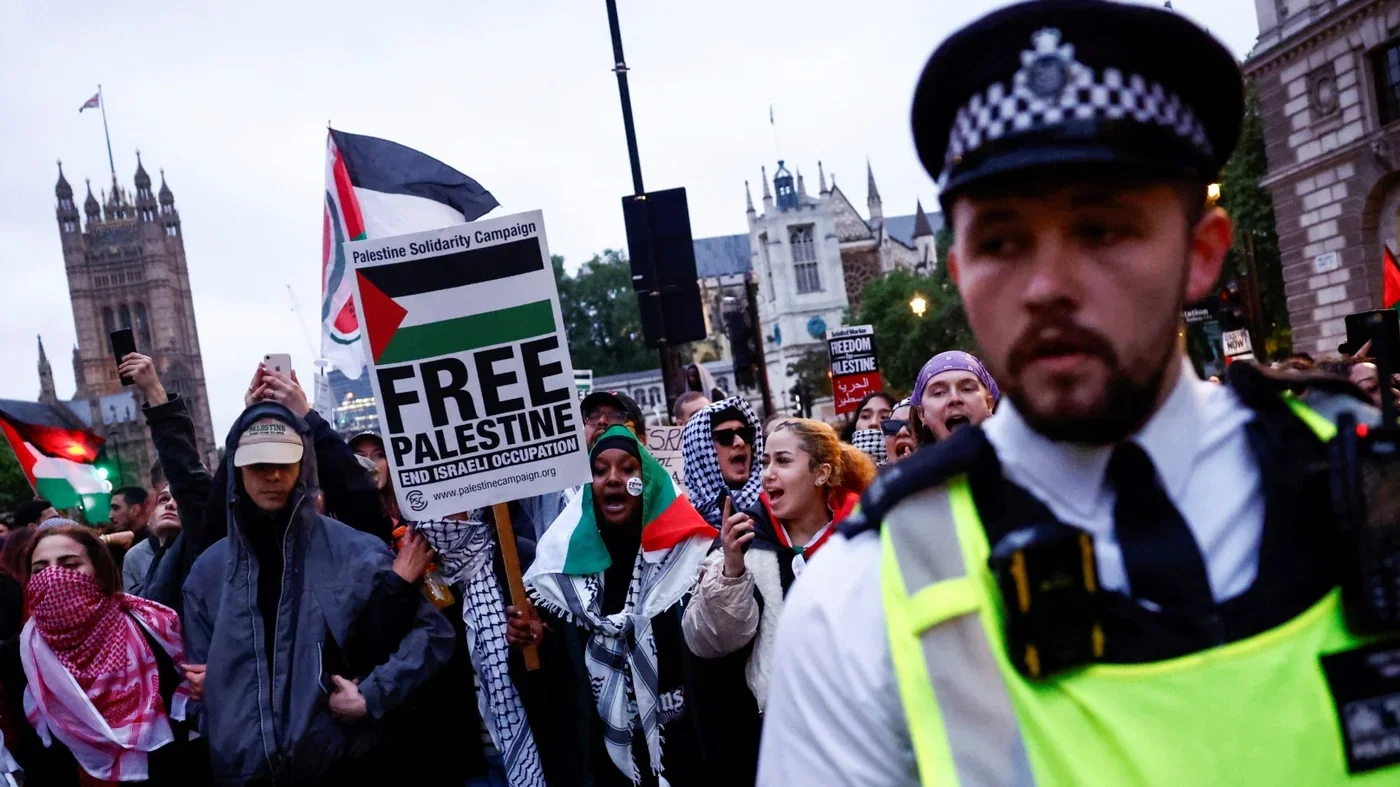
UPDATE: UK police have just announced a controversial decision to criminalize the chant “intifada” during protests, a move that critics say aims to stifle anti-genocide activism. This decision comes amid rising tensions surrounding ongoing protests in London, where at least two individuals were reportedly arrested for chanting the term just days ago.
Authorities assert that this measure is necessary for public order, yet many believe it blurs the critical line between political expression and violent incitement. The implications of this crackdown are significant, as it raises urgent concerns about the suppression of free speech and the potential for increased racial profiling in protests.
The term “intifada,” which translates to “shake off” in Arabic, has historically been employed by Palestinians in their struggle against Israeli colonial occupation. The recent policing stance has drawn ire, as it appears to align with the interests of pro-Israeli lobbyists, who are eager to equate the phrase with violence without substantive evidence.
Critics highlight two crucial points that expose the inequity in this decision. First, the Australian investigators’ findings related to the Bondi attack indicate it was inspired by the Islamic State group, not a Palestinian-organized act. Yet, UK politicians and media have attempted to link the Bondi incident to Palestinian protests, further complicating the narrative around the term “intifada.”
Second, existing laws, such as the Crime and Disorder Act 1998, already set clear thresholds for when speech crosses into criminal territory. Authorities emphasize that encouragement of terrorism requires a direct call to commit terrorist offenses, a standard that many argue is being ignored in this case.
As protests continue, the chilling effect of criminalizing political slogans could stifle peaceful mobilization efforts and further radicalize individuals. The government’s current approach risks alienating voices of solidarity with Palestinians while tolerating rhetoric that fuels ethnic hatred.
The ramifications of this crackdown extend beyond the immediate arrests; they signal a troubling trend towards authoritarianism in the policing of dissent. Just as we witnessed in Hong Kong, where authorities seized on protest slogans to justify prosecutions, the UK’s strategy appears to echo this pattern.
The urgent need for accountability among police and government officials is clear. They must align their actions with established legal standards and resist the pressure from powerful lobbies that seek to undermine free expression. Failure to do so not only erodes democratic values but also endangers the very fabric of civil society.
The call for justice and peace, even when uncomfortable, must remain a protected right. As this situation develops, the public’s response will be crucial. Authorities must be reminded that genuine democracy thrives on the tolerance of diverse viewpoints, not on the silencing of voices advocating for justice.
This is an evolving story, and the implications for civil liberties in the UK are profound. Stay tuned as we continue to monitor this situation and its impact on the ongoing discourse surrounding free speech and activism.