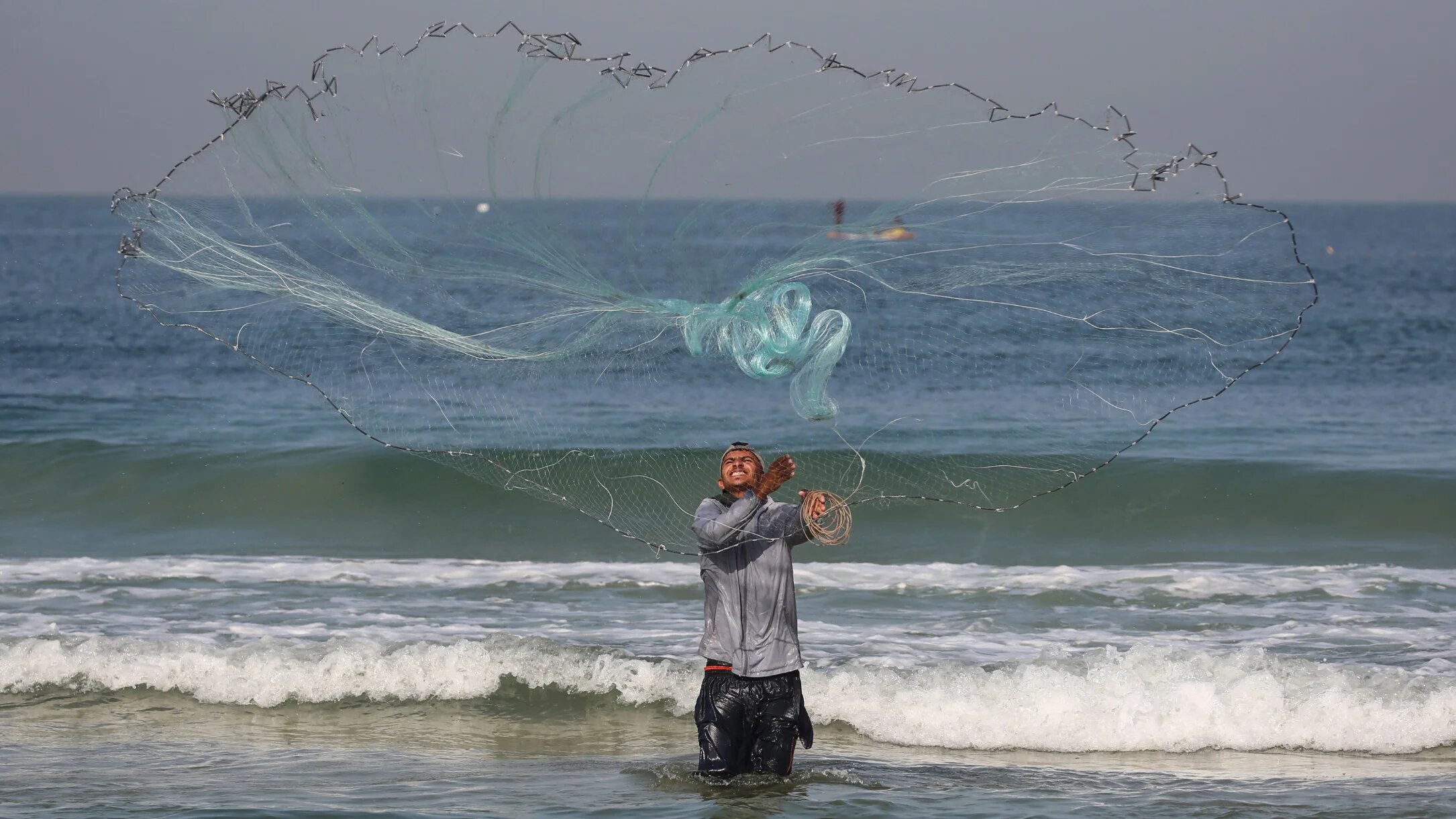
UPDATE: Gaza fishermen are facing an intensified crackdown as hostilities escalate, with reports indicating that at least 230 fishermen have been killed since the conflict reignited on October 7, 2023. The situation is dire as many are risking their lives to provide food for their families amid severe restrictions.
Just released from detention, fisherman Ismail Farhat recounted his harrowing experience after being captured by an Israeli naval vessel while fishing off the coast of Deir al-Balah on the morning of October 8. “I was detained, tortured, and threatened,” Farhat stated, highlighting the brutal treatment fishermen endure under Israeli military operations.
Farhat described being ordered to strip and swim towards the Israeli vessel, where he faced aggressive interrogation about his identity and background. He was later transferred to another boat, where the abuse continued. “They accused every fisherman of being affiliated with Hamas,” he said. “I was treated as a criminal despite never being formally charged.”
During his more than two-month ordeal, which included time at the notorious Sde Teiman detention facility, Farhat experienced extreme conditions. He was kept in handcuffs, deprived of sleep, and often punished for minor infractions. “You live 24 hours a day with your hands cuffed,” he shared. “We were forbidden from speaking or even leaning to either side.”
The situation for Gaza’s fishing community is critical. The Palestinian Fishermen Syndicate reports that over 95 percent of Gaza’s fishing sector has been destroyed, with the permitted fishing area reduced to zero since the onset of hostilities. Fishermen now work under constant threat, with many opting to risk their lives to feed their families.
“Since the beginning of the genocide in Gaza, we have lost many lives,” said Zakaria Bakr, head of the Fishermen Union Committees in Gaza. “As a result, our daily fish production has plummeted to less than 2 percent of pre-war levels.” Currently, fishermen from Gaza Port are collectively catching only 16 kilograms of fish daily, compared to previous catches that sometimes reached 15 tonnes.
Despite the recent ceasefire, the Israeli military continues to impose restrictions. At least 28 fishermen have been arrested since the ceasefire, with only one released, demonstrating the ongoing challenges faced by this community.
Conditions for fishermen in Gaza have always been precarious, but the current conflict has plunged them into deeper despair. “We are forced to risk our lives to secure food for ourselves and our communities,” Bakr emphasized. “No one is allowed to enter the sea; this is collective punishment.”
As the conflict develops, the plight of Gaza’s fishermen remains a poignant reminder of the human cost of war. Authorities and humanitarian organizations are calling for immediate international attention to prevent further loss of life and to restore the fishing sector critical to the livelihoods of thousands.
What happens next is uncertain, but the situation for Gaza’s fishermen is growing increasingly desperate. The international community is urged to take notice and act before more lives are lost to this ongoing crisis.