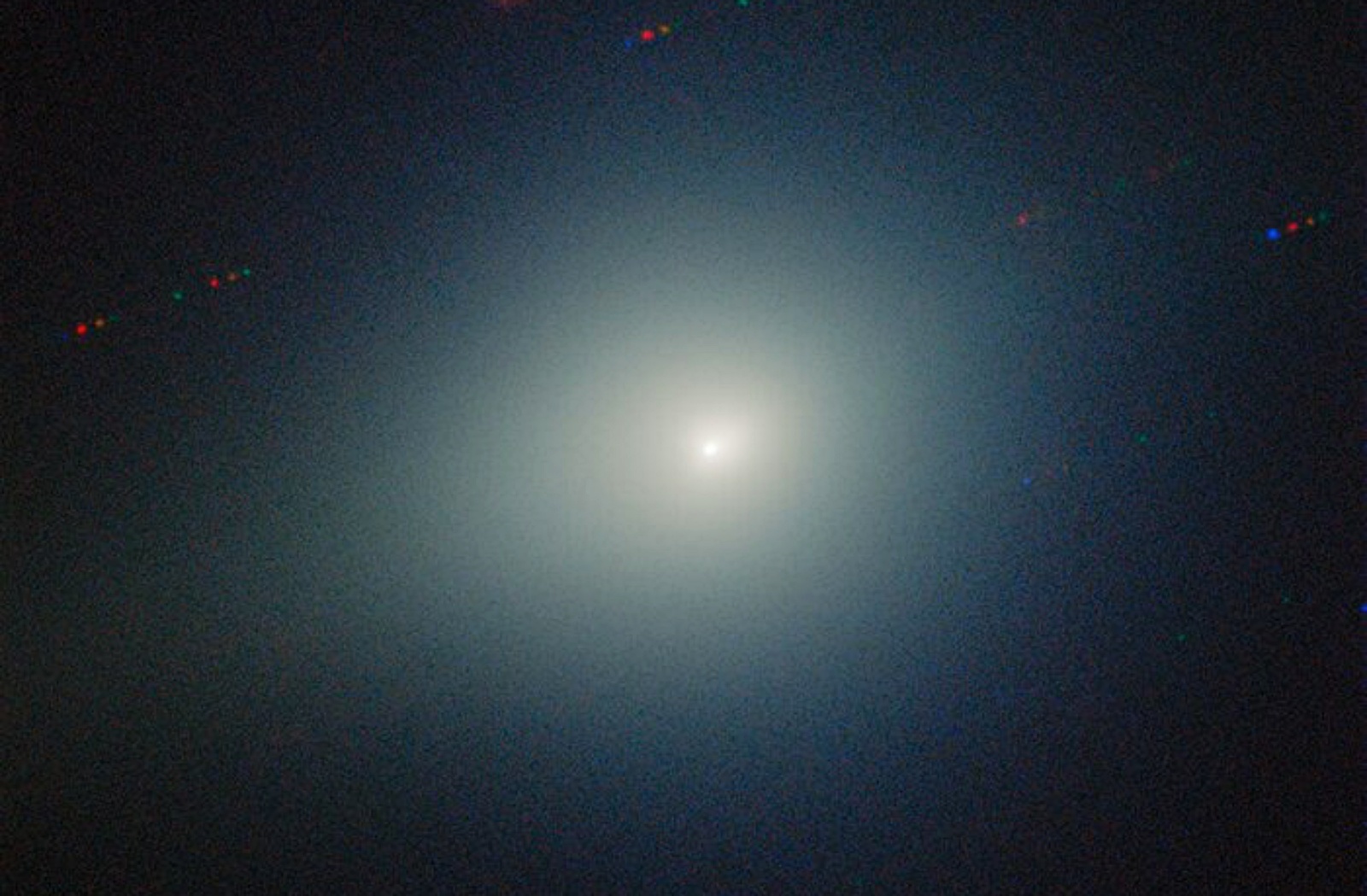
Harvard University astrophysicist Avi Loeb has revised his earlier assertions regarding comet 3I/ATLAS, stating that it is “most likely a natural object.” This update comes in response to ongoing discussions surrounding the comet’s unusual characteristics and its interstellar origin. In a recent interview with News Nation, Loeb emphasized the importance of current data, stating, “At this point, given all the data that we have, I would agree that it’s most likely natural, but there are still a lot of things we don’t understand about it.”
Comet 3I/ATLAS, observed for the first time in July 2025 by a telescope in Río Hurtado, Chile, is categorized as interstellar by astronomers. The NASA-funded Asteroid Terrestrial-impact Last Alert System (ATLAS) survey detected the comet as it passed through our solar system. The initial concerns about the comet being of extraterrestrial origin arose partly due to its anomalous behavior, which Loeb previously highlighted.
The University of Washington’s Center for an Informed Public has characterized Loeb as “an outspoken advocate of the alien hypothesis.” This reputation stems in part from his earlier claims regarding the interstellar object ‘Oumuamua, which he suggested might be an artificial spacecraft. While Loeb has now shifted his stance on 3I/ATLAS, he continues to acknowledge its peculiar traits.
In his blog post on Medium, Loeb clarified that he has consistently maintained that 3I/ATLAS is “most likely a comet of natural origin.” He noted that any sensationalism surrounding his previous comments does not reflect his scientific position. Loeb reiterated, “In response, I repeated what I said before — that 3I/ATLAS is most likely a natural object.”
During the News Nation interview, Loeb observed that 3I/ATLAS has not exhibited any unusual activity as it neared Earth. He remarked, “So far, so good. 3I/ATLAS did not manoeuvre or display any unusual activity when it came closest to Earth.” This statement is crucial in alleviating concerns about the comet being an alien spacecraft.
In November, Life Science reported that NASA released new images of 3I/ATLAS, further confirming its classification as a natural object. The comet has captivated astronomers and the public alike due to its interstellar roots and the intriguing characteristics it displays.
As 3I/ATLAS continues its journey into interstellar space, the scientific community remains vigilant. The ongoing study of this comet not only helps clarify its nature but also serves as a reminder of the vastness of our galaxy and the importance of rigorous scientific inquiry. With growing evidence against the notion of alien technology, the narrative surrounding 3I/ATLAS has shifted towards a more grounded understanding of celestial phenomena.
Loeb’s commitment to scientific investigation underscores the balance between curiosity and evidence in the field of astrophysics. As researchers delve deeper into the mysteries of the universe, 3I/ATLAS offers a unique opportunity to explore the boundaries of our knowledge and understanding of interstellar objects.