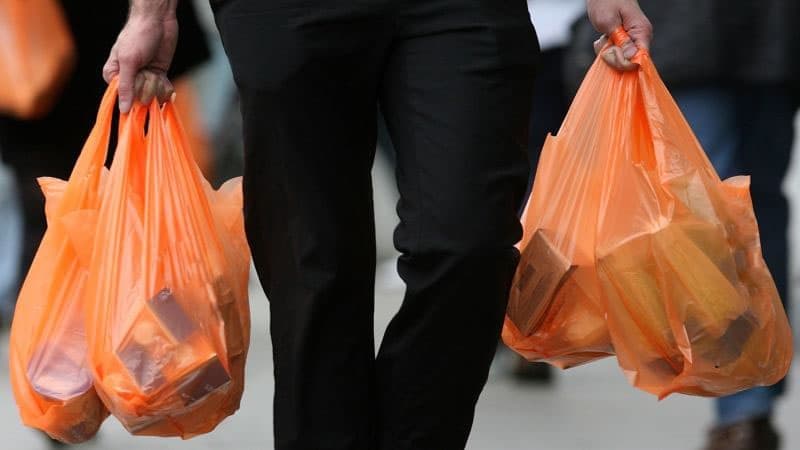
The recent ban on plastic bags in Montenegro has not deterred citizens from choosing plastic alternatives, even when they come at a cost. The prohibition, which formally took effect in October 2024, targets single-use plastic bags with a thickness of 15 to 50 microns. Despite this, according to Nina Mihailovic from the NGO Green Home, the intended effects of the ban remain questionable.
Mihailovic explains that while the banned plastic bags have been removed from the market, they have largely been replaced by other types of plastic bags. Consumers now frequently use thinner bags for fruits and vegetables or thicker bags marketed as reusable, which incur an environmental fee. “The law’s intention was clear: to encourage the use of thicker bags multiple times and reduce their consumption through financial penalties,” she states. However, she questions whether this measure has had any substantial positive environmental effects.
One major concern is the inadequacy of the financial penalty associated with the thicker bags. Mihailovic points out, “The fee has clearly not been sufficient to motivate most citizens to abandon their use.” This raises the question of whether the ban has inadvertently led to increased plastic waste, as the new bags are significantly heavier and bulkier than those previously banned.
For Mihailovic, a more effective solution would involve a complete or stringent ban on plastic bags. “The only way to truly reduce plastic bag waste is through their total or rigorous elimination from use,” she argues. “As long as they are available at retail points, consumers will opt for them over carrying reusable bags made from safe and sustainable materials.”
The lack of measurable results is evident. Despite Montenegro’s efforts over the years to implement various environmental protection initiatives, Mihailovic believes that changes are not permanent. “Changing social habits takes time and requires continuous efforts and strong, long-term initiatives to raise awareness,” she adds. The challenge is particularly pronounced in the realm of ecology, where behavioral changes are often linked to personal values and attitudes towards nature.
Official data backs Mihailovic’s assertions. According to the Environmental Protection Agency, from the time the ban took effect in October 2024 to the end of February 2025, over 10 million plastic bags were put into circulation. Given the average weight of these bags, this translates to an estimated 150 tons of plastic waste generated in just a few months. Such figures do not indicate a successful legislative measure or societal readiness for change.
Mihailovic emphasizes that there is no room for doubt regarding public awareness. “As an organization engaged in environmental issues for over 25 years, we believe the time for discussing society’s preparation to accept the harmful nature of plastic bags has passed,” she asserts. The negative consequences are already apparent, visible in polluted riverbeds during cleanup efforts, studies showing plastic waste in nature, and alarmingly low recycling rates.
She argues that relying solely on voluntary compliance is no longer feasible. “We can no longer depend solely on voluntary adherence to environmental principles. A consistent and systematic application of legal solutions is essential, whether through motivational measures, punitive policies, or a combination of both,” Mihailovic stresses.
The role of government is paramount in this issue. Mihailovic states that the primary responsibility lies with those in power, tasked with implementing environmental protection policies. A coordinated effort from all societal actors—ministries, inspections, retail chains, waste management companies, and citizens—is crucial for meaningful progress.
Addressing individual responsibility, she notes, “As long as we do not perceive Earth as our home and fail to understand that harming the environment jeopardizes our health and that of future generations, changes will be slow and limited.”
Despite some activity from inspections, Mihailovic highlights that they lack sufficient capacity. “There are too few inspectors, an overwhelming number of regulations, and a broad range of responsibilities, making effective oversight challenging,” she explains. Inspections could serve as a vital mechanism in reducing plastic bag usage, but only with enhanced institutional capacities and a broader societal understanding of environmental protection’s importance.
Vanja Cicmil from the NGO Zero Waste Montenegro believes that citizens have demonstrated readiness for change, albeit unevenly and without systemic support. “Many people now carry reusable bags, especially those aware of the issues and informed,” she states. However, she identifies the messaging from practices as problematic. “If you receive a free plastic bag at a store or are offered another alternative that is still plastic, it sends the wrong message. We are ready for change, but it needs to be facilitated, supported, and made clear.”
Cicmil points out that while some retail chains comply with the regulations and have adapted seriously, others exploit gray areas by distributing thin bags at checkout, offering them for free, or replacing one problematic bag with another.
Responsibility for environmental degradation is not solely on one party. “For years, we lived in a system that promoted single-use, quick, and cheap solutions without consideration for consequences,” Cicmil remarks. She emphasizes that responsibility is shared among institutions, businesses, and citizens.
Change must be collective, according to Cicmil. “Institutions set the rules, businesses provide solutions, and citizens demonstrate their desires through choices. When these three factors align, change happens rapidly,” she notes.
Regarding penalties, she believes the issue lies not in their existence but in their application. “Penalties often exist on paper, but if regulations are violated and penalties are rare or symbolic, they do not alter behavior. Fines must be significant enough to deter violations and must be consistently enforced,” she states.
Cicmil also insists that a portion of collected funds should be transparently reinvested into environmental protection and citizen education. “When people see that rules are enforced equally for all and that the money goes towards a legitimate cause, trust in the system grows,” she concludes.