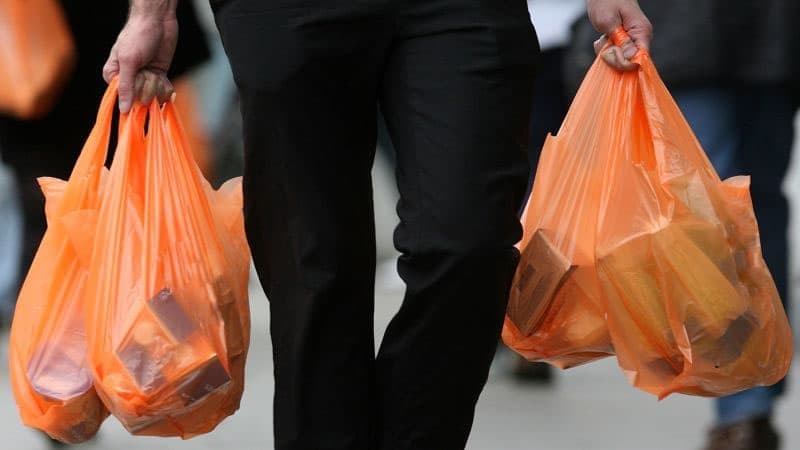
URGENT UPDATE: Montenegro’s recent ban on plastic bags thicker than 15 to 50 microns has officially taken effect, but its actual impact remains uncertain. As reported by Nina Mihailović of NVO Green Home, although these bags have been removed from the market, consumers have quickly turned to alternative plastic options in daily use.
Authorities confirmed that the ban specifically targets single-use plastic bags, yet many shoppers are opting for thinner bags for fruits and vegetables, or thicker bags classified as reusable but still charge an ecological fee. Mihailović warns that the law’s intention—to encourage multiple uses of heavier bags through financial penalties—has not succeeded in reducing overall plastic consumption.
The crux of the issue lies in a lack of adequate motivation provided by the ecological fee, which has proven insufficient to deter most citizens from choosing convenience over sustainability. “We often select simpler solutions, leading to persistent high usage of plastic bags,” Mihailović states.
Recent data reveals that since the new law was implemented in October 2024, over 10 million plastic bags have been sold, generating an alarming 150 tons of plastic waste in just a few months. This statistic starkly contradicts the law’s objective to minimize environmental damage, raising concerns about a potential increase in plastic waste instead.
Mihailović emphasizes that real change requires a more stringent approach, advocating for either a complete ban or a rigorous enforcement of existing regulations. “As long as plastic bags remain available, consumers will continue to choose them over reusable alternatives,” she asserts.
In response to the law’s effectiveness, Vanja Cicmil from NVO Zero Waste Montenegro notes that while many citizens are eager to change their habits, this willingness is not uniform. “People are more conscientious, especially those aware of the environmental issues at hand, but the system must support these changes,” Cicmil explains.
The enforcement of the ban has exposed challenges, with reports indicating that after 834 inspections, authorities issued eight fines totaling €8,000 for non-compliance. While larger retailers seem to adhere to the regulations, smaller markets and vendors still distribute banned bags, undermining the legislation.
Experts suggest that the government must take a more active role, collaborating with all stakeholders—including ministries, inspectors, and businesses—to effectively implement environmental protection policies. “The responsibility lies with those in power to enforce these laws and ensure a collective effort towards sustainability,” Mihailović adds.
As the ban continues to be scrutinized, it is clear that changing public behavior regarding plastic usage is a slow process that demands consistent effort and community awareness. “We cannot rely solely on voluntary compliance; we need systematic and rigorous legal applications to foster real change,” Mihailović concludes.
With the clock ticking on environmental degradation, these developments highlight the urgent need for effective strategies to combat plastic waste in Montenegro. Citizens and officials alike must act swiftly to ensure the success of the ban and protect the environment for future generations.
Stay tuned for updates as this situation unfolds.