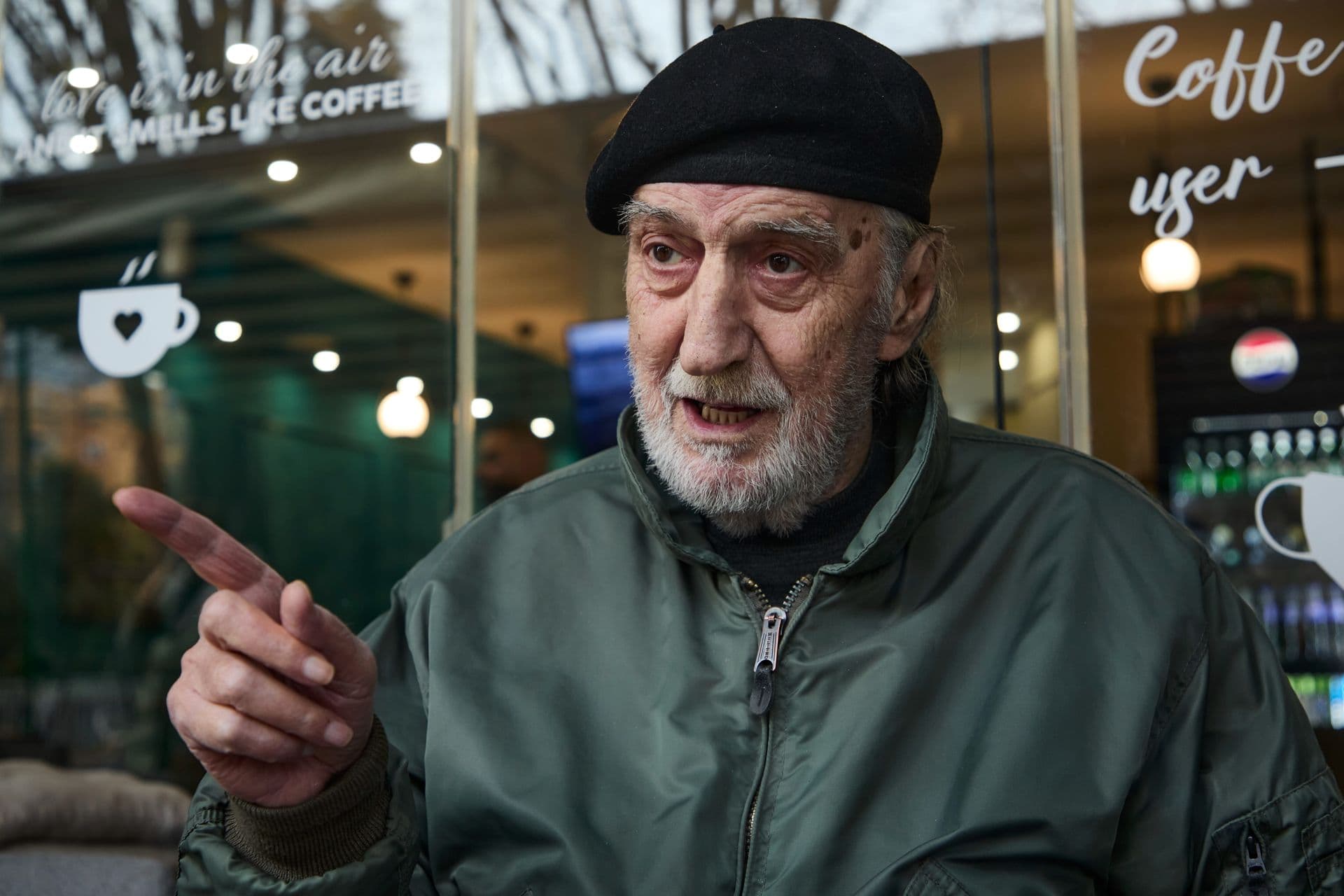
Blagota Eraković, a prominent figure in Montenegrin culture, recently launched a monograph detailing his life and contributions to the theatrical landscape of Montenegro. The book, titled “Među svima kao da je sam – priča o Blagoti Erakoviću, reditelju,” authored by Aleksandar Milosavljević, was unveiled on December 10, 2023, and has garnered significant attention, demonstrating the profound connection between Eraković’s biography and the evolution of Montenegrin society.
During the book’s promotion at the Crnogorsko narodno pozorište, an overwhelming turnout prompted organizers to add extra seating to accommodate the crowd. Eraković expressed his gratitude for the enthusiastic response, highlighting that attendees remained engaged throughout the event. He credited much of the book’s success to his wife, Olja, who diligently collected materials from various sources to compile the narrative.
Eraković shared insights about the book’s title, which he personally chose, drawing inspiration from a line in the epic poem “Gorski vijenac.” He explained that the phrase reflects his sense of being part of a collective while often grappling with challenges independently. He emphasized that his artistic journey has always involved collaboration with actors, colleagues, and the public, but the creative process often required solitary reflection.
The director underscored his commitment to addressing societal issues through his work, stating, “Theatre must comment on relevant social facts.” While he clarified that it was never his intention to promote a specific political agenda, he acknowledged that many interpreted his work as politically charged. Eraković noted the prevalence of “false individuals” in today’s society, a sentiment he plans to explore anew in a modern adaptation of “Šćepan Mali,” a play he originally directed in 1969.
Reflecting on the current landscape, Eraković lamented the rise of individuals lacking genuine expertise and integrity. He remarked, “There are so many false intellectuals and politicians; over 90 percent of them are fabricated.” He believes that true talent often remains obscured by the anonymity of a society that prioritizes superficial qualities over substantial accomplishments.
Eraković, who has directed over 156 plays, expressed a revived passion for theatre. He noted a desire to reinterpret “Šćepan Mali” as a contemporary piece, addressing themes that resonate with current political and social dynamics. He described the overwhelming number of individuals in contemporary Montenegro who lack authentic backgrounds, drawing parallels to characters in his theatrical pursuits.
Having navigated the complexities of the artistic world, Eraković reminisced about his early career and the challenges faced by young directors in Yugoslavia. He recounted how his generation broke new ground in theatre, inspired by international influences, particularly during festivals like BITEF. These experiences shaped his approach to theatre, allowing him to integrate innovative styles and concepts into his productions.
Eraković’s collaborations with notable figures such as Dragica Tomas and Borislav Begović reflect his enduring influence within the Montenegrin arts community. He considers his most significant achievement to be the revival of the Crnogorsko narodno pozorište following a devastating fire in 1989. He took on the challenge of leading the theatre during a tumultuous period, where he faced financial constraints and a struggling industry.
In discussing the current state of Montenegrin theatre, Eraković critiqued the reluctance of local directors to take creative risks. He encouraged the exploration of new works from young playwrights, advocating for their inclusion in annual repertoires. He expressed disappointment at not being invited to participate in local festivals, despite being a founding figure of the Festival glumca.
Eraković views Niksic’s designation as the European Capital of Culture for 2030 as an opportunity for the region. He hopes that this recognition will elevate the cultural scene and provide a platform for emerging talents.
As he looks to the future, Eraković remains passionate about theatre’s potential to provoke thought and inspire change. His reflections not only celebrate his past but also challenge the current artistic landscape to embrace authenticity and courage.