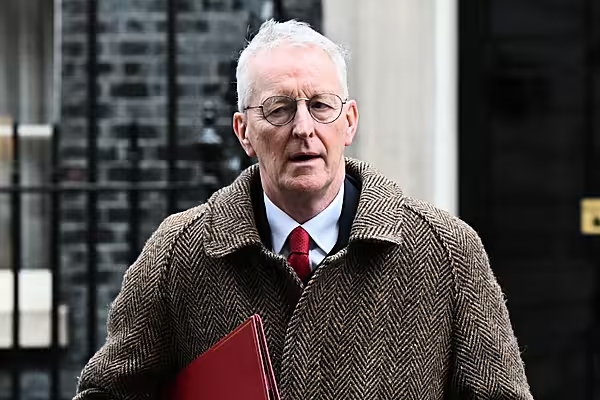
A UK inquiry into foreign political interference will investigate potential connections between pro-independence social media accounts, known as “Natbots,” and the Iranian government. This confirmation comes from Douglas Alexander, a prominent figure involved in the inquiry. The investigation aims to assess how foreign entities may be influencing public opinion regarding Scottish independence.
The inquiry was prompted by concerns over the role of social media in shaping political narratives. Investigators will examine whether these Natbots, which are believed to promote pro-independence sentiments, have received support or direction from Iranian sources. This scrutiny underscores a growing awareness of the impact that foreign influence can have on domestic political issues.
Background of the Inquiry
The UK government has been increasingly vigilant about foreign interference, particularly in light of recent geopolitical tensions. The inquiry was initiated in response to allegations that several countries, including Iran, have sought to undermine democratic processes through disinformation campaigns. As Scottish independence remains a contentious topic, the focus on pro-independence Natbots adds another layer of complexity to the debate.
According to the inquiry’s framework, investigators will not only look at direct ties between these social media accounts and Iran but also analyze the broader implications of such foreign involvement in UK politics. The investigation aims to ensure that the integrity of the political discourse surrounding Scottish independence is protected.
Implications for Scottish Politics
The potential connections between pro-independence groups and Iran could have significant ramifications for the Scottish National Party (SNP) and its supporters. If evidence emerges that these Natbots are indeed linked to foreign interests, it may lead to questions about the legitimacy of their influence on public opinion.
Moreover, the inquiry raises concerns about the role of social media platforms in facilitating foreign interference. Authorities may consider new regulations to curb the spread of disinformation and protect democratic processes. As the investigation unfolds, it will be crucial to monitor its findings and their impact on both Scottish politics and the broader UK context.
The inquiry is expected to release preliminary findings in early 2024, with the potential for further investigations based on the outcomes. As political tensions continue to rise, the implications of this inquiry could reshape the landscape of Scottish independence and the relationship between the UK and foreign governments.
In conclusion, the inquiry led by Douglas Alexander represents a critical step in addressing foreign interference in the UK’s democratic processes. With its focus on the links between Iranian entities and pro-independence Natbots, it highlights the need for vigilance in safeguarding the integrity of political discourse in Scotland and beyond.