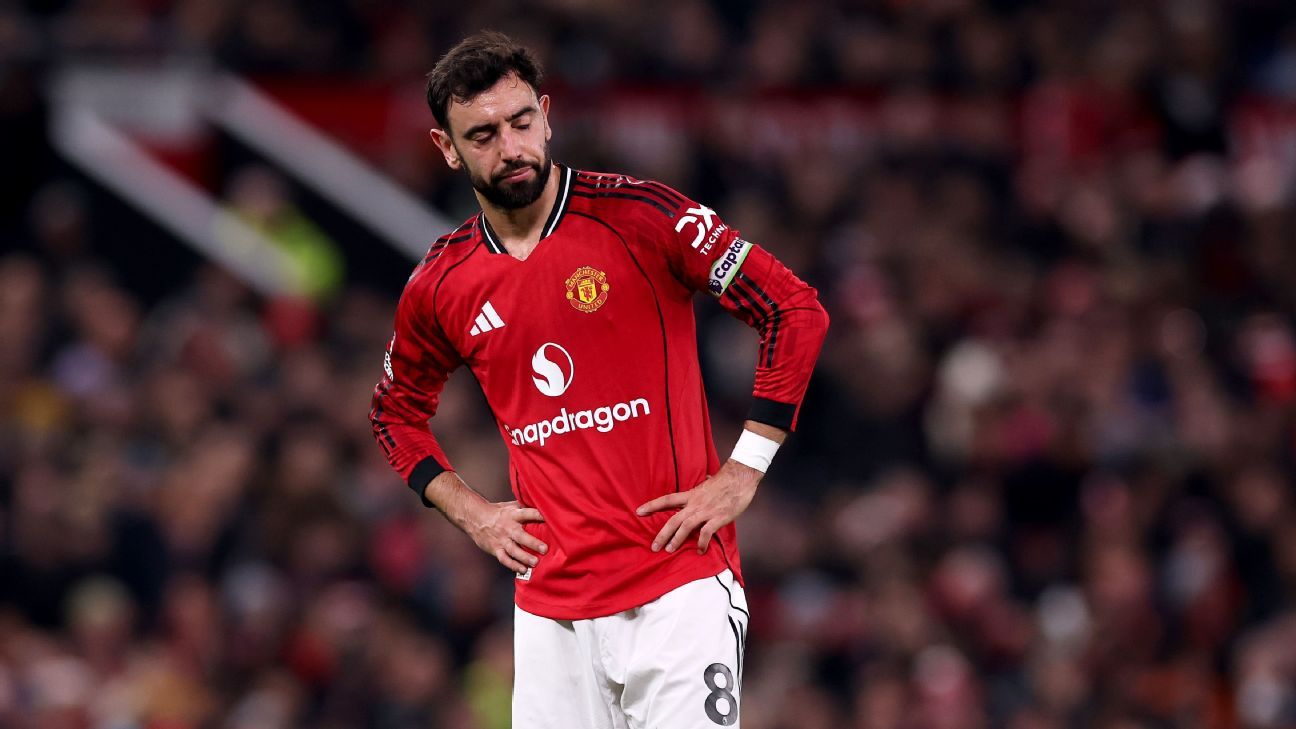
Manchester United’s captain, Bruno Fernandes, has expressed his disappointment regarding the club’s willingness to consider offers for his transfer during the summer window. In a recent interview with Canal 11, a media platform affiliated with the Portuguese Football Federation, Fernandes reflected on the club’s decision to potentially offload him, which he interpreted as a lack of appreciation for his contributions over the years.
The club reportedly received a substantial bid from Saudi Arabian team Al Hilal that included a transfer fee of approximately £100 million along with weekly wages nearing £750,000. Following a challenging season, where Manchester United finished a disappointing 15th in the Premier League and lost the Europa League final against Tottenham, the management viewed selling Fernandes as a viable option to address their financial difficulties.
Fernandes’ comments highlight a significant disconnect between player sentiment and club strategy. He conveyed that he felt the club’s stance was one of indifference, stating, “From the club I felt it was, ‘If you go, it’s not so bad for us.’ It hurts me a bit.” He articulated his belief that the club had no intention of actively retaining him, despite the manager, Ruben Amorim, wanting him to stay.
The situation mirrors sentiments expressed by other players in similar circumstances. Earlier this month, Mohamed Salah claimed he felt “thrown under the bus” by his club after being sidelined due to form issues. Both players seem to overlook the broader context of team dynamics when evaluating their positions within their respective clubs.
While Fernandes is undeniably a key player for Manchester United, with an impressive tally of 103 goals and 93 assists in 307 appearances since joining in January 2020, his departure could have led to a strategic overhaul. The funds from his transfer could have facilitated the acquisition of new talent, potentially strengthening the squad.
Should Fernandes have left Old Trafford, his absence might have opened the door for other players to emerge and fill the gaps that his departure would create. Historical examples from Manchester United’s own past illustrate this point: players such as Roy Keane, David Beckham, Ruud van Nistelrooy, and Eric Cantona have all left the club, yet their successors have continued to achieve significant success, including winning Premier League and Champions League titles.
Currently, Fernandes finds himself in a position that may not fully utilize his strengths. He has been deployed as a deep-lying midfielder, often leaving gaps in the central area of the pitch. This tactical adjustment arises from the club’s failure to sign suitable midfielders, a situation that could have been addressed had Fernandes’ transfer gone through.
The club’s decision-makers, including CEO Omar Berrada and director of football Jason Wilcox, had the choice to act decisively by accepting the offer from Al Hilal. A historical parallel can be drawn to Liverpool’s decision to sell Philippe Coutinho for £146 million. The club reinvested the funds in key players, which ultimately transformed their squad into a championship-winning side under manager Jürgen Klopp.
While many Manchester United fans may appreciate Fernandes’ choice to remain with the club, it raises questions about his understanding of the larger picture. The willingness to part with a player of Fernandes’ calibre reflects the club’s long-term vision for rebuilding and financial stability. As Manchester United navigates a complex landscape of performance and finance, both the club and Fernandes may need to reassess their perspectives to align with the evolving demands of modern football.