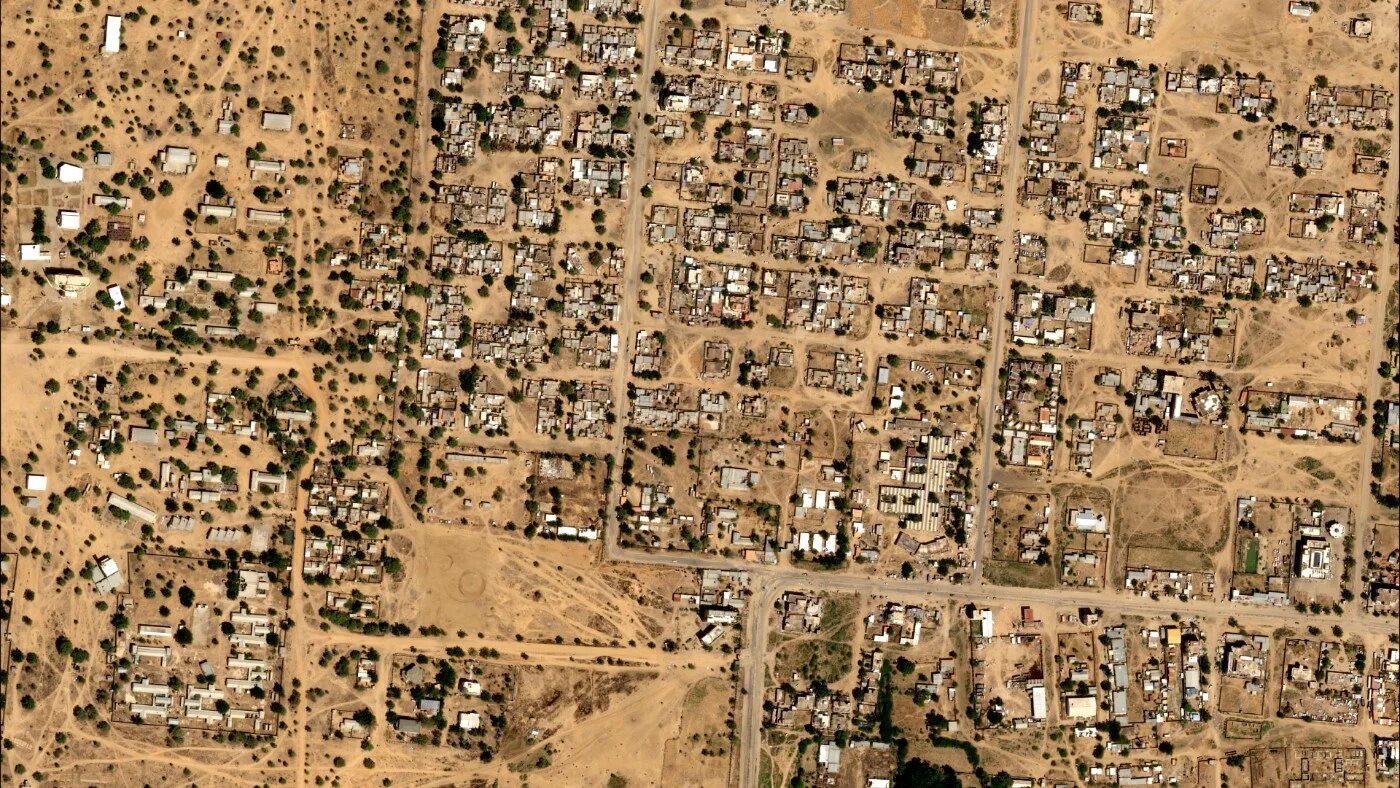
Reports indicate that Sudan’s paramilitary group, the Rapid Support Forces (RSF), is engaged in a systematic campaign to destroy evidence of mass killings in the city of el-Fasher, North Darfur. A recent analysis from Yale’s Humanitarian Research Lab (HRL) reveals that since the RSF seized control of el-Fasher on October 26, 2023, it has reportedly conducted killings of civilians attempting to flee and executed door-to-door assaults throughout the city.
Eyewitness accounts corroborate the findings from the HRL, which describe a grim scenario. Local residents claim that RSF fighters are targeting individuals trying to escape the city, with many reports detailing the execution of civilians in the Daraja Oula neighborhood. One resident, Mohamed Hassan, recounted a harrowing experience, stating, “The RSF entered the neighborhood one by one and fired on everybody.”
In addition to these violent acts, the HRL report highlights an extensive effort by the RSF to eliminate evidence of its actions. The organization has allegedly engaged in a multi-week campaign to dispose of human remains through burial and burning. The HRL estimates that tens of thousands of bodies may have been buried or incinerated since the RSF took control. The World Food Programme estimates that between 70,000 and 100,000 people may still be trapped within el-Fasher.
Evidence of Atrocities and International Response
The Yale research team utilized satellite imagery to analyze a region encompassing approximately 700 square kilometers around el-Fasher. They identified clusters of objects consistent with human remains at 150 locations from October 26 to November 1, 2023. Monitoring continued until November 28, 2023, revealing changes in at least 108 of these clusters, with 57 being completely removed from view.
The report notes that while it could not confirm all disturbances were mass graves, evidence consistent with human remains was identified near a former children’s hospital, purportedly used by the RSF as a detention site. Notably, the analysis also detected 38 instances of reddish discoloration consistent with blood or bodily fluids, visible from space.
The HRL has linked the RSF’s actions to its military capabilities, observing vehicles associated with the group near at least 31 clusters of human remains. Additionally, satellite data indicated at least 20 instances of burning at sites connected to mass killings and detention facilities.
The violence in Sudan, which escalated in April 2023, has resulted in what the United Nations describes as the world’s largest humanitarian crisis. Over 14 million individuals have been displaced, with an estimated death toll in the hundreds of thousands, though precise figures remain elusive.
In recent developments, the Sudanese Forensic Medicine Authority reported overseeing the collection and burial of 15,000 bodies from neighborhoods and schools across Khartoum state, where bodies had been hastily buried or discarded in mass graves by the RSF.
Global Reactions and Future Implications
The atrocities committed in el-Fasher have elicited widespread international condemnation, particularly concerning the RSF’s main supporter, the United Arab Emirates (UAE). Following the fall of el-Fasher, international attention has focused on the UAE’s involvement, prompting lobbying efforts to mitigate potential repercussions.
On a diplomatic front, Sudanese army chief Abdel Fattah al-Burhan recently met with Saudi Crown Prince Mohammed bin Salman in Riyadh. Discussions reportedly included the UAE’s role in the ongoing conflict, illustrating the complex geopolitical dynamics at play.
In response to the international outcry, RSF leader General Mohamed Hamdan Dagalo, commonly known as Hemedti, announced an investigation into alleged violations by his forces during the takeover of el-Fasher.
As the situation unfolds, the international community continues to grapple with the ramifications of the violence in Sudan, emphasizing the need for accountability and humanitarian support for those affected by the ongoing crisis.