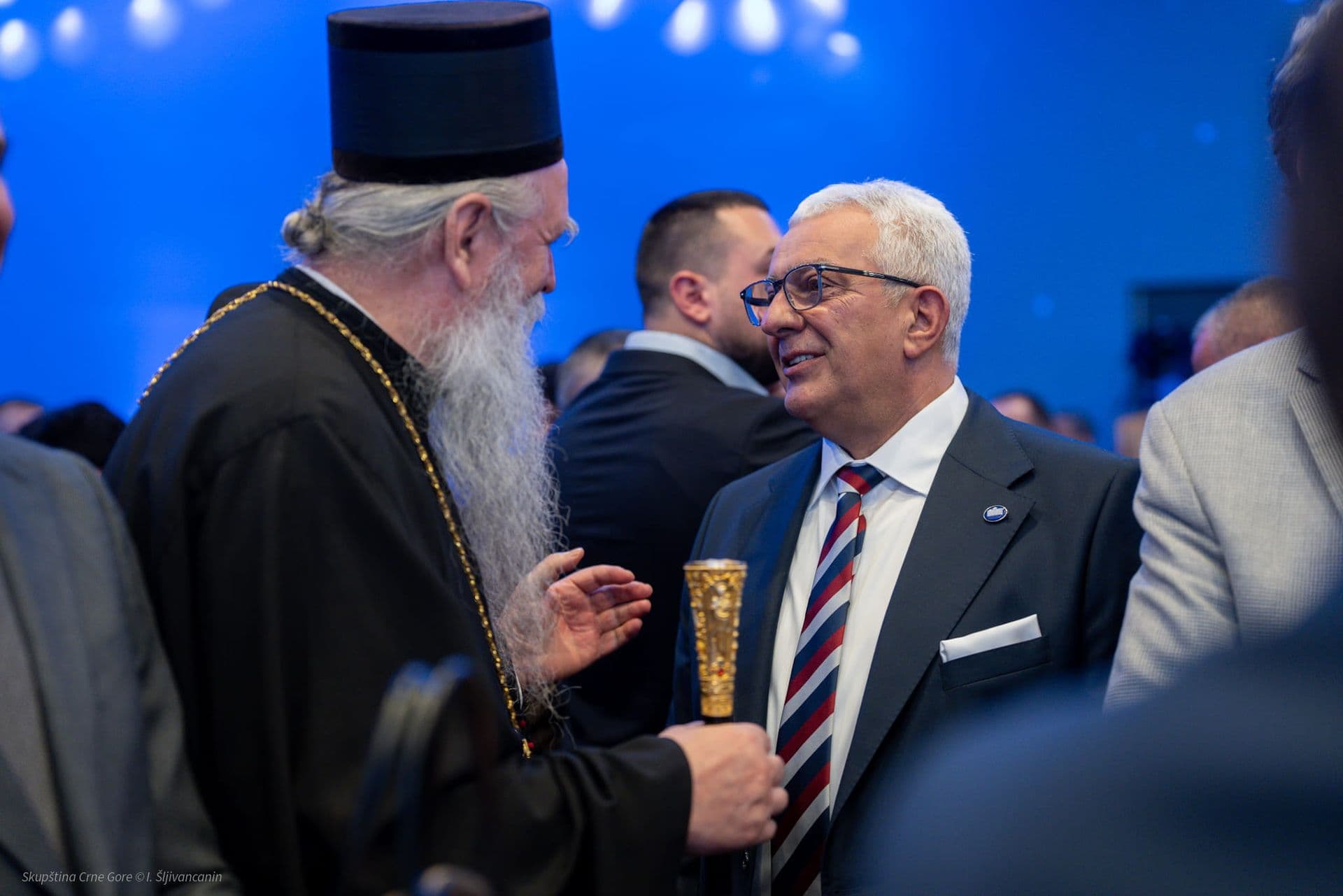
Andrija Mandic, the President of the Assembly of Montenegro, hosted a formal reception to commemorate the 120th anniversary of the Constitution of the Principality of Montenegro. During the event, he emphasized the need to update the current constitution, which he argues does not accurately reflect the realities of contemporary Montenegro. He highlighted that many elements, including the status of the Serbian language, are ready for alignment with modern societal values.
Reflection on Historical Context
In his opening address, Mandic reminded attendees of the significance of the Nikoljdanski Constitution, the first constitutional act in Montenegro’s history. He noted that this document marked Montenegro’s entrance into the circle of modern European states. The constitution established the separation of powers, defined citizens’ rights and responsibilities, and played a crucial role in transitioning from a patriarchal system to a constitutional monarchy. It preserved the country’s identity, traditions, and historical heritage.
Mandic emphasized that the Nikoljdanski Constitution serves as a reminder that a constitution is more than a legal document; it represents a social agreement and a foundation of trust between citizens and the state. He pointed out that the current constitution, adopted nearly two decades ago, fails to fully represent the societal landscape today. He noted that many of its provisions are ready for adjustment, particularly regarding the status of the Serbian language.
Call for Dialogue and Inclusivity
Mandic stated, “The citizens of Montenegro do not seek miracles but desire a constitution that reflects the reality of this country.” He clarified that no one wishes to alter the status of other languages in the constitution, but he believes it is time to correct the historical injustices created by individuals who have divided Montenegro over the past 30 years. He urged responsibility akin to that of the ancestors he referenced in his speech.
According to Mandic, today’s Montenegro is a multi-national, multi-religious, and democratic state. Its stability relies on respecting all citizens and acknowledging its historical roots. He concluded that Montenegro’s European path should not equate to renouncing its identity but should instead offer an opportunity to integrate values that have long characterized the nation—freedom, honor, and heroism.
Mandic invoked the words of Prince Nikola, who, in his speech on Nikoljdanski Day on December 6, 1905, remarked that borders once concealed only a few small tribes, within which the essence of pan-Serbian independence still flickered. He noted that, unlike in the past, today’s borders encompass the living standards and happiness of the people, with a vision for Montenegro as a land of happy, free, and prosperous individuals.
The reception concluded with a ceremonial program celebrating the historic anniversary. In addition, the Assembly of Montenegro will host a roundtable discussion on this significant milestone at Vila “Gorica” tomorrow, starting at 09:00 hours.